
CYNTHIA CARTER: Finding recovery from addiction
ASK GRANDMA: A look at the Recovery Movement
By Cynthia Carter
I interviewed Marilyn Ellis about the Recovery Movement for all people and was both fascinated and appalled to learn just how prevalent addictions are. According to Ellis, people are addicted to much more than just drugs and alcohol. Ellis is graphic designer and journalist who volunteers teaching computer information systems at the SOWEGA Council on Aging. She has resided in Albany about five years.
Q: Are all people in the Recovery Movement?
A: Much has been written about addictions. In “The Complete Idiot’s Guide to Buddhism” by Gary Gach, it says our culture is so rife with toxins and addictions that we’re all addicted in one way or another. Money. Prestige. Self-image. Ideology. Food binges. Shopping sprees. Noise or music. One can divide any roomful of people in half — those in denial and those in recovery. So, we’re all in the Recovery Movement in some way.
Q: There are many recovery programs. What is Buddhism’s view?
A: There is a section of Gach’s book called “The Eightfold Path Meets the Twelve-step Program,” saying that any alcoholic or drug addict can tell you the substance in substance abuse is only a symptom of some deeper, underlying problem and they may not even know what it is. Buddhism calls this “the poison of craving that manifests itself as addiction; is the personification of a separate, enduring self blindly identifying with one’s craving.” Gach says, “Addiction is, by definition, self-perpetuating; from a Buddhist view, it perpetuates an illusory self, regardless of the consequences of holding onto such an illusion. Understanding the nature of the suffering, its root, its arising, we see the way out.”
Q: How can you tell if you have an addiction? What triggers it?
A: First of all, something feels off. It feels like the ground is shifting. What worked no longer does. Rug yanked out from under; the known world is disappearing. And the first thing anyone wants is to get a grip, seize something to hold onto, but there’s nothing to hold onto. It is very uncomfortable.
Q: So, what might a person do?
A: Anything to quit feeling uncomfortable, like grabbing something — a beer, a body, a bagel, a book — or bingo! Addictions mask the natural process of being uncomfortable, denying this is a part of life. Accepting that feeling uncomfortable is normal, many people will do anything to escape feeling this way and have never gotten used to the normal process of being uncomfortable.
Q: Can you give me an example?
A: A month ago I drove to Tifton to pick up some pecan meal at Adcock Pecans and they were out. I was miffed. I got their phone number the, vowing to never go over there without calling first. When I got in my car to leave, I had peanuts in a a tin in my car and unconsciously began to eat. Then, for the first time, I caught myself. I was stuffing my face to feel better! I had eaten breakfast, was not hungry, but eating anyway. I put the lid back on the tin and realized this was a moment of clarity. I was aware for the first time that this is how I handle bad news.
Q: What led you to this discovery about yourself?
A: It began in the spring while attending a 12-step program. I member read a quote from “Love Warrior” by Glennon Melton. I got the book, read it and was wondering how Melton came to her conclusions in dealing with her own addiction. I got the book this quote was in, written by Pema Chodron, a Buddhist nun in Nova Scotia since 1984. It is called “When Things Fall Apart.” Now, I am in a study group on this book and each time we read it and comment, I try to get a grip on its meaning.
Q: What is different about Buddhism’s take on dealing with addiction?
A: Chodron talks about Buddhism’s Middle Way. She says to make no move or do anything to feel better. There as a quote: “So even the hot loneliness is there, and for 1.6 seconds we sit with that restlessness, when yesterday we couldn’t sit for even one second, this is the journey of the warrior.” Mike Dean, a meditation teacher at Shambhala Mountain Retreat in Colorado, talked about groundlessness. Dean said “that nothing i static; it is always evolving. There is nothing to hold onto, the foundation shifting, impermanence, everything is changing, another way of saying groundlessness. You can’t build on it, not eternally.”
Q: With all this unhappiness and suffering, is there a bright side.
A: yes, there is if I’m willing to go through a Middle Way process. Pain is synonymous with suffering, what the Buddhists talked about as one of the Four Noble Truths. What it means is suffering is a normal part of life. It is not wrong, it is not bad; it just is.
Q: Can you give an example?
A: On my mother’s birthday, I hit an all-time low. That afternoon at our book study meeting a member nailed it for me when she said she was afraid to get too close for fear of being hurt. This brought me right back to my sister’s death 16 years ago and to the losses of years before like my mother, father and even grandfather’s death when I was 17. There it all was, up in my face. I could feel this pain, so deep and melancholy, still there after all this time and, for once, thanks to Pema Chodron, Mike Dean and our discussion group, I chose a different way. I was truly nailed, stuck and for once, instead of stuffing food, I sat in it. I sat in it and cried for a long time.
Q: What was the result?
A: When I woke up the next day, I woke up elated and excited. A whole new world of creativity opened in an avenue that I thought was shut. And feeling great continued into the next week.
The world feels different, but I know it is not the world that has changed, but me. Today, I can see it differently only because I have worked on myself. While by no means an expert, I can say I have something in my life today I didn’t have six months ago. I am penetrating the source of my addictions.
Ask Grandma is a weekly column written by Cynthia Carter. If you have a question to Ask Grandma, email it to [email protected] and include “Ask Grandma” in the subject line. You also can mail questions to Ask Grandma, c/o The Albany Herald, P.O. Box 48, Albany, GA 31702. Phone-in questions can be left on our Bright Side comment line, (229) 888-9351.
Related Articles

‘Sounds Like a Mutiny.’ Secret Recording Exposes Claims of Toxic Leadership After a Marine’s Suicide
This week’s War Horse story follows the systemic failures before and after the death of Cpl. Drew Mobley who was the third in two years at Marine Corps Base Quantico to die by suicide.
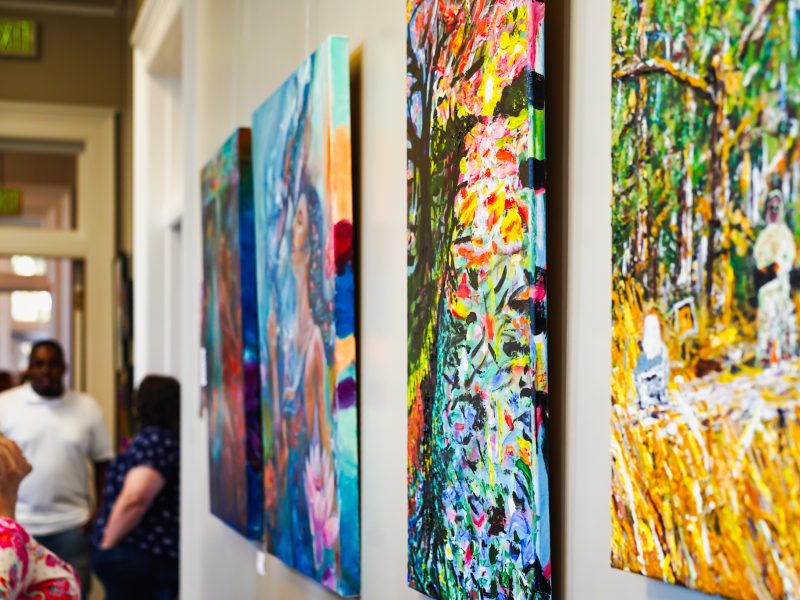
Southwest Georgia artists recognized at packed opening of exhibition
The annual juried exhibition, one of the region’s largest showcases of visual art, features approximately 46 artists and nearly 90 works spanning painting, sculpture, ceramics, photography and mixed media.
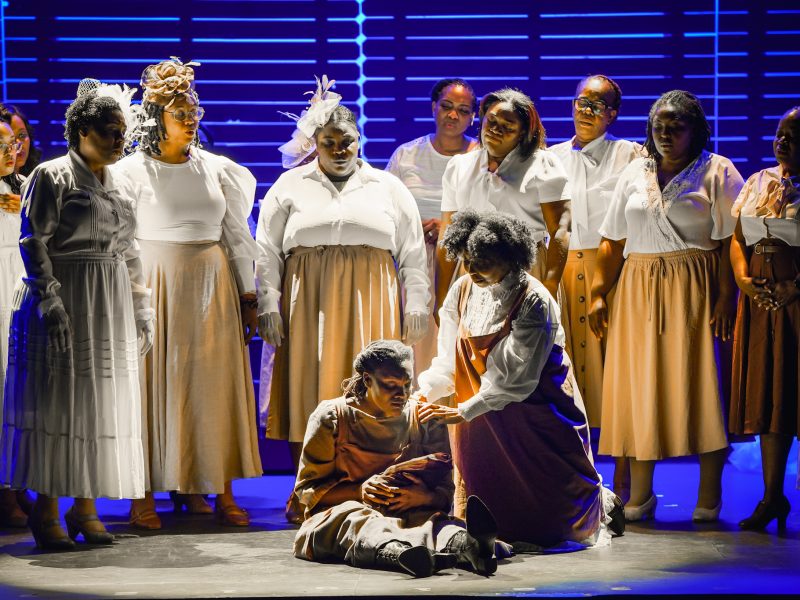
Powerful performances drive Theatre Albany’s ‘The Color Purple’
From the street, strands of purple ribbon wind around the white columns of the historic theater, hinting at the story waiting beyond its doors. Inside the foyer, a carefully curated slideshow flickers across a large screen, cycling through the faces of the cast. Some are seasoned performers. Others are stepping onto a stage for the very first time. Teachers stand alongside former students. Parents perform beside their children. People who worship in different churches, work different jobs and come from different corners of Southwest Georgia gather beneath the same lights to tell the same story.
