
DNR: Be proactive to prevent conflicts with geese
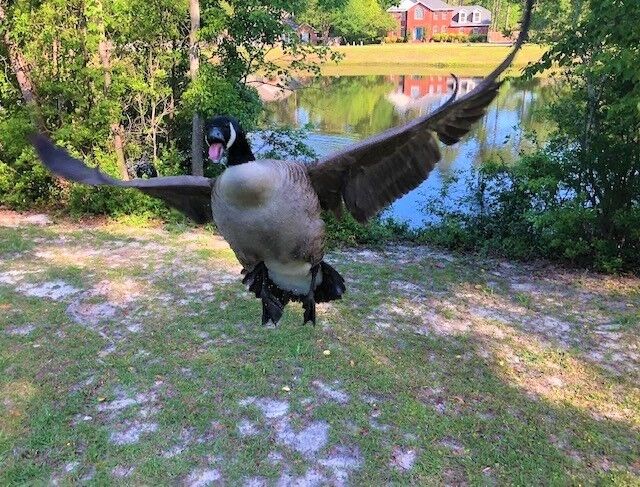
Special Photo: Georgia DNR
From staff reports
SOCIAL CIRCLE — The Canada goose is an adaptable bird that can thrive everywhere from open farmland and rural reservoirs to suburban neighborhood ponds, office complexes, parks and other developed areas. This adaptability sometimes puts them near human populations, which could lead to an increase in human-wildlife conflicts, according to the Georgia Department of Natural Resources’ Wildlife Resources Division.
“Geese that have become habituated to people, either because they are being fed or because they are around humans on a daily basis, can become aggressive,” Kara Nitschke, a wildlife biologist with the Game Management Section of the Georgia DNR Wildlife Resources Division, said in a news release. “Geese will defend their nest sites against all perceived threats, and when they nest near developed areas like office complexes or apartment buildings, that may include chasing or charging at people.”
The nesting season for geese is just getting underway, and landowners and land managers who have problems with geese (homeowners, golf course managers, city/county managers, etc.) — especially during the summer molting season — may be able to act now and reduce their nuisance problems later this year.
First, it is important to remember that Canada geese are a protected species under state and federal law. It is illegal to hunt, kill, sell, purchase or possess Canada geese except according to Georgia’s migratory bird regulations or other federal permits. However, there is a variety of methods for handling situations before they become an issue:
♦ Harassment: Landowners who don’t want geese on their property should first try a variety of harassment techniques, including chemical repellents, mylar balloons, wire/string barriers, and noise makers. These methods are proven to help reduce goose problems. However, they do require consistency from the property owner and are not always 100% effective. Now is the best time to act because geese are just beginning to select their nesting sites. Scaring the geese away now will reduce problems later in the summer.
♦ Reduce Goose Reproduction: The U.S. Fish and Wildlife Service issued regulations that allow for additional control measures, apart from harassment techniques and traditional hunting, to help address nuisance goose problems. One of those regulations is a permit for reducing goose reproduction through nest and egg destruction or egg addling or oiling, which prevent the eggs from hatching.
“A permit can be useful in certain situations — such as a homeowner that may have geese nesting close to their home,” Nitschke said. “Additionally, it is a way to keep the number of adult geese on the property from growing too large through years of unchecked reproduction.”
These permits are available at the U.S. Fish and Wildlife Service’s website (https://epermits.fws.gov/eRCGR/geSI.aspx). The website also contains useful information on the methods for addling or oiling the eggs or destroying the nests, and when each method may be appropriate.
For a brochure on a variety of methods of dealing with nuisance geese, visit https://georgiawildlife.com/preventing-wildlife-conflicts, scroll to “Common Conflict Species” and click on “Canada Geese.”
Author

Related Articles

From cotton to cloud: In the data center debate, is rural Georgia once again being asked to carry the cost?
Across much of rural Georgia, the abandoned cotton warehouses and shrinking tax bases remain — enduring reminders that industries built to serve distant markets do not necessarily stay rooted in the communities that first sustained them.
My Grandpa Was Killed in World War II. I Met Him Through His Letters Home
Gina Wolf’s grandfather died before she was born. His letters sent to her grandmother from Europe during World War II made it possible to know what kind of man he was.

‘Sounds Like a Mutiny.’ Secret Recording Exposes Claims of Toxic Leadership After a Marine’s Suicide
This week’s War Horse story follows the systemic failures before and after the death of Cpl. Drew Mobley who was the third in two years at Marine Corps Base Quantico to die by suicide.
