
Don’t get caught under too much mistletoe
Special Photo
By Alicia Holloway
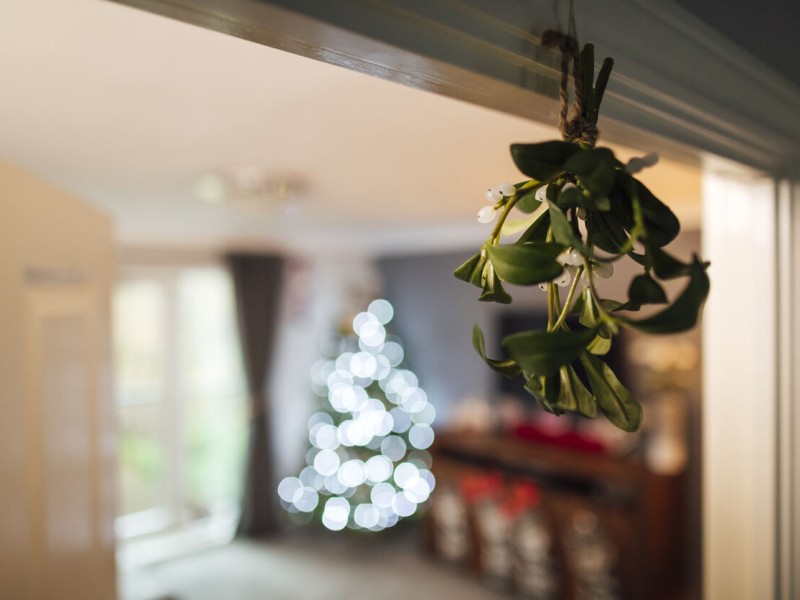
ATHENS — While a sprig of mistletoe hung from the ceiling for sweethearts to kiss under is a sweet tradition, too much mistletoe hanging from your trees can lead to trouble later.
Many of the plants we traditionally associate with Christmas are evergreen and are used because they are leafy when everything else is bare for the winter. Its history as a symbol of fertility and love goes back thousands of years, well beyond today’s interpretation as holiday decor. But when you get down to it, mistletoe is a parasite. As a symbol of love, choosing a parasite may seem a bit of a cynical choice.
Our native mistletoe, often called American or Oak mistletoe, can kill the trees they are growing on.
They use their own green leaves for photosynthesis, but they also draw water and other nutrients from the tree. If too many bunches of mistletoe invade, they will slowly suck the life out of the tree.
In summer, these green clumps blend in with leaves and are not very noticeable. But among bare branches in the fall and winter, the bunches are easy to spot.
Check the trees around your house. If you see multiple green clusters near the top, keep a close watch on those trees, as they may begin to lose branches and might eventually need to be removed from the landscape.
You can treat mistletoe by pruning it out 2 feet below where it is attached to the tree or by pruning it off and wrapping the cut with black plastic for a couple of years to prevent it from growing back. Unfortunately, getting to the mistletoe may prove difficult. Mistletoe usually grows too high in trees for either of those methods to be practical. You may need someone with specialized skills and equipment, and I’ve never seen an arborist offer that service. For most of us, the best plan is to be aware and keep a watchful eye.
As you take down your mistletoe this year, take a moment to monitor for it in your yard. When scouting your trees, make sure you set aside any pleasant associations with the holidays, and recognize the plant for the water-stealing parasite that it is to your trees.
Alicia Holloway is the University of Georgia Cooperative Extension Agriculture and Natural Resources agent in Barrow County.
Author

Related Articles

‘Sounds Like a Mutiny.’ Secret Recording Exposes Claims of Toxic Leadership After a Marine’s Suicide
This week’s War Horse story follows the systemic failures before and after the death of Cpl. Drew Mobley who was the third in two years at Marine Corps Base Quantico to die by suicide.

Southwest Georgia artists recognized at packed opening of exhibition
The annual juried exhibition, one of the region’s largest showcases of visual art, features approximately 46 artists and nearly 90 works spanning painting, sculpture, ceramics, photography and mixed media.

Powerful performances drive Theatre Albany’s ‘The Color Purple’
From the street, strands of purple ribbon wind around the white columns of the historic theater, hinting at the story waiting beyond its doors. Inside the foyer, a carefully curated slideshow flickers across a large screen, cycling through the faces of the cast. Some are seasoned performers. Others are stepping onto a stage for the very first time. Teachers stand alongside former students. Parents perform beside their children. People who worship in different churches, work different jobs and come from different corners of Southwest Georgia gather beneath the same lights to tell the same story.
