
EDDIE SEAGLE: Enjoy the colors of spring
GEORGIA CLIPPINGS: Certain plants provide certain specific colors for landscapes
By Eddie Seagle
csi_seagle @yahoo.com
“Spring would not be spring without bird songs.” — Francis M. Chapman
“Sweet April showers do spring May flowers.” Thomas Tusser
While you enjoy the chilly mornings and cool evenings separated by comfortably warm days, continue to observe and enjoy the colors of spring in action.
The knockout roses are looking great with their early flowering, while the other roses are displaying their beautiful colors and fragrances for your personal enjoyment. (Don’t forget the Thomasville Rose Show and Festival April 26-28 – the rose garden is looking great.) Also, bedding plants are beginning to grow and develop into strong plants for ultimate seasonal enjoyment, whether for flowers or food.
As you continue working in your landscapes, let your motivation and enthusiasm guide you to learn more about plants. In so doing, certain colors and characteristics will tend to attract you to specific plants, more so than others. Below are some plants that offer various qualities which help to beautify the landscape and grounds throughout the season and year.
Jasmine (Jasminum): There are very few vines that can challenge jasmine for appearance and fragrance. It is easy to grow and produces beautiful flowers (white or yellow) in clusters whose fragrance can be detected across the property. They bloom in late winter and early spring. However, the Arabian jasmine flowers throughout the year in many locations. Jasmines prefer full sun to part shade in moist, well-drained soils. They can climb upward to 15 feet or more and are deer resistant.
Lemon verbena (Aloysia triphylla): Lemon verbena stands up to its namesake. It offers a strong lemony flavor filled with a most delicious citrus taste. Packed with this desirable citrus flavor, thinly sliced leaves of lemon verbena add spice and scent to foods such as fish, salads, steamed vegetables, fruits and desserts. Also, the leaves can be used in preparing a refreshing summer tea. Lemon verbena prefers light shade and benefits from selective pruning. This shrub, which reaches 6 feet tall and spreads of 6 feet wide, generally blooms in late summer and early fall with flowers that can be collected and enjoyed as lemon bouquets indoors. It is easy to grow and offers deer resistance. Verbena bonariensis (tall vervain) and Verbena incompta (Brazilian vervain) may be invasive.
Lilac (Syringa): Even though common lilacs become leggy and take up space, they can provide a lavish, green screen or can be selectively pruned into a shapely, small tree. New dwarf lilacs afford you the opportunity to utilize these exciting plants in space-restricted areas such as flower borders and in containers. The dwarf Korean lilac, among other newer hybrids, bring the lilac fragrance closer to your patio for your personal enjoyment. Lilacs are easy to grow and prefer sunny locations in well-drained soils. They are drought tolerant and attract hummingbirds and butterflies.
Spirea (Spiraea): The delicate foliage and cascading branches of white or pink spring flowers make the spirea an excellent choice in the landscape bed. These characteristics bode well when designing it among the spring flowering bulbs. A traditional favorite among many gardeners is the bridal wreath spirea. Other cultivars offer attractive light-green or gold foliage, which contrast effectively with purple-toned perennials and shrubs. Also, the compact spirea varieties serve well as mounding backdrops in those gardens with limited space. Spireas like full sun and prefer fertile, moist soils with good drainage. Spiraea japonica is invasive.
Summersweet (Clethra alnifolia): Summersweet’s fragrant flowers bloom in late summer or early fall in spicy-scented white or pink clusters. Its dark green foliage turns bright yellow in the fall. It prefers partial shade and forms a colony of stems, thus needing sufficient space to grow and develop. Summersweet is relatively easy to grow and attracts hummingbirds and butterflies.
Viburnum (Viburnum): Viburnums are very diverse in shape and foliage, thus offering special contributions to the landscape. Such contributions include attractive fall color, aromatic blooms and clusters of colorful fruits that attract overwintering birds. Viburnums prefer sunny sites that are well-drained. These drought-tolerant, deer-resistant plants are easy to grow and attract birds and butterflies.
Weigela (Weigela florida): Weigelas are characterized by their arching stems that are covered in bell-shaped flowers from late spring to early summer. Many new cultivars offer showy foliage in shades of gold, green, white and rose for a display of color lasting all season. Reaching upward from a compact size to heights of 6 feet, weigela prefer well-drained soils in full sun with sufficient moisture. These plants are drought-tolerant and attract hummingbirds and butterflies.
Yellow bells (Tacoma stans): Yellow bells like the heat and dry conditions. This tough plant has outstanding yellow trumpet-shape blooms from late spring through the fall. It can be grown as a shrub or in containers. Yellow bells prefer full sun to part shade and soils with good drainage. This drought tolerant plant attracts hummingbirds and butterflies.
Remember, this is the month for Earth Day (April 22) and Arbor Day (April 27) – so plan on doing something favorable for the environment at home or the office, whether planting a single tree or a bed of landscape plants. Continue to think in terms of native and sustainable plants in the landscape rather than those with invasive characteristics.
Many thanks to all who read this column, which is an effort to provide each reader with timely and useful information. It is a small contribution on my part in “paying it forward” to my readers. In keeping with this thought, many of you know that we are planning our annual mission trip to Peru this summer. We are currently raising funds to help finance this mission trip (discipleship journey). If you feel led to do so and would like to donate to this cause, please make a check payable to Heritage Church and mail to Eddie Seagle, Peru Mission Team, 108 Tallokas Circle, Moultrie, Ga. 31788. We would appreciate your prayers for a safe journey as well, and many thanks to each of you.
“Let us fix our eyes on Jesus, the author and perfecter of our faith, who for the joy set before him endured the cross, scorning its shame, and sat down at the right hand of the throne of God.” Hebrews 12:2.
Eddie Seagle is a Sustainability Associate, Golf Environment Organization (Scotland), Agronomist and Horticulturalist, CSI: Seagle (Consulting Services International), Professor Emeritus and Honorary Alumnus (Abraham Baldwin Agricultural College), Distinguished Professor for Teaching and Learning (University System of Georgia) and Short Term Missionary (Heritage Church, Moultrie). Direct inquiries to csi_seagle @yahoo.com.
Related Articles

‘Sounds Like a Mutiny.’ Secret Recording Exposes Claims of Toxic Leadership After a Marine’s Suicide
This week’s War Horse story follows the systemic failures before and after the death of Cpl. Drew Mobley who was the third in two years at Marine Corps Base Quantico to die by suicide.

Southwest Georgia artists recognized at packed opening of exhibition
The annual juried exhibition, one of the region’s largest showcases of visual art, features approximately 46 artists and nearly 90 works spanning painting, sculpture, ceramics, photography and mixed media.
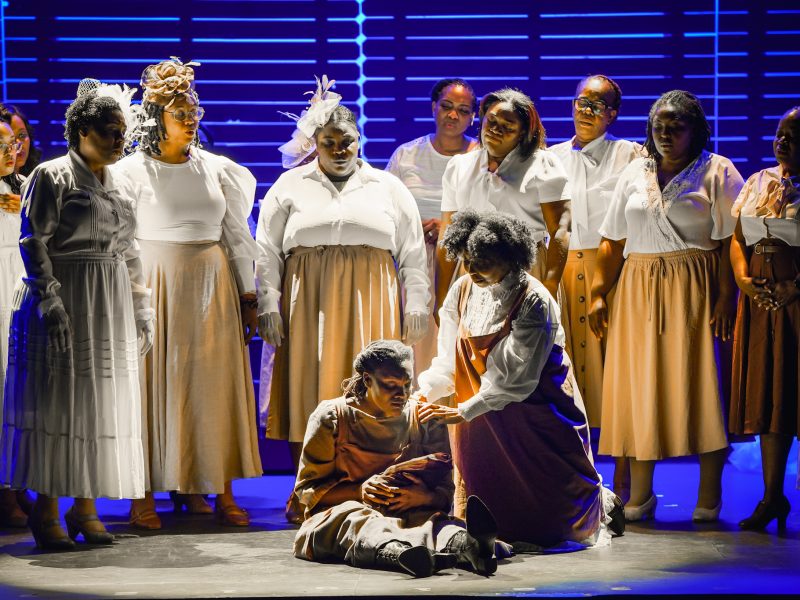
Powerful performances drive Theatre Albany’s ‘The Color Purple’
From the street, strands of purple ribbon wind around the white columns of the historic theater, hinting at the story waiting beyond its doors. Inside the foyer, a carefully curated slideshow flickers across a large screen, cycling through the faces of the cast. Some are seasoned performers. Others are stepping onto a stage for the very first time. Teachers stand alongside former students. Parents perform beside their children. People who worship in different churches, work different jobs and come from different corners of Southwest Georgia gather beneath the same lights to tell the same story.
