
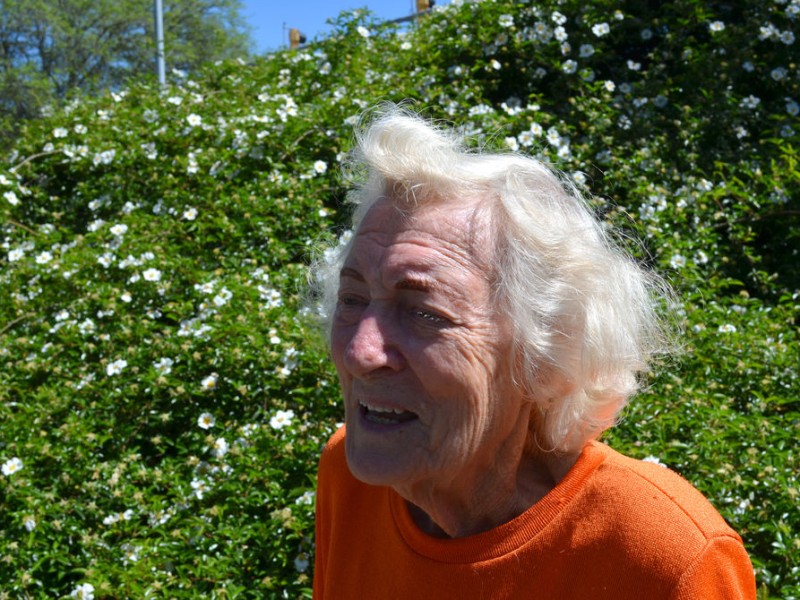
Elizabeth Nichols proudly displays huge Cherokee Rose bush
Albany history lover, 89, relates story of Georgia’s state flower
By Carlton Fletcher
ALBANY — Elizabeth Nichols is not clear on the exact date she transplanted the Cherokee Rose cutting at the corner of her Pine Avenue property. She did, after all, just turn 89.
“It had to have been 30 to 35 years ago when I got this little cutting that was maybe 18 inches to 2 feet long,” Nichols said. “I got it on a trip to Savannah. If you follow history, which was always a passion of mine, you might know that the first Cherokee Rose plants that were brought to what is now Georgia were brought to Savannah from China by workers who came to our country before Georgia was even a state.”
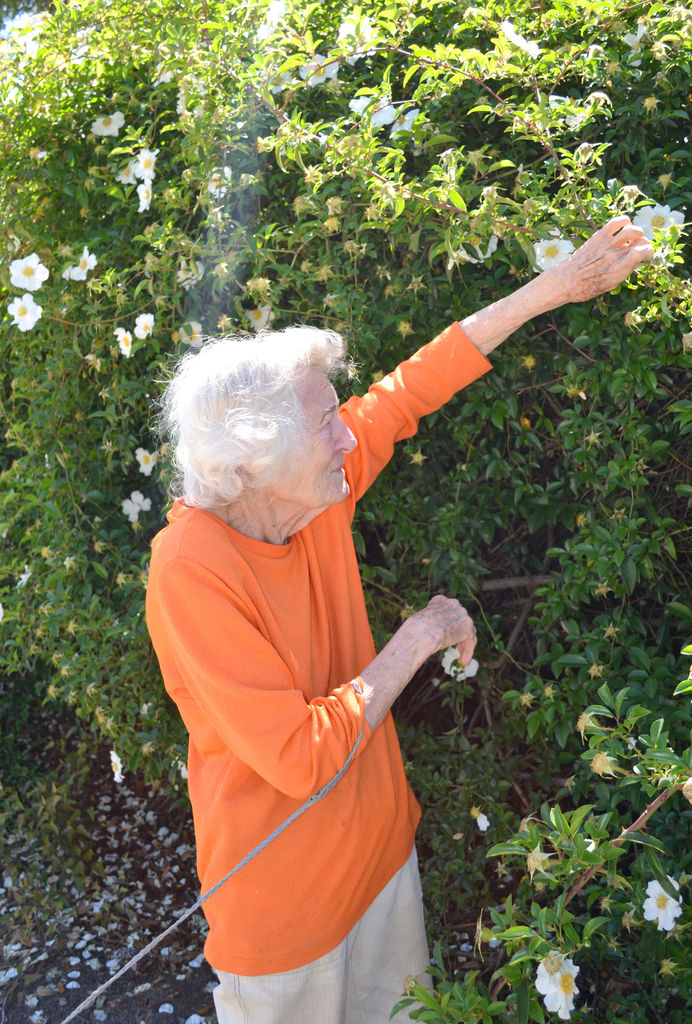
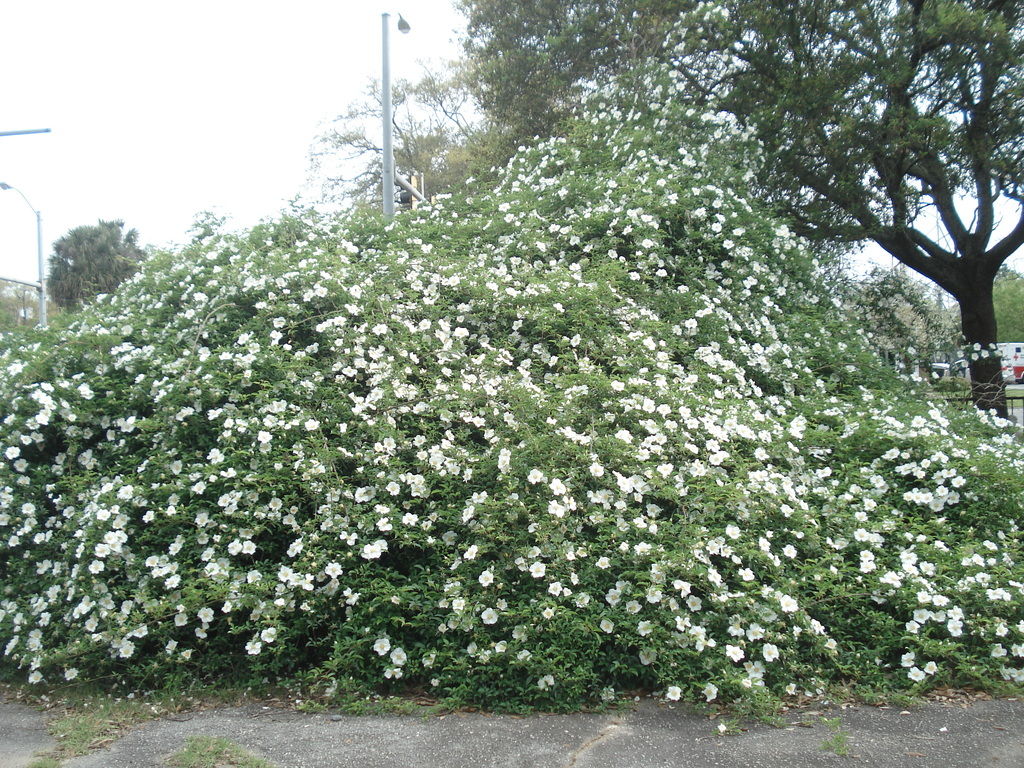
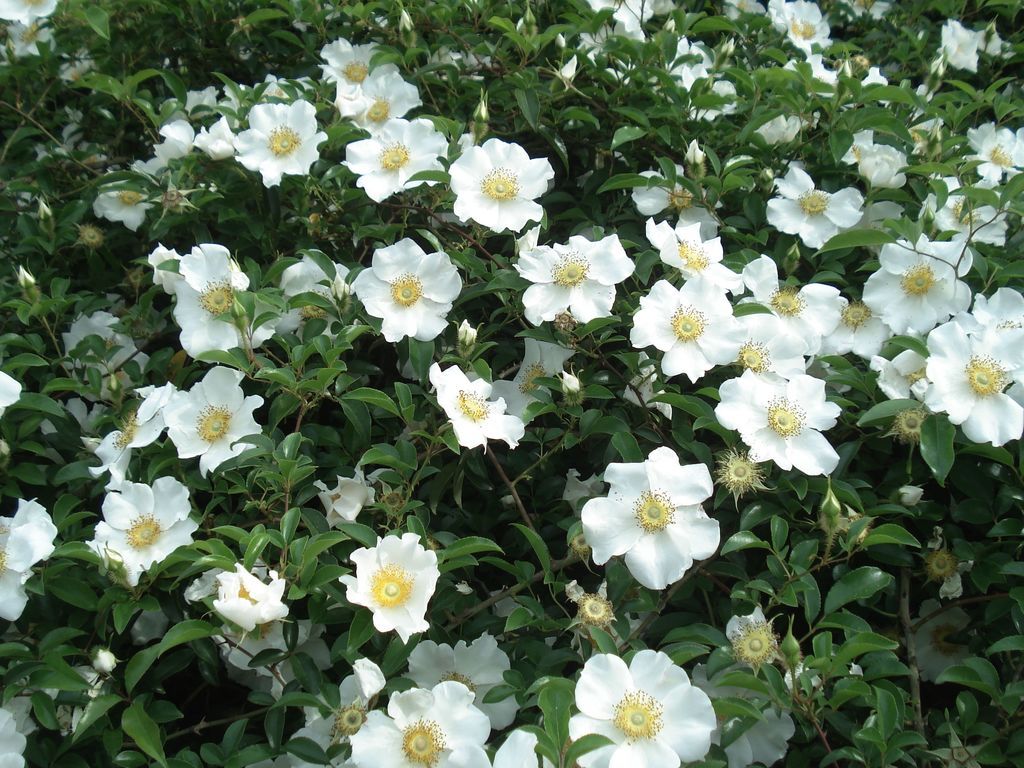
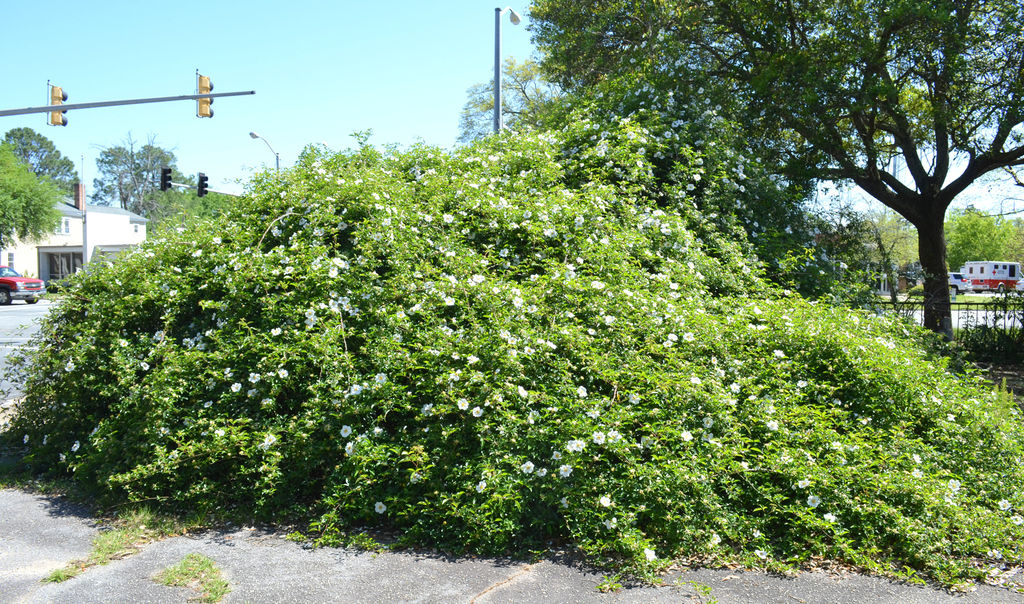
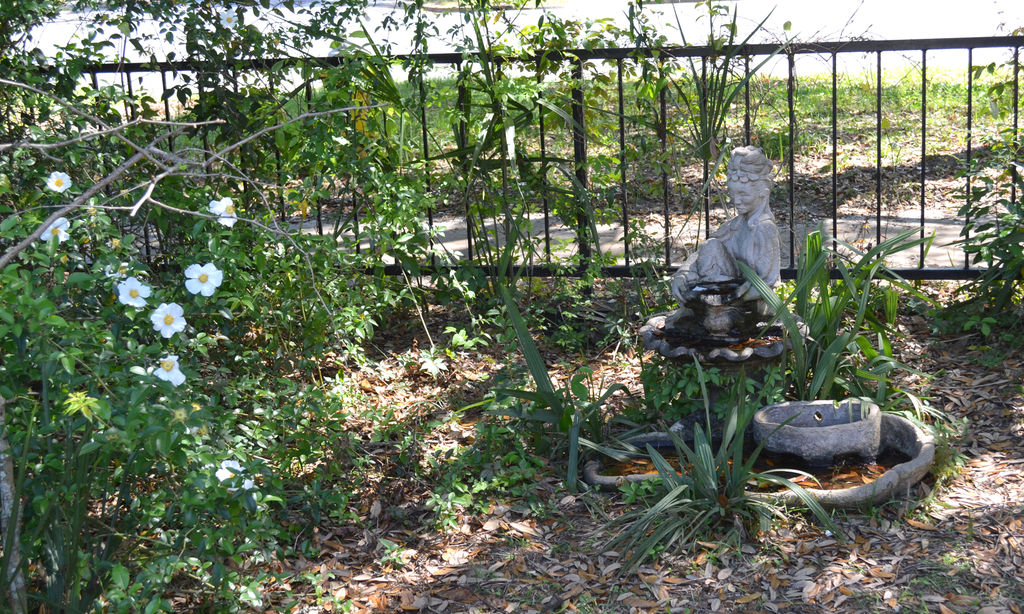
Nichols’ little cutting has grown into a gigantic Cherokee Rose bush that takes up a space roughly 10 feet long and 14 feet deep in the corner of her yard, climbing as high as 12 feet above the ground. The bush recently burst into a palate of stark white and bright gold as thousands of flowers marked the peak early-spring blooming season of the Cherokee Rose.
“The flowers won’t be here very long; the Cherokee Rose has a very short blooming season,” said Nichols, who has retired now but once owned the Trinity Travel agency that allowed her ample opportunity to see the world. In fact, the Cherokee Rose played a part in a trip she made to China.
“We were admiring the Cherokee Roses there, and I broke off one of the flowers,” Nichols says with a laugh. “Some of the people were looking at me horrified, as if I was guilty of some great sin. So I held that flower up and said, ‘Ladies and gentlemen, let me introduce to you the Cherokee Rose, the state flower in my home state of Georgia.’”
Even as she nears 90, Nichols still cuts back her gigantic Cherokee Rose frequently on the southwest corner of its growth. There, she’s located a flowing fountain that provides water for her pets and for the wild chickens that she feeds daily.
“I have to keep the bush cut back on this side so that it doesn’t keep the animals from getting to the water in my fountain,” she said. “The city has also cut the plant back as its grown out onto the sidewalk. I think a lady in a wheelchair was having trouble getting by where the plant was growing onto the sidewalk, so city crews came and cut the plant back.
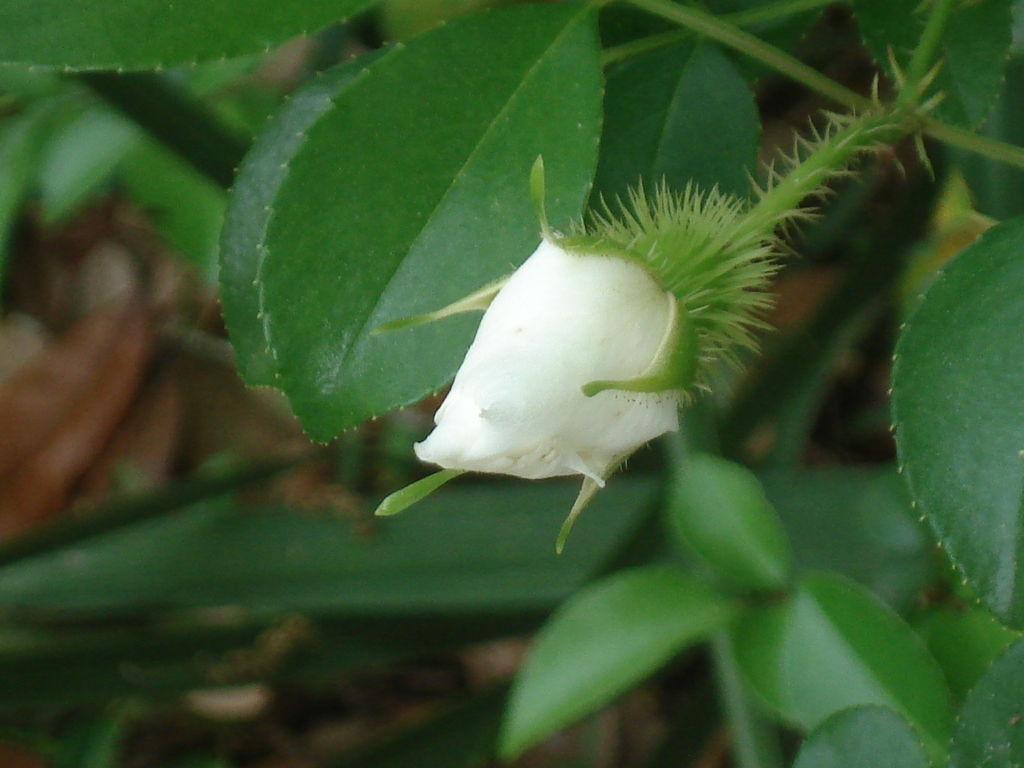
“I went out and asked them what they were doing, and they said they were clearing a path for sidewalk traffic. I have no problem with that. This bush has some pretty significant thorns on it.”
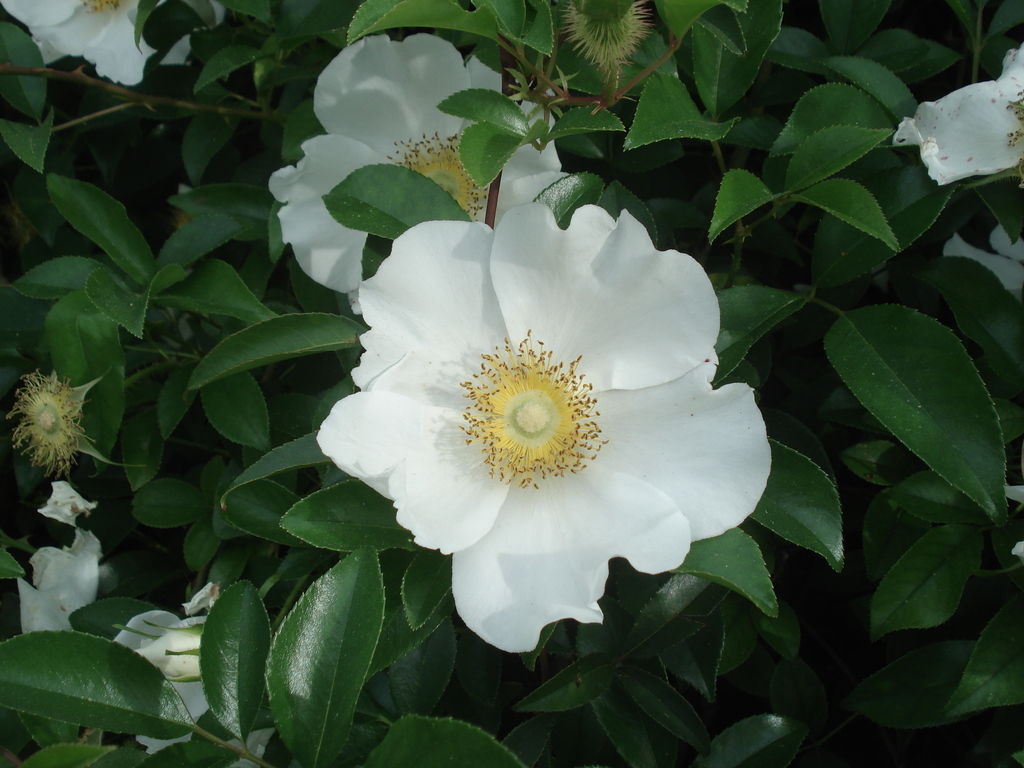
Georgia’s state flower, which is characterized by its small white petals and bright yellow centers, has a significant history. It arrived in the U.S. in the mid-1700s and got its name because it was planted copiously by the Native-American Cherokee tribe in north Georgia.
During the so-called “Trail of Tears” of 1838, in which thousands of Cherokees were forced out of Georgia and other Southern states onto reservation land, Cherokee lore said that everywhere a Cherokee woman’s tear dropped onto the earth, a Cherokee Rose bloomed.
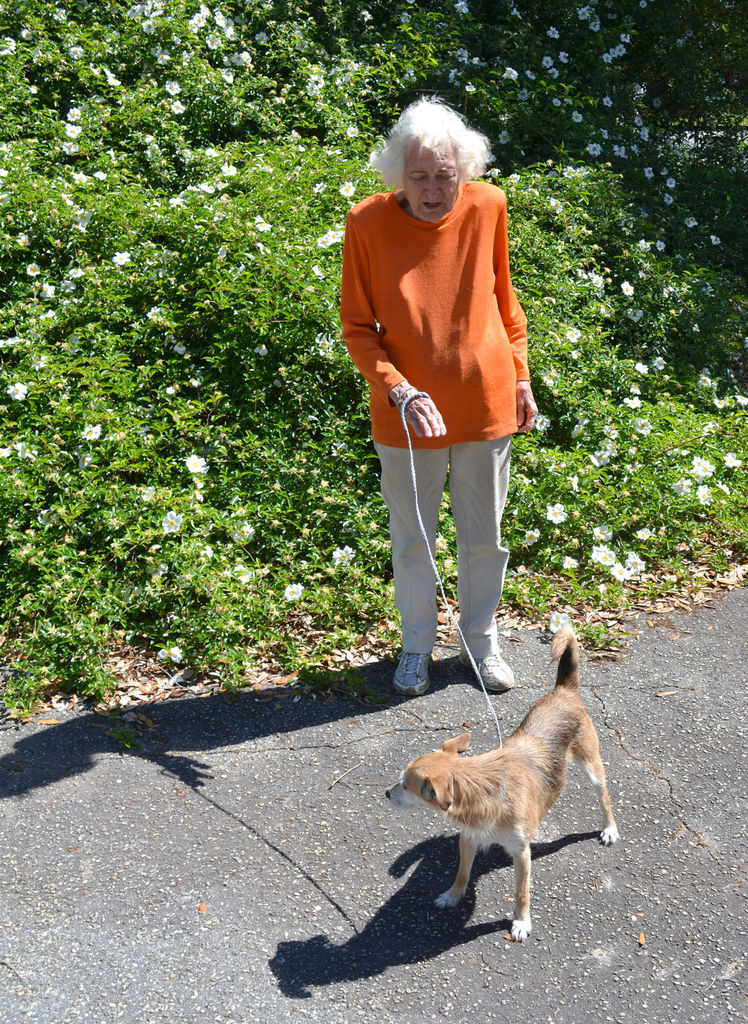
Nichols, who was born in Dodge County but spent much of her childhood with her large sharecropper family in Wilcox County, ran Trinity Travel out of her home and worked with Albany Travel before retiring. She and her 15-year-old mutt Cody regularly stroll around her downtown Albany neighborhood and look after the wild chickens that spend most of their time in her yard.
“I’ve seen any number of people come out and get a cutting off that vine over the years,” she said. “I don’t mind. It doesn’t take much, and — as you can see — you can have a pretty significant bush growing in your yard. The flowers don’t stay with us long, but when they’re here, they’re really beautiful.”
Author

Related Articles

‘Sounds Like a Mutiny.’ Secret Recording Exposes Claims of Toxic Leadership After a Marine’s Suicide
This week’s War Horse story follows the systemic failures before and after the death of Cpl. Drew Mobley who was the third in two years at Marine Corps Base Quantico to die by suicide.
Southwest Georgia artists recognized at packed opening of exhibition
The annual juried exhibition, one of the region’s largest showcases of visual art, features approximately 46 artists and nearly 90 works spanning painting, sculpture, ceramics, photography and mixed media.
Powerful performances drive Theatre Albany’s ‘The Color Purple’
From the street, strands of purple ribbon wind around the white columns of the historic theater, hinting at the story waiting beyond its doors. Inside the foyer, a carefully curated slideshow flickers across a large screen, cycling through the faces of the cast. Some are seasoned performers. Others are stepping onto a stage for the very first time. Teachers stand alongside former students. Parents perform beside their children. People who worship in different churches, work different jobs and come from different corners of Southwest Georgia gather beneath the same lights to tell the same story.
