
Historic walk celebrates King’s time in Albany
Freedom torch was passed to Albany State University students
By Cindi Cox
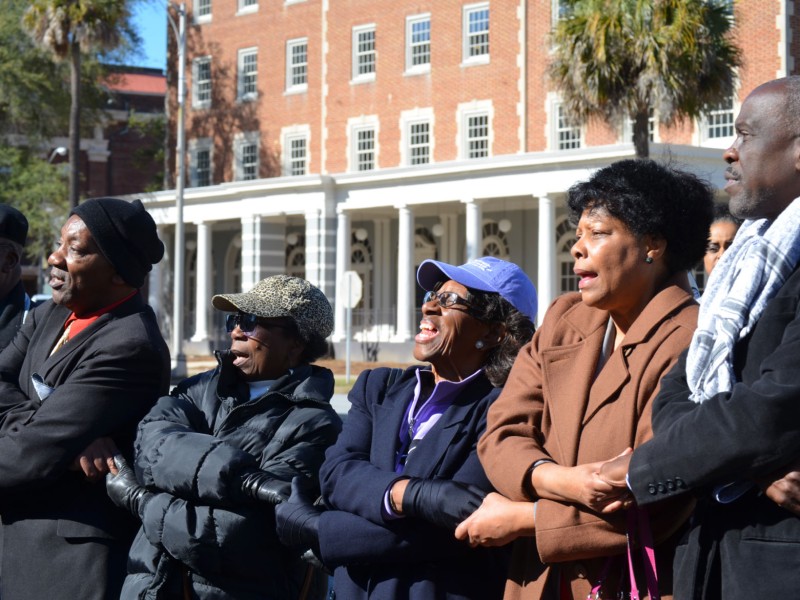
ALBANY — A crowd gathered at the old Mt. Zion Baptist Church on Monday to honor Martin Luther King Jr.’s memory, first with a short presentation and then with a walk along the path King once took from adjacent Shiloh Baptist Church to the old jailhouse where he and other activists were incarcerated for participating in a civil rights demonstration.
Monday’s walk was the third re-enactment held to remember, celebrate and commemorate the time King came to Albany to show his support to local civil rights leaders and activists. That journey went down in history as a forerunner to some of the bigger and more well-known marches King led in the weeks, months and years following his time in Albany.
The walk was organized by the Rev. Henry Mathis. The theme was “Passing the Torch,” and Albany State University students played a key role in accepting that challenge by representing the next generation of young people chosen to carry on King’s dream, ideals and legacy.
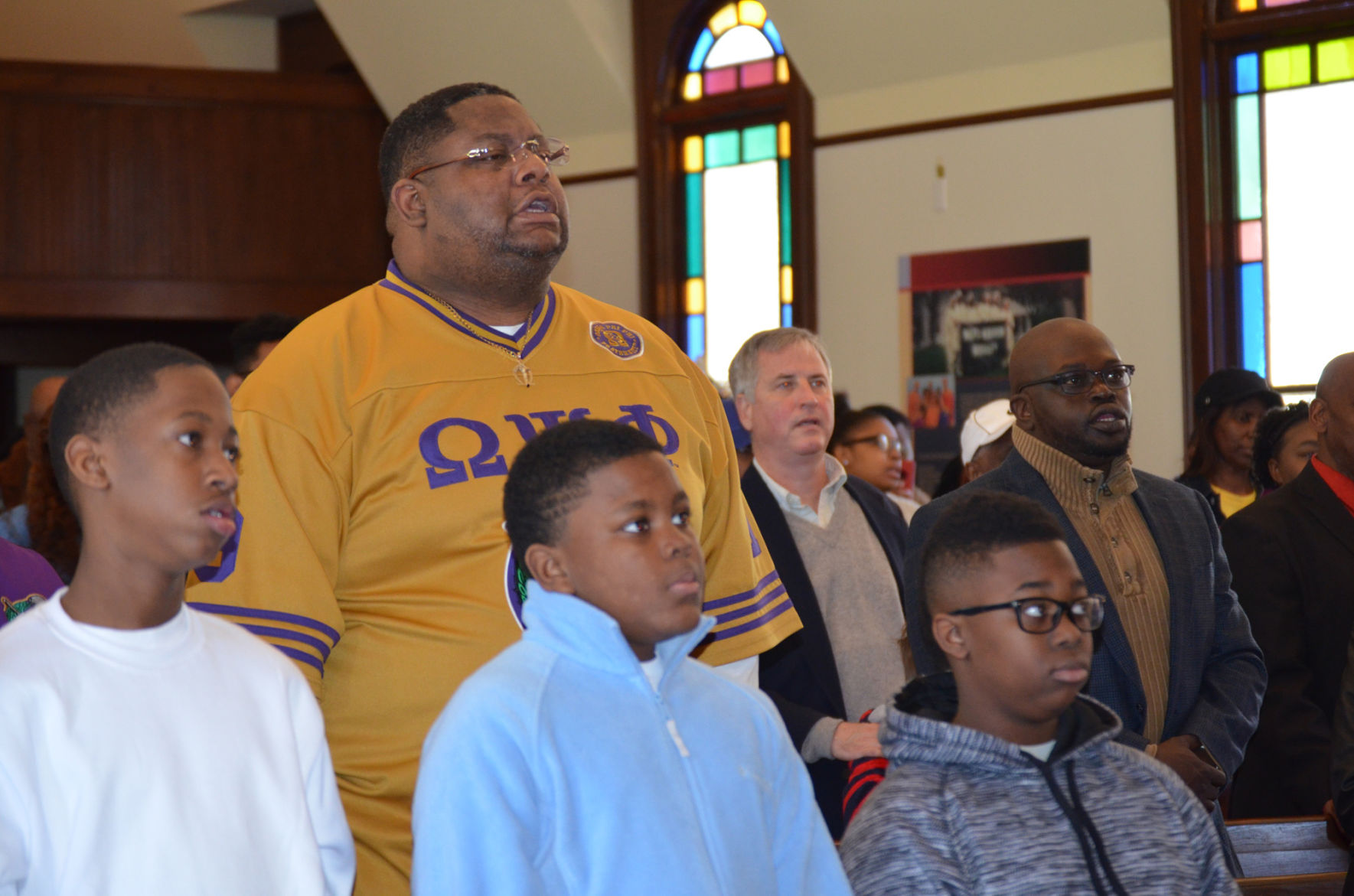
The walk was preceded by a short service inside the old Mt. Zion Baptist Church that is now part of the Albany Civil Rights Institute. It is located directly across the street from Shiloh Baptist Church, where the original walk with King began.
Kenneth Cutts, staff representative for District 2 U.S. Rep. Sanford Bishop, was the first to greet the crowd that gathered in the church.
“We can’t know where we are going if we don’t know where we have been,” Cutts said.
Another speaker, the Rev. James Bush, said he had been shaking peanuts, pulling corn and picking cotton before King came to Albany.
“I didn’t know where the road was headed, but today I owe everything to these people and to Dr. Martin Luther King,” Bush said. “If not for them, I would probably still be a sharecropper in Miller County.”
Mathis talked about the Albany Movement and how he, as a child, had walked with his grandparents and other family members when King came to town. Mathis said that his mother tied a package around his waist with soda crackers and peanut butter — just in case he got arrested and got hungry in jail. Mathis was not arrested that day — although some were. Instead, he said that a police officer gave him 25 cents and told him to get on home.
“We were all prepared to go to jail that day,” Mathis said.
On this day in 2018, more than five decades later, police on motorcycles directed traffic and escorted the walkers.
Original Freedom Singer Rutha Harris was among those leading the walk. Using a bullhorn, she sang out the freedom songs from a bygone era. The songs were sung as participants weaved their way to the Charles Sherrod Civil Rights Park. From there, they crossed Oglethorpe Boulevard into Freedom Alley, which led the marchers to Pine Avenue. They ended up at the location of the old jailhouse, next to the Albany Government Annex building.
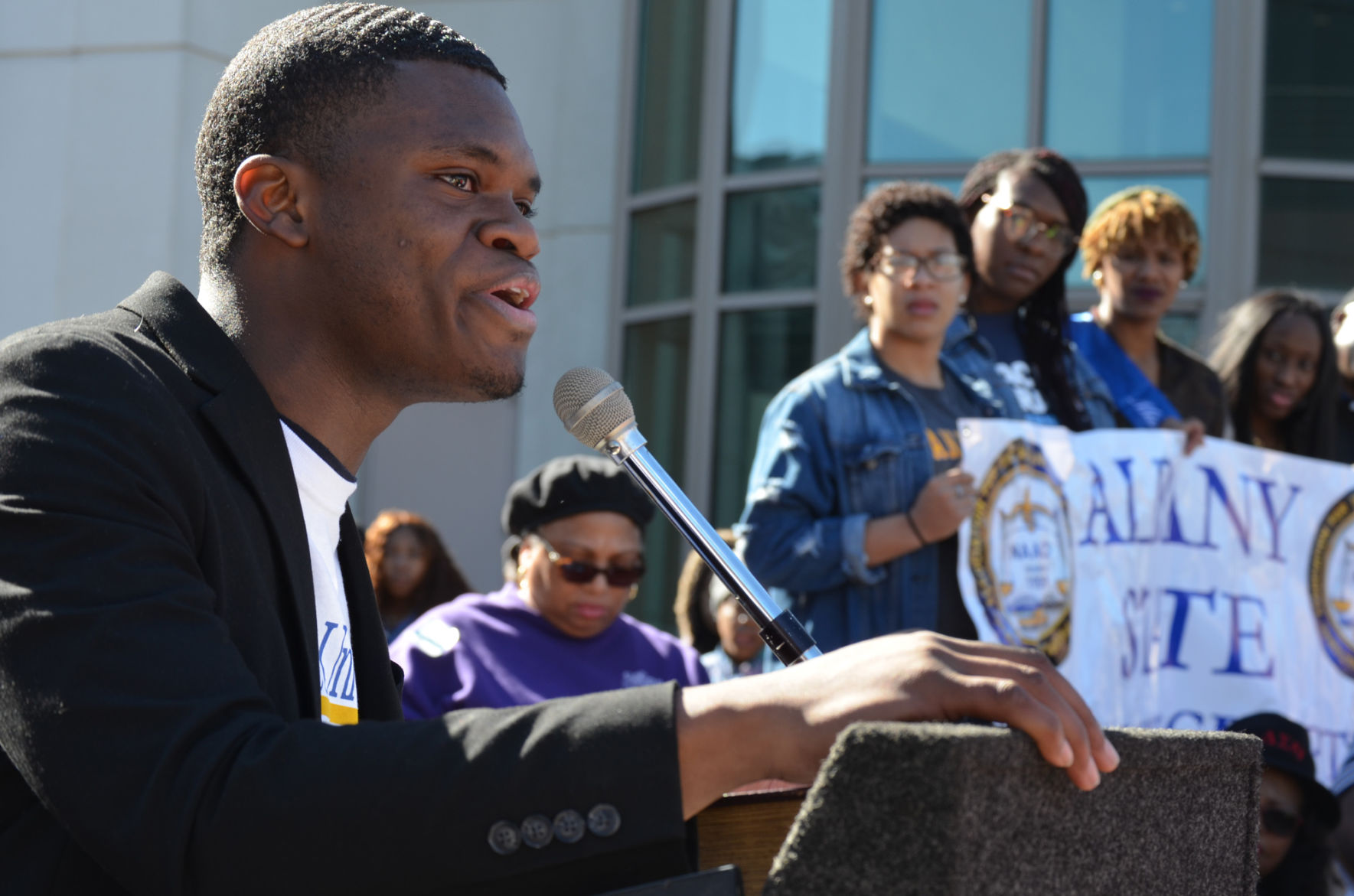
Albany State Student Government Association Executive Coordinator Alexandria Sims said she didn’t pay too much attention to King or to civil rights when she was younger, but now she is beginning to understand the history and its significance in her own life and in the lives of those in her generation who now are being called upon to keep living out King’s dream.
“Passing that torch from older to younger and newer leaders means everything to me now, and I think it is very important that we continue to educate ourselves to civil rights history and current civil rights issues,” Sims said. “We can never forget our past. We may tend to take it for granted, but we should remember that these older civil rights leaders fought for us. And now we must pass that information down.”
Local attorney Ken Hodges brought two young children with him to the service and the walk. Asked how important it is to pass on King’s legacy, Hodges said it is “critically important.”
“We don’t live in a time like the 1960s, thankfully, but we do need to understand what it was like because we don’t ever want that history to repeat itself,” the attorney said. “Children can grow up now and appreciate diversity and equality regardless of race, faith or gender.”
At the end of the walk, Mathis spoke of the challenges King faced and the challenges young people face today — from black-on-black gun violence to poverty and AIDS. He spoke of the role faith played in King’s life and in the lives of others who set out to become change agents.
He encouraged attendees to stand tall and never bow down to the ways or the evils of the world, but instead to believe in and work for a greater cause.
“When faced with the music of this world, don’t bow down. Don’t dance to it,” said Mathis.
During the ceremony, student leaders accepted a large book symbolizing the torch of the future.

Related Articles

From cotton to cloud: In the data center debate, is rural Georgia once again being asked to carry the cost?
Across much of rural Georgia, the abandoned cotton warehouses and shrinking tax bases remain — enduring reminders that industries built to serve distant markets do not necessarily stay rooted in the communities that first sustained them.
My Grandpa Was Killed in World War II. I Met Him Through His Letters Home
Gina Wolf’s grandfather died before she was born. His letters sent to her grandmother from Europe during World War II made it possible to know what kind of man he was.

‘Sounds Like a Mutiny.’ Secret Recording Exposes Claims of Toxic Leadership After a Marine’s Suicide
This week’s War Horse story follows the systemic failures before and after the death of Cpl. Drew Mobley who was the third in two years at Marine Corps Base Quantico to die by suicide.
