EDDIE SEAGLE: Give the ginkgo a chance
GEORGIA CLIPPINGS: A weekly look at home gardens and landscapes
By Eddie Seagle
“The ginkgo tree is from the era of the dinosaurs, but while the dinosaur has been extinguished, the modern ginkgo has not changed. After the atomic bomb in Hiroshima, the ginkgo was the first tree that came up. It’s amazing.”
— Koji Nakanishi
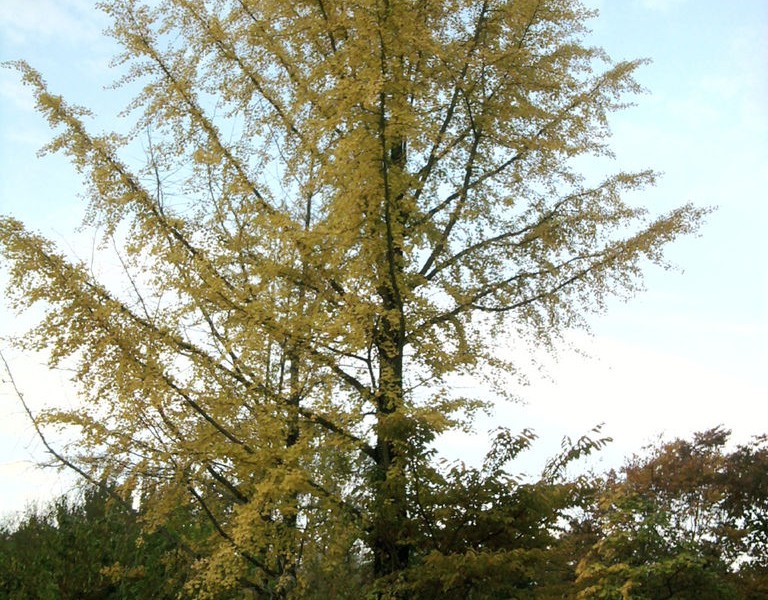
If you looking for an awesome tree, consider the ginkgo. The common ginkgo (Ginkgo biloba) is a large tree, usually reaching a height of 60–120 feet, with some specimens in China being over 160 feet. These trees have angular crowns, long and erratic branches, deep roots and are resistant to wind and weather damage. Young trees are often tall and slender and sparsely branched, with the crown broadening as the tree ages. During the fall, the leaves turn a bright yellow, then drop (sometimes within 15 days). A combination of its resistance to diseases and insects and its ability to form aerial roots and sprouts makes the ginkgo long-lived, with some specimens appearing to be over 2,500 years old.
Ginkgo is one of the oldest living tree species (dating back many centuries) known to society and its leaves are among the most extensively studied herbs in use today. In Europe and the United States, ginkgo supplements are among the best-selling herbal medications, and it consistently ranks as a top medicine prescribed in France and Germany. Ginkgo has been used in traditional medicine to treat blood disorders and enhance memory. Its leaves contain two types of chemicals (flavonoids and terpenoids) believed to have potent antioxidant properties.
The ginkgo (also known as maidenhair tree) makes a remarkable feature in any garden and is renowned for its spectacular yellow autumn display of color. They are often seen as large trees in parks and gardens. However, many varieties of Ginkgo biloba are grown that are suitable for smaller gardens and courtyards. Also, the ginkgo is well-suited for growing in containers where they will survive for many years with minimal attention and occasional feeding.
Cultivated ginkgos are easy to maintain and will grow in most conditions from sun to shade. The ginkgo tree is very hardy and often makes an excellent alternative to the Japanese maple. The forms available vary from the dwarf varieties such as Ginkgo biloba Troll which is very small to the larger, columnar trees such as Gingko biloba Tremonia. This tree offers a size and shape for almost every garden.
In nature, the ginkgo is a tall tree with a wide mature crown. Across many centuries, a number of unique traits have been recognized and cultivated, thus many cultivars displaying a host of sizes, shapes and appearances are available today. The ginkgo can be divided into five primary crown types including normal or standard, weeping or pendulous, upright or fastigiated, dwarf form and a branch form with aerial root bulges and modified foliage. These foliage variations include rolled tubular leaves, variegated leaves, a leaf and seed-stem fused foliage, among others.
Since many people find the messiness and smell of the female tree’s fruits objectionable and/or repulsive, the male (non-fruiting) varieties are most widely planted as shade, street or park trees. Also, rather than growing trees from seed and waiting years for them to flower and learn their gender, gardeners can propagate male trees from cuttings that are grafted onto other tree’s roots.
The ginkgo prefers deep, sandy soils with moderate moisture and is adaptable to a range of pH levels. It prefers full sun and is tolerant of pollution, salt air and heat. Pruning is best performed in the spring and this tree is relatively pest-free.
Landscape uses include planting as a specimen tree for large open areas, as a shade tree and possibly as a street tree (depending on the cultivar). Only male species should be planted since female plants have such a foul-smelling fruit. Ginkgos can be slow to become established following transplanting.
Names of tall, upright-growing, nonfruiting trees include Autumn Gold, Princeton Sentry, Chi-Chi, Magyar, Elmwood, Saratoga and Shangri-La. Any trees labeled Fastigiata or Variegata must be mature enough to distinguish the gender.
With exceptionally short branches and a dense display of foliage, some varieties of ginkgo mature into a more shrub-like form. These dwarf varieties are very slow growing and are ideal in small-sized landscapes as a shrub specimen or conversation piece. Jade Butterfly and Thelma are two dwarf selections which (after several decades of healthy growth) mature 8 to 15 feet tall and 6 to 10 feet wide, becoming more like a small tree after considerable time but as a shrub in the interim. Todd’s Witches Broom (also Todd’s WB) is a true ultradwarf, growing 3 to 4 feet tall and 3 to 4 feet wide, and Troll will reach 3 feet in height and is very compact with slow growth.
Much variation occurs on ginkgo trees included in the variety Pendula. Weeping ginkgo trees rarely demonstrate strongly pendent branches. Their branches actually have drooping tips or branches that grow horizontally rather than the typical upward-angled. Both male and female weeping trees exist, thus their sexual identity is only known after many years, once flowers are seen and if any fruits develop.
Cultivars include Autumn Gold (26 feet tall with an open, pyramidal habit and specimen tree), Tremonia (20 feet tall with a narrow columnar habit and specimen tree), Fairmount (16 feet tall with slender growth adding height in limited area), Jade Butterflies (13 feet tall with bushy growth and specimen tree, pot or ground) and Saratoga (13 feet tall with pyramidal growth and attractive leaves in pot or ground).
Also, Horizontalis (5 feet tall with horizontal habit and ideal in a pot or planted), Mariken (5 feet tall with dense compact growth and planted in pot or ground), Barabits Nana (6 feet tall with dense bonsai habit and great in container), Tubifolia (6 feet tall with open architectural habit and in pot or ground), Beijing Gold (10 feet tall with bushy dense growth and best in dappled shade), California Sunset (10 feet tall with yellow variegated leaves and best in dappled shade), Chi-Chi (10 feet tall with bushy dense growth and ideal for pot on patio), Pendula (over 10 feet tall with arching architectural habit and in pot or ground), Variegata (10 feet tall with slow open growth and best in dappled shade) and Weeping Wonder (10 feet tall with very weeping growth and in pot or ground).
Looking for an awesome tree, then look no further. Give the Ginkgo a chance! However, be sure to deal with a reputable grower or garden center to insure receipt of the male species and not the female because of the messiness and smell of the fruit.
Always think in terms of native and sustainable plants in the landscape. Keep your hanging baskets and potted plants refreshed with water and food.
Remember to feed and water the songbirds. Give your pets the care they need. Do not leave them unattended in a hot car or tied to a tree all day long. Also, be on lookout for children playing and bicyclists riding along the streets and roadways throughout our communities. Don’t drive distracted or impaired, and don’t text while driving. Help the homeless every chance you get. Let’s keep everyone safe!
“When Jesus had finished saying these things, the crowds were amazed at his teaching, because he taught as one who had authority, and not as their teachers of the law.” Matthew 7:28-29.
Eddie Seagle is a sustainability associate, Golf Environment Organization (Scotland); agronomist and horticulturalist, CSI: Seagle (Consulting Services International); professor emeritus and honorary alumnus, Abraham Baldwin Agricultural College, and associate editor of The Golf Course, International Journal of Golf Science. Direct inquiries to [email protected].