
Litigation against city of Albany is about managing risks
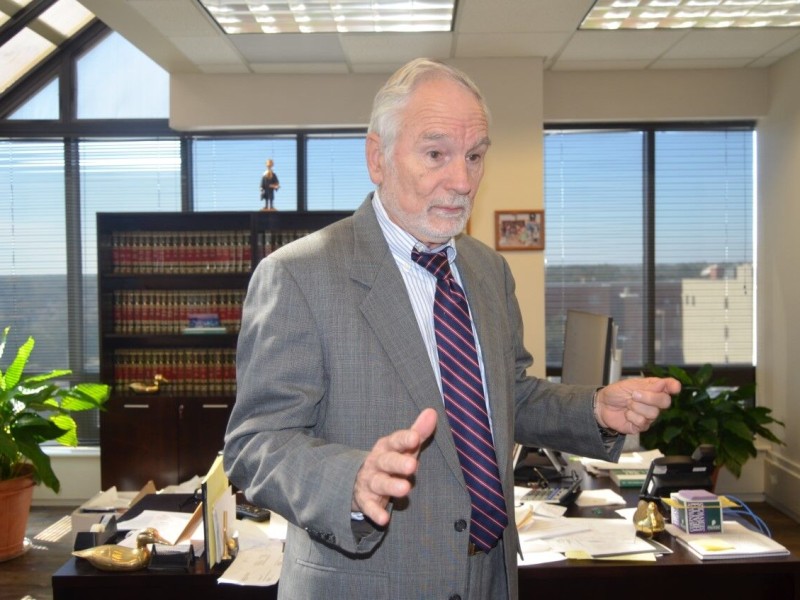
File Photo
By Carlton Fletcher
[email protected]
ALBANY — After settling eight “major” lawsuits ($500 or better) for $42,475.05 in 2019, most related to traffic accidents, the city of Albany paid $438,150 to settle nine such suits in 2020, and $3,620,444.77 to settle six in 2021, the overwhelming majority of the latter total coming from a $3.5 million settlement for a car wreck involving an Albany Police Department officer.
The decision to settle lawsuits, which are brought frequently by people who see the city government as a relatively easy target, ultimately is made by the Albany City Commission, but the choice of recommending settlement a possible suit or taking it to court falls under the jurisdiction of the city’s director of human resources and risk management, Veronica Wright, and Albany City Attorney Nathan Davis.
The pair, who say they’ve never disagreed on an ultimate decision made to settle suits brought against the city, meet with risk management staff — which includes investigators who dig into the details of each claim — weekly to determine whether fighting a battle in court or settling a suit better serves the interest of taxpayers. And while the large majority of complaints brought against the city involves small claims that are easily proved or disproved, when it comes to the possibility of a large settlement being handed out by a jury, the true art of risk management comes to the fore.
“What you have to remember is that contentious litigation can be costly,” Davis, an attorney who has served as the city’s top litigator since June of 2003, said. “In most such cases, when you consider special damages and pain and suffering, it’s usually best to try and negotiate a settlement.”
It helps, says Wright, who has served as the city’s HR/risk management director since January of 2009, when the people making such decisions are as like-minded as she and Davis.
“We may initially have different viewpoints, but once we meet with staff and talk over the specifics of a particular incident, we have always been able to come to a decision jointly,” Wright said. “Then you get into negotiations.
“Negotiations are a very important part of risk management. Now when it comes time to negotiate, the opposing attorney may be an old classmate of mine or someone Nathan met at a seminar and they got along well. That’s often how we decide who will negotiate a settlement. But in any case, the facts are what they are; they’re cut and dried. We try to get to them and get a case off the books as quickly as we can.”
The pair knows all too well, though, how a case can go sideways once it makes its way into a court of law. They need only look at the so-called “Brick City” case that involved the Valentine’s Day shooting death of LeSheldon Stanford at the Brick City facility that was licensed as a recording studio but had been cited a number of times for illegally selling alcohol.
Sheryl Stanford and Wilfred Foster, as executors of LeSheldon Stanford’s estate, sued the owners of the establishment, the persons involved in the incident that cost Stanford his life, and the city of Albany. When a Dougherty County Superior Court jury returned a $15.2 million verdict in the case, the city found itself facing a $10.64 million payment.
The case was eventually overturned on appeal, a final ruling by the state Supreme Court being handed down in July of 2019. Still, the city paid the firm it contracts with to try such cases — the Atlanta-based Freeman, Mathis, Gary LLP firm — $450,681 for its work on the case.
“That’s a big fee, but it ended up being a good return on the city’s investment when you look at an eight-figure settlement that we were facing,” Davis said. “We knew we had a strong case; if we were determined liable for that kind of incident, we’d have to control the property of every business we issue a certificate of occupancy (business license).”
The city is facing a similar suit in a recent incident that occurred at the Sand Trap night club.
Wright points out that the city has an insurance policy that leaves the carrier responsible for paying a large part of any claims against the city.
“But it’s like any other kind of insurance: If you have a lot of claims against you, you’re going to end up paying a higher premium,” she said. “We’re fortunate that our (insurance) broker has negotiated an agreement with a carrier that has insured us for a number of years.”
Wright and Davis said they had to weigh the considerable pros and cons against settling with a driver who was hit by an APD officer who was responding to an emergency call last year and was involved with an accident at an intersection. Both the officer and the driver of the other vehicle insisted they had the green light at the intersection, and the Georgia State Patrol Trooper who investigated the accident said there was no way of determining who was at fault and did not issue a citation.
The citizen driver filed suit, and the risk management team decided a settlement of $3.5 million was the best option for the city.
“It just wasn’t a clear-cut case,” Wright said. “With the State Patrol ruling that they could not determine who was at fault and with a passenger in the (car driven by the civilian) claiming severe injuries that were going to exceed $700,000 in treatment, we thought the circumstances warranted a settlement.
“We negotiated back and forth before coming to an agreement on the amount.”
Accidents are a part of life, especially, as Davis notes, when the city provides so many utilities services to its citizens, but Wright said all employees go through extensive training before and after they are allowed to drive city vehicles.
“All of our employees go through quarterly training,” she said. “A six-hour defensive driving course also is mandatory for all employees.
“If an employee has an accident, he or she must take a remedial course. But if it is determined by our review board that the incident could have been avoided if the employee followed proper procedures, they could face corrective measures up to termination. That goes for a second and third incident over a three-year period as well. If there is a fourth incident within that three-year period, that calls for automatic termination.”
Davis still handles some of the smaller claims in court, as well as city condemnation cases, but he says that most litigation that can’t be settled is handled now by the Freeman, Mathis, Gary firm.
“I used to be more involved in the litigation, but we now have only one city attorney — me — on staff,” he said. “There’s just no time for me to be tied up in court.
“But realistically, as we’ve seen, it’s always better to try and settle a case. It’s a risk not to. If things go to court, it can get bare-knuckled. And, as we’ve seen, when you get in a courtroom, there are no slam-dunks.”

Author

Related Articles

‘Sounds Like a Mutiny.’ Secret Recording Exposes Claims of Toxic Leadership After a Marine’s Suicide
This week’s War Horse story follows the systemic failures before and after the death of Cpl. Drew Mobley who was the third in two years at Marine Corps Base Quantico to die by suicide.

Southwest Georgia artists recognized at packed opening of exhibition
The annual juried exhibition, one of the region’s largest showcases of visual art, features approximately 46 artists and nearly 90 works spanning painting, sculpture, ceramics, photography and mixed media.

Powerful performances drive Theatre Albany’s ‘The Color Purple’
From the street, strands of purple ribbon wind around the white columns of the historic theater, hinting at the story waiting beyond its doors. Inside the foyer, a carefully curated slideshow flickers across a large screen, cycling through the faces of the cast. Some are seasoned performers. Others are stepping onto a stage for the very first time. Teachers stand alongside former students. Parents perform beside their children. People who worship in different churches, work different jobs and come from different corners of Southwest Georgia gather beneath the same lights to tell the same story.
