
MARY BRASWELL: Looking Back at National Library Week, first observed in 1958
HISTORY: In the mid-1950s, Americans were spending less on books, more on radios, TV and musical instruments.

By Mary Braswell
Each week Albany Herald researcher Mary Braswell looks for interesting events, places and people from the past. You can contact her at (229) 888-9371 or [email protected]. Follow @ABH_MBraswell on Twitter.
In 1957, a plan was developed for National Library Week based on the idea that once people were motivated to read, they would support and use libraries. The first National Library Week was observed in 1958 with the theme, “Wake Up and Read!” National Library Week was observed again in 1959, and the ALA Council voted to continue it as an annual celebration. When the National Book Committee disbanded in 1974, ALA assumed full sponsorship.
IN THE BEGINNING
— There were parish (parochial) libraries open in Anglican churches all over the American colonies. The Society for the Propagation of the Gospel in Foreign Parts, founded in 1701, subsidized libraries as a regular part of their missionary activity whenever they sent a priest to an Anglican mission or church that did not have a library already.
— Aside from the church libraries, during the early years of the colonies, only the wealthy had access to books. These privately owned volumes were not loaned to the general public.
— On July 1, 1731, Benjamin Franklin and a group of members from the Junto, a philosophical association, drew up “Articles of Agreement” to form a library.
— Primarily because of Ben Franklin’s efforts, The Library Company of Philadelphia was founded and is considered the first “modern” library.
— Franklin’s subscription library allowed members to buy “shares” and combined funds were used to buy more books; in return, members could borrow books and use the library. Today, the Library Company continues to exist as a nonprofit, independent research library.
— A town in Massachusetts named itself Franklin after the famous Pennsylvanian. For this honor, Franklin donated 116 books to the town instead of a requested church bell. In 1790, at a Franklin town meeting, it was decided to lend the books to all Franklin inhabitants free of charge, and this small collection can therefore be considered the first free public library in the United States.
— Many other locations began offering public use of books. The first free public library supported by taxation in the world was the Peterborough, N.H., Town Library, which was founded at town meeting on April 9, 1833.
— The first free continuous children’s library in the United States was founded in 1835 in Arlington, Mass.
— New York attorney and former governor Samuel J. Tilden, upon his death in 1886, bequeathed the bulk of his fortune, about $2.4 million, to “establish and maintain a free library and reading room in the city of New York.” Such a library has no equals in America.
CARNEGIE LIBRARIES
— Andrew Carnegie was born in Scotland. His family came to America when he was just a boy of 13, after which he received no further education. His first job in the new country was as a bobbin boy at a cotton factory. He earned $1.20 per week.
— Carnegie was ambitious and hard-working and found work with the Pittsburgh division of the Pennsylvania Railroad. He later became the division supervisor, all the while investing in coal, iron and oil companies.
— After leaving the railroad business in 1865, Carnegie co-founded his first steel company in the early 1870s.
— In 1901, he sold the Carnegie Steel Company to J.P. Morgan for $480 million and set about giving away much of his wealth.
— In addition to a gift of $1.1 million for the land and construction of Carnegie Hall and 7,600 organs to churches worldwide, Carnegie provided funding for more than 2,500 public and academic libraries.
— Georgia received 20 grants which funded 24 public libraries and five academic libraries for a total amount of $613,756. One such library is right here in Albany. The building now serves the Albany Area Arts Council on Jackson Street.
BOOKMOBILES
— Called a library wagon, the first such service in the U.S. was the idea of Mary Lemist, a librarian in Washington County, Md., in 1905. The specially-designed wagon was driven by the public library’s janitor.
— The first motorized book delivery vehicle was put into service in 1912.
— It was around 1929 that the term “bookmobile” was commonly used to describe the moving library.
— During the Great Depression, women were employed by the Works Progress Administration to carry books to rural areas of the country by way of pack horses.
— By 1944, there were 300 bookmobiles in 41 states.
— The number of bookmobiles in the U.S. jumped to 900 by 1956.
— In 1970, bookmobiles totaled 2,000.
— It was around 1980 when bookmobile services began to reduce and/or discontinue services due to the high cost of fuel.
— Today, there are around 1,000 bookmobiles in service. Many, however, carry no books, but computers instead.
— Generously supported by the Dollar General Literacy Foundation, the Salem County, N.J., Bookmobile Library currently makes 43 stops, which include such places as convenience stores and churches.
THIS ‘N’ THAT
—The Library of Congress has about 840 miles of shelving.
— On a wall of the Boston Public Library is inscribed “The Commonwealth requires the education of the people as a safeguard of order and liberty.”
— The outside of the Kansas City Public Library parking garage is designed to look like giant books on a shelf.
— An abandoned Walmart in McAllen, Texas, has been turned into what is believed to be the largest single-floor library in the U.S. at 123,000 square feet.
— Libraries have more card holders than Visa and more locations than McDonalds.
— The most common problem preservationists of historical books, maps, letter, etc. face is mildew.
— Less than 1 percent of public library funding comes from the federal government.
— Reference librarians in U.S. public and academic libraries answer about 6.6 million questions per week.
—Lewis Carroll (“Alice in Wonderland”) once worked as a librarian.
— While not a lot of data is available regarding the subject, many sources say that the book that holds the record as most-stolen from public libraries is none-other than “The Guinness Book of World Records.”
Believe it or not:At a public library in Toronto, Canada in 2014, a patron challenged the circulation of “Hop on Pop” by Dr. Seuss. The concern was that the book “encourages children to use violence against their fathers” and asked the library to remove the book and apologize to local fathers. Library board members and others disagreed. The book, first published in 1963, remains on the library shelf.
Quik Quiz ANSWER: (d) Isaac Asimov
Related Articles
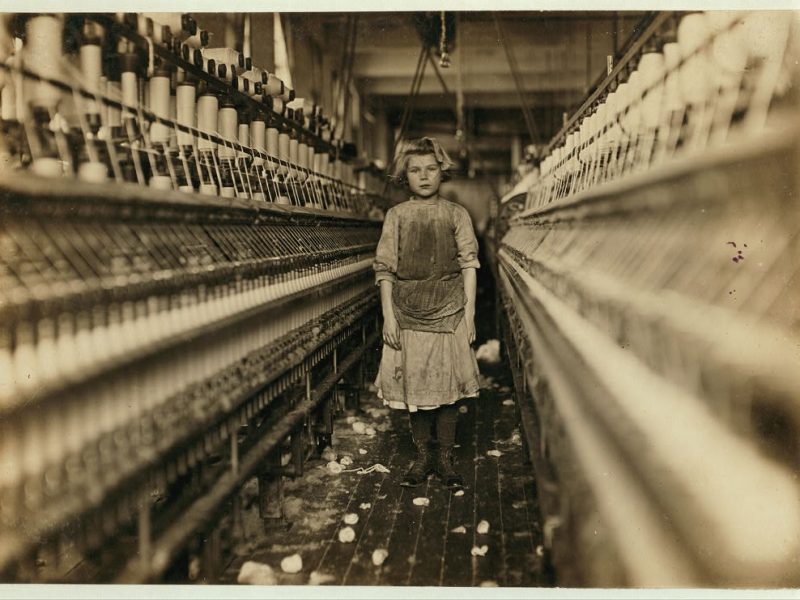
From cotton to cloud: In the data center debate, is rural Georgia once again being asked to carry the cost?
Across much of rural Georgia, the abandoned cotton warehouses and shrinking tax bases remain — enduring reminders that industries built to serve distant markets do not necessarily stay rooted in the communities that first sustained them.
My Grandpa Was Killed in World War II. I Met Him Through His Letters Home
Gina Wolf’s grandfather died before she was born. His letters sent to her grandmother from Europe during World War II made it possible to know what kind of man he was.
‘Sounds Like a Mutiny.’ Secret Recording Exposes Claims of Toxic Leadership After a Marine’s Suicide
This week’s War Horse story follows the systemic failures before and after the death of Cpl. Drew Mobley who was the third in two years at Marine Corps Base Quantico to die by suicide.
