
MARY BRASWELL: Looking back at summers past
HISTORY: In the summer of 1940, the new bus depot was under construction at the corner of S. Jackson and Oglethorpe.
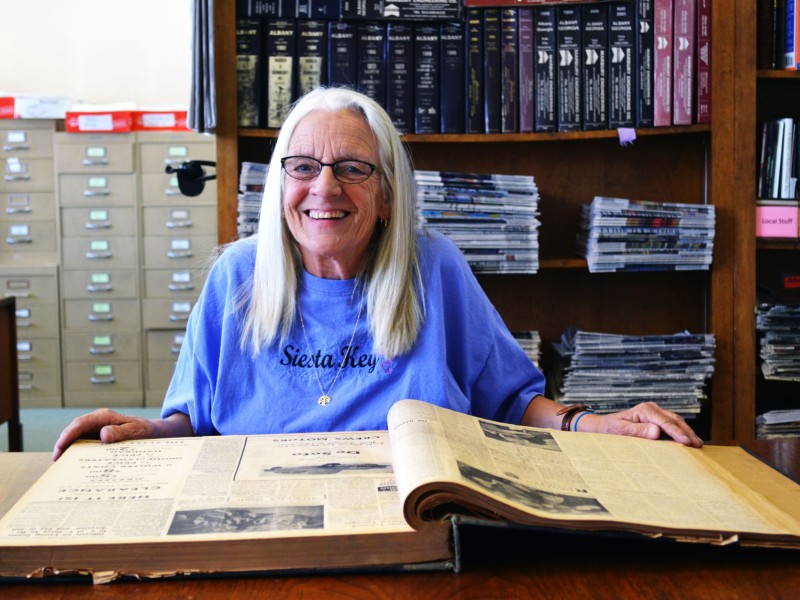
By Mary Braswell
The Looking Back column has been a part of the Sunday paper for 15 years and counting. Here are some of my favorite summer entries.
1910
— The Albany Drug Co. began staying open at night until after the moving picture shows were over. Movie fans were invited to come in for ice cream and a cold soda.
1911
— Georgia legislators introduced a new compulsory education act requiring parents to send their children ages 6-18 to school for not less than 60 days per year. Children deemed “mentally or physically unfit” were exempted.
1920
— Twelve dispensaries were opened in Mitchell County for the treatment of malaria. The State Board of Health furnished over 260,000 doses of pure quinine. With more applications coming in daily, 4,500 people were already receiving treatment.
QUIK QUIZ
In the summer of 1925, Gov. Clifford Walker signed an act prohibiting what in the state of Georgia?
a) Fishing
b) Dancing in public
c) Kissing in public
d) Hunting
The answer is at the end of the column.
1928
— Curb showers for Albany children were given four times a week. Tuesday through Thursday, the Albany Police Department blocked off areas of downtown residential areas in mid-afternoon. The Albany Fire Department hooked up hoses and allowed children to play in the spraying water.
1932
— During the Democratic National Convention, the Albany Herald had an Associated Press wire open in order to bring direct news to the paper from the convention hall. Ballot results were announced by megaphone from an upstairs window to the crowd on the street.
1936
— Grady County Superior Court reported in July that no criminal cases had been heard there since September 1932.
1937
— Miss Royal Crown was brought to Albany courtesy of the the Nehi Bottling Company. Nehi touted the attractive young woman’s talent in mental telepathy. Working blindfolded with an assistant, Miss Royal Crown met people on the street and revealed amazing facts about them. She was able to tell what brand of cigarettes the person smoked, how many coins a person removed from his or her pocket, the make of a person’s watch and other uncanny facts. If and when Miss Royal Crown was incorrect, a free R.C. Cola was given.
1938
— Public school children were issued free books all across the state. Before the order was sent, however, the State Board of Education struck off the line item requesting 800,000 Bibles.
1940
— Owned by Georgia Stages Inc., the new bus terminal at the corner of South Jackson Street and Oglethorpe Avenue (now Boulevard) was under construction. The new building was designed for comfort with large waiting areas, restrooms and air conditioning.
1941
— The first navigation cadets arrived at Turner Field’s Advance Flying School. Graduates of other training schools, the cadets would spend another six weeks in training to become qualified as instructors.
1944
— The War Production Board announced new quotas for tin and paper. Albanians were expected to salvage 10 pounds of paper per person and five pounds of tin per person. A new salvage depot for paper was erected in front of the Albany Herald. Tin cans could be dropped off at any grocery store.
1952
— The town of Whigham completed a new medical clinic. The facility was being offered for free use to any young doctor who was willing to relocate to rural Grady County. At age 85, the only local physician, Dr. M.W. Dykes, expressed a desire to retire.
1953
— Phoebe Putney Hospital reported it had experienced six power interruptions over a period of 35 days. Most were caused by either lightning strikes or automobile accidents damaging poles and lines nearby.
1958
— Hubble’s at 311 N. Washington St. advertised one half a fried chicken for $1. Hot dogs were two for 25 cents, and 20 cents bought a hamburger. The diner was air-conditioned and bragged, “Not the best lookin’ but by far the best cookin’.”
1963
— The 8th Circuit Court of Appeals ruled that law enforcement officers in Albany could not enforce racial segregation in publicly-owned or regulated facilities.
1965
— The City of Albany received a check from the state for $152,287 for street construction and resurfacing, as well as traffic markings. This windfall assured residents that taxes would not increase.
— Led by Lester Maddox, future governor of Georgia, 600 Ku Klux Klan members and their sympathizers marched silently through Americus to the courthouse. In the same week, future U.S. Rep. John Lewis, then a Student Non-Violent Coordinating Committee representative, and 15 others were arrested for attempting to integrate the First Baptist Church.
1971
— For the second time in two years, Albany State College was in search of a head football coach. Willie J. Parker resigned after less than a year to accept a position at the University of Cincinnati.
1975
— An estimated 25,000 people packed Hugh Mills Stadium to celebrate Independence Day. Activities included a greased pole climb, log-sawing contest, bow-and-arrow balloon busting, and fireworks after dark.
1987
— Representatives of the Dougherty County Safety Seat/Safety Belt Task Force were given permission to erect “Buckle Up” signs in local parking lots. Albany was one of the first cities in the state to erect the signs.
1990
— Radio Shack advertised handheld cellular phones that regularly sold for $999 on special for just $499. The phone came with a battery pack, antenna and carrying case. Charging stands, AC adapters and mobile mounting kits were sold separately.
1996
— Dougherty County voters used ballots with a computer scanning system, replacing the punch card system that had been in place since 1972. At the time, Dougherty was one of only 20 counties in the state with the new technology.
1997
— In a 4-3 vote, the Albany City Commission approved free bus rides throughout the city on July 15 to encourage people to vote in the Democratic Party Primary. Supporters on the commission were David Williams, Arthur Williams, Carol Fullerton and Jon Howard. Opposition came from Marvin Bannister, Tommy Coleman and Jay Cole. Cole pointed out that “It’s a free ride on voting day, not necessarily a ride to the polls.”
QUIK QUIZ ANSWER: b) dancing in public
Each week Albany Herald researcher Mary Braswell looks for interesting events, places and people from the past. You can contact her at (229) 888-9371 or [email protected]. Follow @ABH_MBraswell on Twitter.
Related Articles
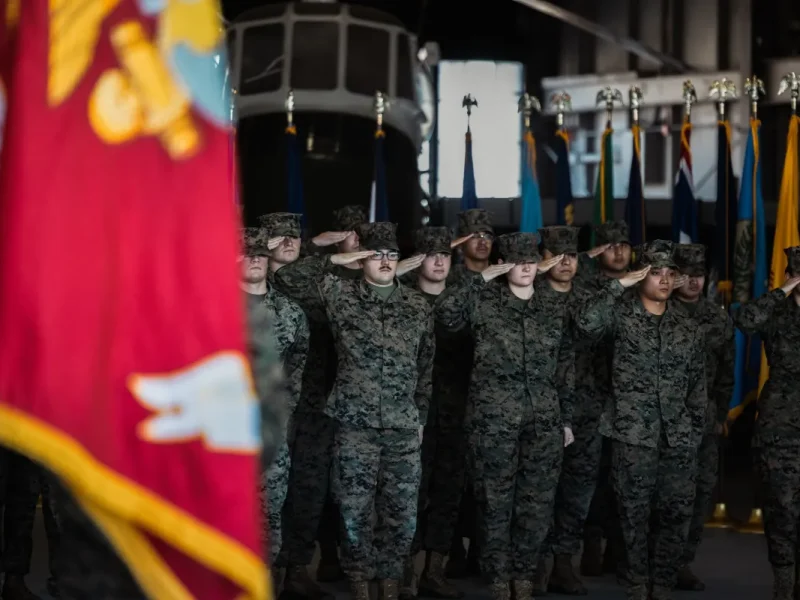
‘Sounds Like a Mutiny.’ Secret Recording Exposes Claims of Toxic Leadership After a Marine’s Suicide
This week’s War Horse story follows the systemic failures before and after the death of Cpl. Drew Mobley who was the third in two years at Marine Corps Base Quantico to die by suicide.

Southwest Georgia artists recognized at packed opening of exhibition
The annual juried exhibition, one of the region’s largest showcases of visual art, features approximately 46 artists and nearly 90 works spanning painting, sculpture, ceramics, photography and mixed media.
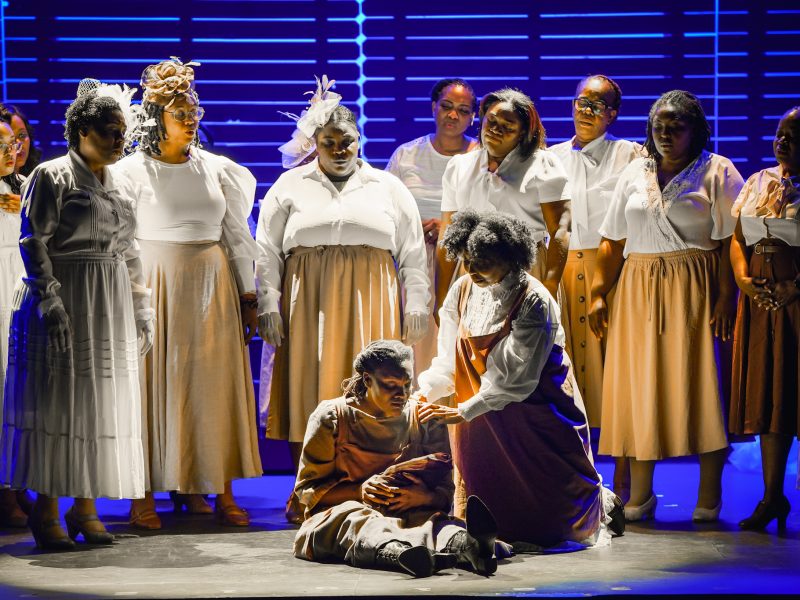
Powerful performances drive Theatre Albany’s ‘The Color Purple’
From the street, strands of purple ribbon wind around the white columns of the historic theater, hinting at the story waiting beyond its doors. Inside the foyer, a carefully curated slideshow flickers across a large screen, cycling through the faces of the cast. Some are seasoned performers. Others are stepping onto a stage for the very first time. Teachers stand alongside former students. Parents perform beside their children. People who worship in different churches, work different jobs and come from different corners of Southwest Georgia gather beneath the same lights to tell the same story.
