
MARY BRASWELL: Looking Back at summertimes past
HISTORY: In the summer of 1949, the State Theatre was Albany’s newest entertainment venue.
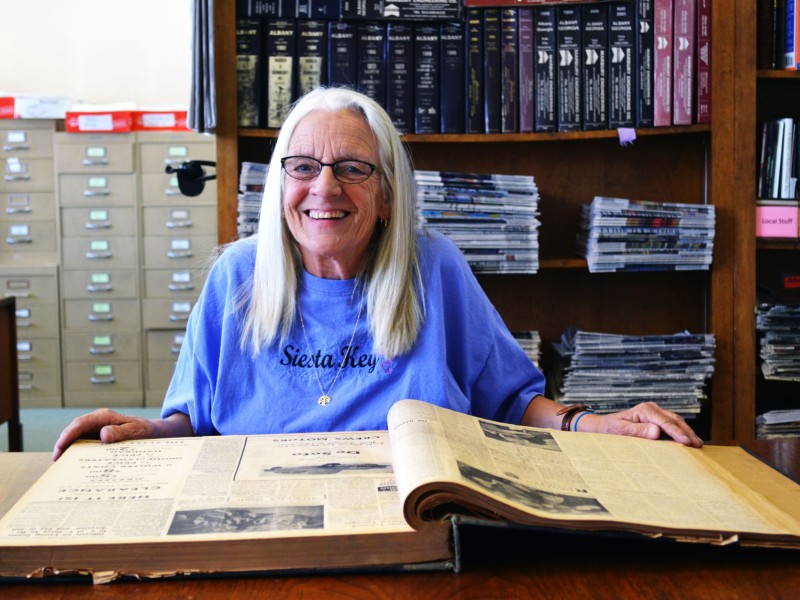
By Mary Braswell
Each week Albany Herald researcher Mary Braswell looks for interesting events, places and people from the past. You can contact her at (229) 888-9371 or [email protected]. Follow @ABH_MBraswell on Twitter.
In honor of this column’s 15th summer, here are some “reruns” from earlier years. How many of these entries do you recall?
1903
— The General Assembly adopted a joint resolution condemning the practice of whipping women inmates in state prisons.
1908
— The Albany Buggy Company was overstocked and willing to sell even its best buggies at ‘hard time prices’ for $50 each.
1910
— Hundreds of family members and friends packed into the Albany High School auditorium for graduation services. The crowd overflowed into the corridors and some were even turned away. The Class of 1910 consisted of nine graduates.
1911
— The Albany City Council adopted an ordinance requiring all patrons of the municipal waterworks to have a water meter installed within six months of connecting to the system.
1917
— In just the first couple of weeks of summer, the Albany Police Department issued four speeding tickets. Guilty parties forked over $5.75 each.
— The B.A. Patrick Garage on Pine Street offered automobile storage. Customers could send for their car or deliver a car for storage any hour of the day or night. Service also included filling the battery with water on the 1st, 10th and 20th of each month and keeping the vehicle dusted. All this for just $5 per month.
1920
— The average annual cost for students attending public school in Georgia was $32. Americus, however, reported their annual cost per student to be only $22.
1922
— Albanians wishing to vacation in New York City could get there for $58.93. The fare included a train ride to Savannah then a steamship to the city’s port as well as all meals while sailing.
1924
— Albany’s mayor, W.M. Legg, received a petition with six signatures seeking the use of the Municipal Auditorium for a Ku Klux Klan meeting. The petition was denied.
1927
— The River-Bend Park opened in Mitchell County, 10 miles south of Albany just off the paved Dixie Highway. The park’s 40-by-100-foot cement pool was supplied with water from an artesian well, which poured a constant stream of fresh water into the pool while in use.
1933
— As part of President Roosevelt’s New Deal, cotton mill workers began to work less and make more. A worker making 17 1/2 cents per hour for a 55-hour week made $9.62 per week. Under the president’s plan, the same worker made 30 cents per hour for a 40-hour week with a paycheck of $12.
1936
— The Lee County Commission voted to have two “stop-and-go lights” installed in the city of Leesburg to slow speeding motorists.
1937
— Nehi’s “psychic wonder” Miss Royal Crown was an added stage attraction in theaters across Southwest Georgia. Donning a blindfold, Miss Royal Crown was capable of guessing a person’s hair color, the color of the clothes worn as well as make and time on a person’s watch. If, by some chance, the lovely lady failed at a guess, the lucky patron was presented with a case of RC Colas.
— Applications were being accepted for the newly created Georgia Highway Patrol. A photograph, references and proof of at least a high school diploma were required to accompany the job application. Assuming the paperwork was in order, applicants were expected to pass a physical exam and to pass an intelligence test.
1938
— After much discussion from both sides, Lee County voted 148 to 117 for repeal of Prohibition.
1940
— H.T. McIntosh, president and editor of the Herald Publishing Company, announced the licensing of a new 1,000-watt radio station. The station, with call letters WALB, became the only radio station of its size within 75 miles of Albany.
1947
— Donations were being accepted to aid with the purchase of streptomycin to battle tuberculosis in Randolph County. Two TB cottages (more like shacks) were constructed to house patients unwilling to go to a hospital. At the time, there were 23 confirmed cases in the county with six of those in advanced stages.
1956
— As part of a Civil Defense drill, a citywide “go-home” alert was given. During the drill, all businesses were immediately shut down and all citizens were urged to return home. The idea was to have families together in the event of a nuclear attack.
1958
— Hubble’s at 311 N. Washington St. has much to brag about. The restaurant was air-conditioned. One-half a fried chicken cost only $1. Hamburgers were 20-cents and hotdogs, two of them, were only a quarter. Many attested to the diner’s statement — “Not the best-lookin but by far the best cookin’.”
1960
— For the first time since opening in 1911, all of Phoebe Putney Memorial Hospital was air-conditioned.
1962
— Topping the summer music charts the first week of August: “The Loco-Motion” by Little Eva, “Wolverton Mountain” by Claude King and “Ahab, the Arab” by Ray Stevens.
1963
— The 8th U.S. Circuit Court ruled that law officers in Albany could not enforce racial segregation in publicly owned facilities.
1964
— Angus Alberson turned the first shovel of earth at the site of the new $400,000 Doublegate Country Club. Others bearing shovels were Ducky Wall, Richard V. Richard, Ross Malone Jr., O.D. Carlton II, C.T. Oxford, Frantz Lipsey, John H. Sperry and J.D. Williams.
1978
— Plains Police Chief Bill McClung delivered his first crime report. The department, established Dec. 15, 1976, investigated one burglary and two assaults during its first 18 months.
1995
— Shoney’s opened a new 176-seat restaurant in Albany. The restaurant employed about 60 people and had an annual payroll of about $500,000. In the summer of 2000, the restaurant closed its Albany doors forever.
QUIK QUIZ ANSWER: (b) left him money in his will. The recipient scarcely remembered the incident, but his memory was jogged four years later when the older man died and left him $20,000 in his will, the equivalent of about $485,000 in 2016 dollars.
Related Articles
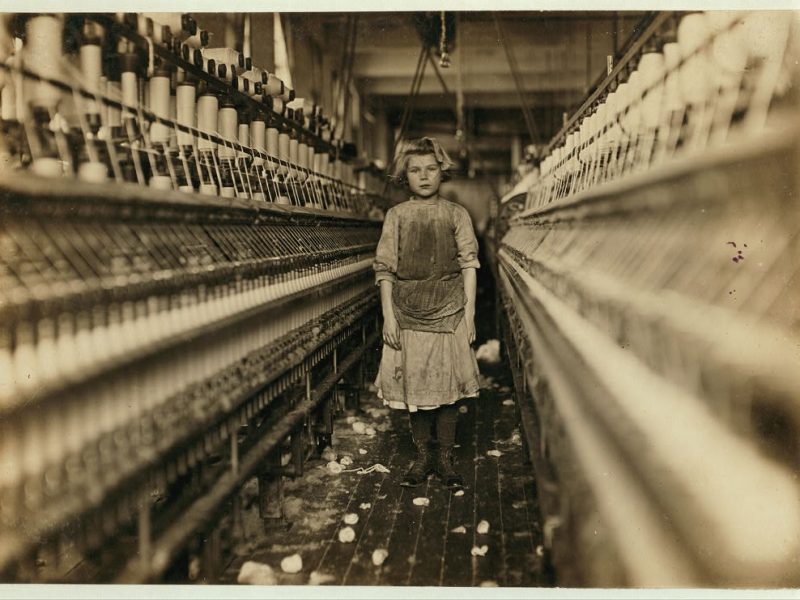
From cotton to cloud: In the data center debate, is rural Georgia once again being asked to carry the cost?
Across much of rural Georgia, the abandoned cotton warehouses and shrinking tax bases remain — enduring reminders that industries built to serve distant markets do not necessarily stay rooted in the communities that first sustained them.
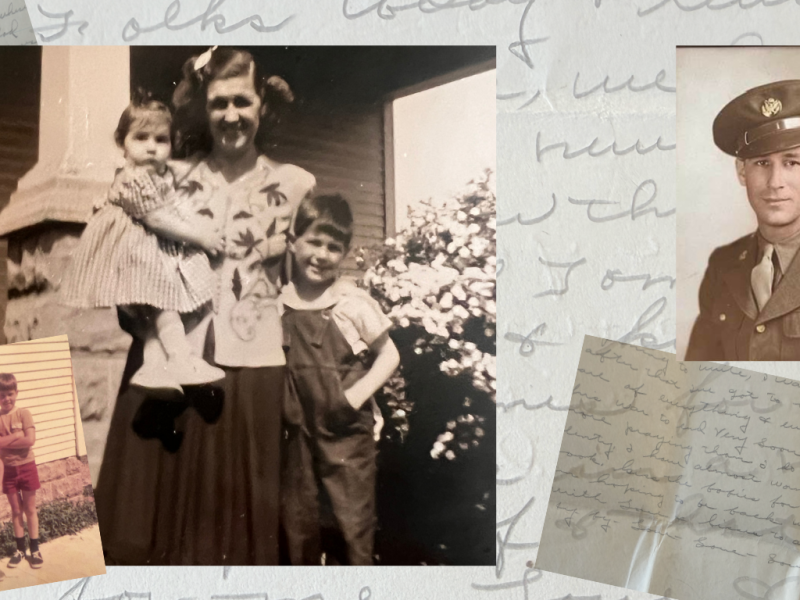
My Grandpa Was Killed in World War II. I Met Him Through His Letters Home
Gina Wolf’s grandfather died before she was born. His letters sent to her grandmother from Europe during World War II made it possible to know what kind of man he was.
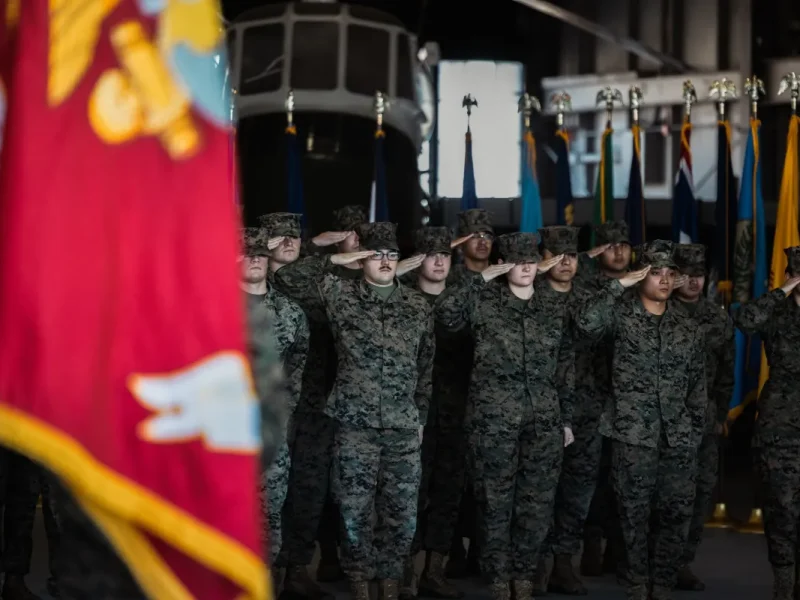
‘Sounds Like a Mutiny.’ Secret Recording Exposes Claims of Toxic Leadership After a Marine’s Suicide
This week’s War Horse story follows the systemic failures before and after the death of Cpl. Drew Mobley who was the third in two years at Marine Corps Base Quantico to die by suicide.
