
Dawson’s $6.18 million budget draft balances to the penny — but the money doesn’t add up
A draft of Dawson’s proposed FY2027 budget included in a Finance Department report presented to the City Council on Aug. 13 shows revenues and spending in perfect balance — $6,180,350 on each side, to the penny. An Albany Herald review of the numbers found the draft does not actually balance.
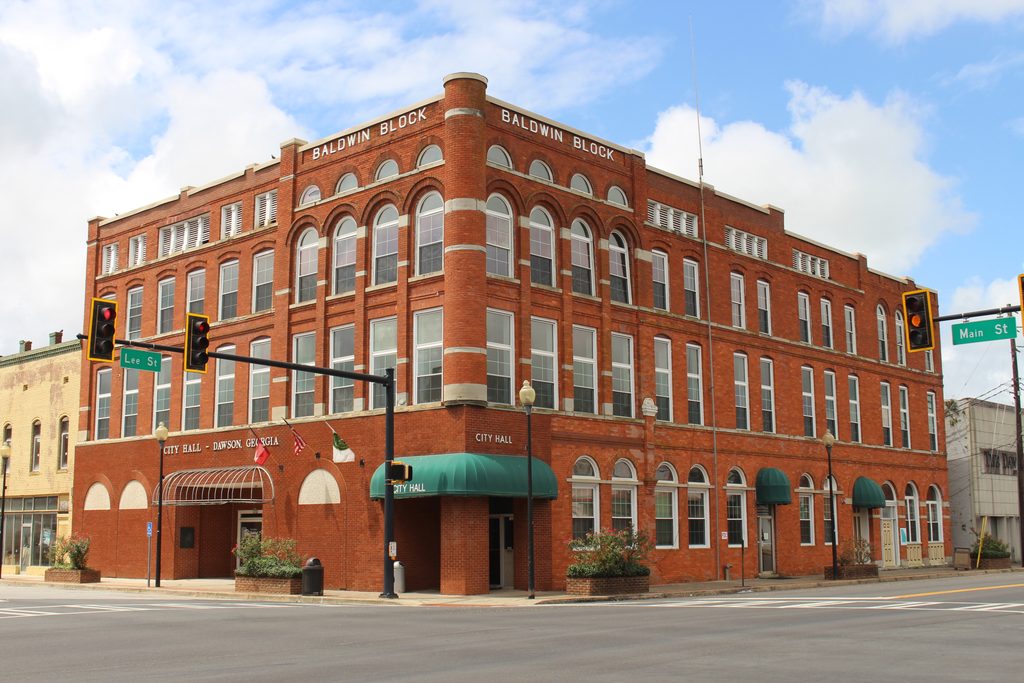
DAWSON — A draft of Dawson’s proposed Fiscal Year 2027 budget included in a Finance Department report presented to the Dawson City Council on Aug. 13 shows revenues and spending in perfect balance — $6,180,350 on each side, to the penny.
An Albany Herald review of the numbers, though, found the draft does not actually balance.
The balance is produced in part by counting the same money twice, while the spending plan for the fiscal year that begins Sept. 1 sets aside nothing to repay $350,000 the city has already borrowed from its Tax Anticipation Note to cover payments owed to vendors, nothing for payments coming due on $4.4 million in state wastewater loans and nothing for more than $141,000 in purchases the council was asked to approve at the same meeting.
The proposal counts a $300,000 transfer from the city’s water, sewer and gas utilities as general fund revenue. But no fund in the draft budget records that money going out, and the utilities’ combined budgeted surplus is $291,494.33 — less than the amount being transferred to the general fund. Strip out the double-counting, and the city plans to spend roughly $300,000 more than it expects to take in. Georgia law requires cities to adopt balanced budgets for each fund.
As outlined in prior reporting, presentations to the City Council make clear Dawson expects to begin the fiscal year Sept. 1 without an adopted budget. No proposed budget has yet been presented to the public for review, and city officials have proposed holding the required public hearing Sept. 17 — more than two weeks after the fiscal year begins. A companion ordinance included in the council materials acknowledges the city “will be unable to adopt a budget prior to the beginning of the fiscal year” and provides temporary spending authority until a budget is adopted.
The adoption ordinance included with the draft left the required public hearing and advertisement dates blank. The draft spending plan was also presented without the prior-year comparisons, budget message and debt summary called for by the finance code included in the same council materials.
As previously reported, the Finance Department report outlines that the city obtained a $400,000 tax anticipation note this year and has drawn $350,000 of it “to address immediate accounts payable obligations” — that is, to pay bills already owed. The report says $50,000 remains available.
Under Georgia law, tax anticipation borrowing must be repaid from the same year’s tax collections by the end of the calendar year. Dawson’s property tax bills go out around Oct. 1 and are not due until Dec. 20 — and the roughly $991,000 the draft budget expects from property taxes is already fully committed to next year’s operations. The draft contains no line for repaying the note or its interest, meaning December’s tax collections are effectively promised twice.
The same Finance Department report defends the $300,000 utility transfer as reimbursement for shared costs and acknowledges the amount is “higher than previous years due to the need to adjust for prior revenue projections that overstated available resources.”
Council members were asked Aug. 13 to approve a $109,886 change order for two new aerators at the city’s wastewater treatment plant, which the packet says “will be funded through GEFA” — the Georgia Environmental Finance Authority, which holds two loans totaling $4.38 million for the plant’s reconstruction.
But GEFA has stopped paying.
In written responses to The Albany Herald this month, the authority said disbursements to Dawson are on hold because the city is on the state Department of Audits and Accounts’ noncompliance list.
Dawson has not filed an annual audit for Fiscal Years 2023, 2024 or 2025, despite a written commitment to state grant monitors in 2024 to catch up by last November. Two pending loan requisitions totaling $369,338.11, submitted in mid-June, remain unpaid, and a modification needed to revive one loan — whose draw period expired in June 2023 — is blocked by the same audit delinquency.
None of that appears in the Finance Department report.
Mauldin & Jenkins, the accounting firm working with the city, did not respond to an email seeking comment on the status of the three outstanding audits or asking the firm to verify the city’s projected timeline for completing them.
The council materials also assign two treatment plant pump purchases — a $16,416.60 sludge pump and a $15,000 bypass pump at Tyson Foods — to the city’s 2023 SPLOST fund. The draft budget’s own SPLOST page shows that fund fully allocated: $2,298,000 in expected revenue matched dollar for dollar to named projects, with no line for either pump. Sales tax proceeds are legally restricted to the purposes voters approved in the referendum.
The largest source of money for the $7.5 million plant reconstruction — a $5.82 million federal American Rescue Plan grant administered by the Governor’s Office of Planning and Budget — requires all expenses to be incurred by Oct. 31 and documented by Nov. 30, under the grant amendment then-City Clerk Roxie Powell — the city’s current city manager — signed in December 2024.
Through late June, the city had requested about $3.24 million of the grant, leaving roughly $2.58 million unspent. The contractor’s June pay application puts the project at 53.8% complete, with $3.68 million of work left to finish; the city’s own filings project the plant will not be operational until December 2027.
The draft budget included in the Finance Department report contains no plan for how the remaining construction will be paid for if the grant window closes on a half-finished plant.
The draft’s arithmetic shows other signs of engineering. Expenses match revenues to the cent only by way of a $46,002.33 “unappropriated contingency” and odd-cent salary lines. An identical $18,226 workers’ compensation charge appears in nearly every department. And the general fund counts on $250,000 from fines and forfeitures — about 7% of its revenue — in a city of roughly 4,000 people whose service area, by the city’s own federal filings, has a median household income of $32,294.
Auditors have flagged Dawson’s bookkeeping every year from 2019 through 2022, most recently for failed bank reconciliations and for spending in excess of appropriations.
The Aug. 13 council materials also included a proposal to create a new fire service district funded by a fee with lien enforcement. The fee amount was left blank in the ordinance, and the draft FY 2027 budget contains no fire-fee revenue.
Related Articles

Terrell County school board calls special meeting to consider CFO consulting services
The Terrell County Board of Education will hold a special called meeting Tuesday to consider hiring outside financial consulting services as the school district continues work on its finance operations.
The meeting is scheduled for 5 p.m. Tuesday, Aug. 25, in Room 107 of the Terrell County Board of Education office, 761 First Ave. SE in Dawson.
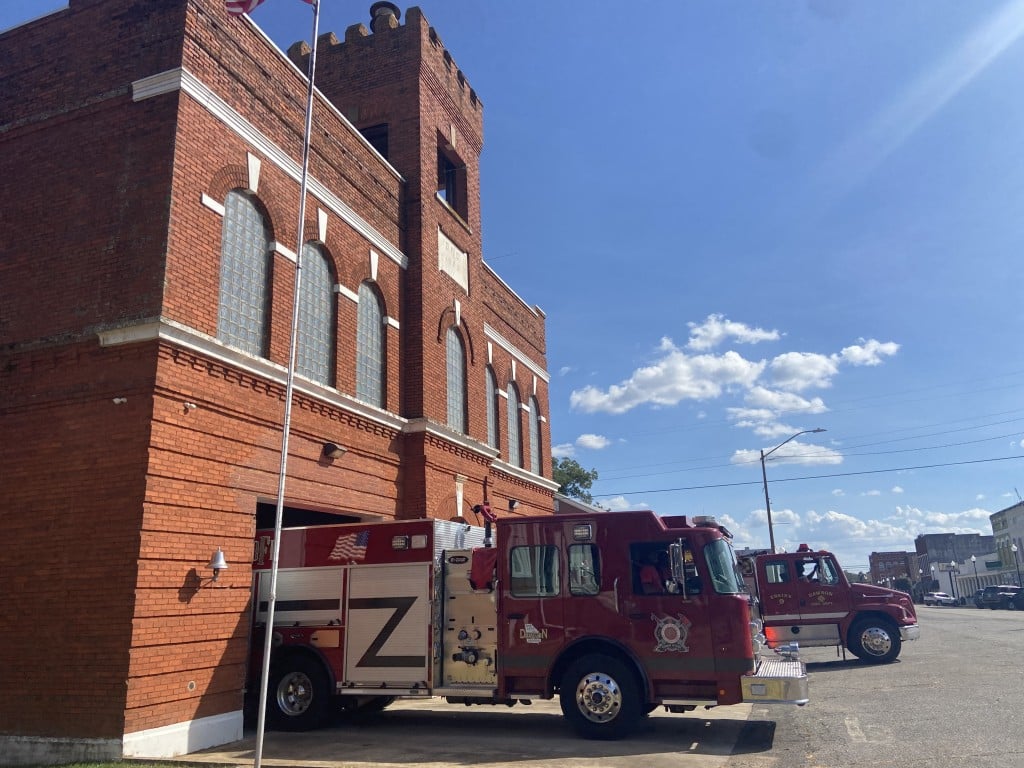
Dawson’s proposed fire tax district: What residents need to know
Dawson residents could soon see a new $8 charge on their monthly city utility bills to help pay for fire protection. That is the simplest way to describe what the Dawson City Council is considering. But the proposed ordinance would do considerably more than add another line item to a water bill.

Judges denies residency challenge; Edward Brown to claim Senate District 12 seat
An email ruling issue this week paves the way for Albany businessman Edward Brown to enter the Georgia Senate next year. A Superior Court judge denied candidate Corey B. Morgan’s challenge to Brown’s residency in the District 12 race.
