
Dawson’s proposed fire tax district: What residents need to know
Dawson residents could soon see a new $8 charge on their monthly city utility bills to help pay for fire protection. That is the simplest way to describe what the Dawson City Council is considering. But the proposed ordinance would do considerably more than add another line item to a water bill.
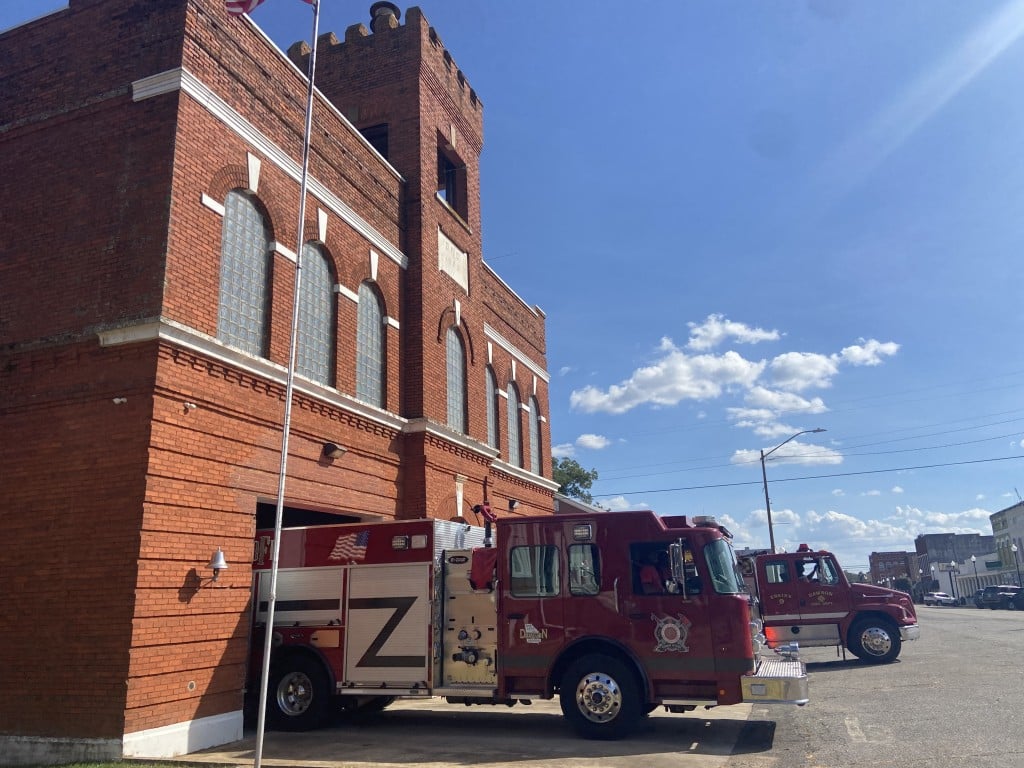
DAWSON — Dawson residents could soon see a new $8 charge on their monthly city utility bills to help pay for fire protection.
That is the simplest way to describe what the Dawson City Council is considering. But the proposed ordinance would do considerably more than add another line item to a water bill.
Ordinance 2026-10 would designate the entire incorporated city as the City of Dawson Fire Tax District, establish a recurring assessment on active residential and commercial units receiving city water, and place the money in a dedicated account that can be used only for fire protection. The ordinance also gives the city tax-style collection powers if the assessment goes unpaid.
Council members have not yet adopted the ordinance or formally set the rate. City officials initially suggested between $10 and $15 per month during their Aug. 13 council meeting before members settled on $8 as the amount they wanted to move forward for consideration.
For a household, that would mean $96 more per year. For the city, it could mean about $172,800 in dedicated fire revenue annually, based on the roughly 1,800 accounts officials said are eligible to be charged. For Dawson, it would represent a change in how residents see and pay a portion of the cost of a service they already receive.
Fire protection already costs Dawson considerably more than the proposed assessment would generate. City officials told the council the Fire Department’s annual budget is projected at slightly more than $1 million, including salaries, expenses and insurance.
“Considering the fire department’s budget, we’re just looking anywhere between $10 to $15 per month off the utility bill,” a city official told the council when the ordinance was introduced, explaining that the revenue would be placed in its own account and “strictly used for the fire department.”
At $10 per month, 1,800 paying accounts would produce about $216,000 annually. At $15, that would rise to about $324,000. But council members also weighed the department’s needs against what another recurring charge would mean for residents.
“I would go down just a little bit more,” one council member said.
By the business portion of the meeting, the discussion had moved toward $8.
“We brought it back down to eight with that, so we can move forward,” a city official said.
At that rate, the assessment would generate roughly 17% of a $1 million fire budget if all 1,800 accounts paid for a full year, leaving the remainder to come from other city revenue.
What has not yet been publicly explained is whether that approximately $172,800 would add to what Dawson currently spends on fire protection, allowing the department to increase staffing, equipment or services, or whether it would replace a portion of the general revenue the city already puts toward the department. For residents trying to determine what they would receive in exchange for the additional $96 a year, that is an important distinction.
There is also an important distinction between how residents would encounter the charge and how the ordinance legally treats it.
The proposed ordinance uses several terms — “fee,” “special assessment” and “tax.” The city is relying on a provision of the Georgia Constitution that allows local governments to establish special districts to provide government services and collect fees, assessments or taxes within those districts to pay all or part of their costs.
Dawson’s ordinance explicitly calls the new jurisdiction the City of Dawson Fire Tax District, with boundaries encompassing all property inside the incorporated city. The minimum assessment, however, is written to apply to each active residential and commercial unit within the district that receives city water.
For residents, that would create something that looks much like a utility fee, appearing monthly alongside other city services, but carries some of the legal characteristics of a tax if it goes unpaid.
The ordinance reaches beyond single-family homeowners, however. It defines active residential units to include occupied single-family and multifamily dwellings, mobile homes and modular homes receiving billable water service. For multifamily properties, duplexes and apartment buildings would be billed for each individual unit.
Commercial units include hotels, motels, restaurants, businesses and public or semi-public establishments receiving water service. The ordinance also allows the council to establish a schedule imposing charges above the minimum, although no such schedule was included in the draft presented Aug. 13.
That leaves an important unanswered question for businesses: Whether a small shop, restaurant, large industrial property and other commercial users would ultimately pay the same $8 minimum or whether some would be assigned higher charges.
Unlike Dawson’s regular property tax, however, the minimum fire assessment would not rise or fall with a property’s assessed value. Under the draft presented to the council, the minimum is tied to an active unit rather than property value. That means the owner or occupant of a relatively inexpensive home could pay the same $96 minimum annually as someone living in a substantially more valuable home.
That is one of the significant differences between funding fire protection this way and funding it entirely through property taxes. It also makes the cost more visible. Rather than being incorporated into the city’s broader tax structure, residents would see a specific amount each month representing part of the cost of fire protection.
For renters, who actually receives that bill, payment responsibility may depend on whose name is on the account. The ordinance says the city can bill either the owner of an active residential or commercial unit, as determined through tax records, or the recipient of water service. That means renters with city utilities in their names could potentially see the charge on their bills.
The draft also establishes procedures for transferring the assessment when property changes ownership, although portions of that provision remain blank in the version provided to the council.
Those details become particularly important if an assessment goes unpaid.
The ordinance provides for penalties and interest on late payments. It then says the assessment, late charges and interest are “deemed and constituted a tax” and can become a continuing lien against real or personal property until paid. The city also could issue a writ of fieri facias, commonly called a fi. fa., to pursue delinquent amounts using tax-collection procedures.
The $8 figure itself is another part of the proposal that could change. In fact, $8 does not yet appear in the ordinance at all; the space establishing the minimum monthly assessment remains blank in the draft presented to the council.
Once an initial amount is established, the ordinance says the city council may set the fee for subsequent years at the first regular meeting of each fiscal year.
“I think you can revisit every fiscal year,” a city official told the council during the discussion.
Residents should therefore think of $8 as the proposed starting point rather than a permanent rate.
Dawson would not be the first Georgia city to separate at least part of the cost of fire protection from its other revenue and put that cost directly in front of residents.
Perry has operated a fire protection utility since 2014, with fire protection appearing on regular city services bills much as Dawson is proposing. But Perry uses a more detailed system for deciding who pays what. That city’s ordinance says rates should bear a reasonable relationship to the cost of providing fire protection and the demand different properties place on the fire department.
Perry’s current fee schedule lists the basic fire protection charge at $24.75 per residential equivalent unit, compared with the $8 Dawson is considering.
Garden City has taken another approach. Its fire protection fee methodology considers the amount of water firefighters would need to fight a fire at a particular property. The system used a “residential equivalent unit” tied to needed fire flow, with credits available when on-site fire suppression or other measures reduced the burden a property placed on the fire department.
The experience of Savannah shows that the question also can become politically contentious.
Savannah adopted a fire service fee as part of its 2018 budget, with a single-family residence set to pay $256 for the year before discounts. The city argued that the system spread the cost of fire protection more broadly because properties benefiting from fire service — including tax-exempt properties — would contribute. The amount was based on the cost burden a property placed on fire services rather than its property value, and Savannah also developed discounts and planned hardship assistance for qualifying homeowners.
But Savannah reversed course before the system became permanent. In July 2018, the City Council unanimously repealed both the fire services special revenue fund and the fire service fee.
For Dawson residents, that brings the issue back to perhaps the most important unanswered question: What would they get for the additional $96 a year?
The ordinance says Dawson needs “a greater fire presence than presently exists” and describes the special district as the most economical, efficient and feasible method of financing enhanced fire service. But the council discussion reviewed by The Dawson News did not establish specifically what an additional $172,800 at the proposed $8 rate would purchase.
It could mean additional firefighters, higher salaries to recruit or retain personnel, new equipment, greater staffing per shift or improvements that could affect the city’s fire insurance classification. Or the assessment could primarily relieve pressure on Dawson’s existing general fund.
Those answers would tell residents whether the $96 represents payment for an identifiable enhancement in fire protection or a different way of paying for services the city already provides.
For now, none of those changes has taken effect. The council did not approve the assessment Aug. 13. City Manager Roxie Powell told members to use the meeting to discuss the proposal before bringing it back.
“You all discuss it this month. We’ll vote on it next month, and then if you approve it, we’ll advertise it,” she said.
Officials also discussed allowing the charge to take effect 30, 60 or 90 days after approval.
The ordinance presented to the council remains unfinished in several places. In addition to the blank assessment amount, it contains blank dates governing payments and ownership transfers and refers at one point to fees for “police and fire services,” although the ordinance otherwise establishes only a fire district and requires the proceeds to be spent on fire protection.
For residents, however, the proposal can be reduced to a few essential facts: Dawson is considering adding a minimum of $8 a month, or $96 a year, to covered city accounts to create a dedicated source of fire funding. The rate could change in future years, and if the ordinance is adopted substantially as drafted, that seemingly small monthly line item would carry the collection power of a tax if it goes unpaid.
Related Articles

Foreclosures jump 52.9% across the region as buyers regain negotiating power
In Dougherty County, the number of residential properties advertised for foreclosure has nearly doubled this year. In neighboring Lee County, developers are preparing to add hundreds of new houses and apartments, including homes aimed at buyers who have struggled to find newer housing at an attainable price.

PHOTOS: Albany State New Employees Luncheon
Click the arrow to scroll through the photos.

Albany Commission will revisit downtown park project at October retreat
“Right now it’s a sea of asphalt there. It doesn’t encourage gathering. Parks and green spaces encourage gathering.”
