
MICHAEL FOWLER: How do you explain death to a young child?
DOUGHERTY CORONER: It is best to talk about death in simple terms

By Michael Fowler
Death is a hard topic at any age, but it is especially hard when it comes to children. In light of the events that transpired recently, many people have asked, “How am I supposed to explain this to my kids?”
My best answer, which is supported by research and by local certified counselors I have consulted with, is to be direct. Be honest with kids and encourage them to ask questions.
The ability to understand is different with each child. Each child is different and unique. It is key that you recognize the child’s ability to understand and use this as your guide when speaking to them to about death.
Children under age 6 tend to take what you say literally, so it is best to avoid saying things like “went away.” “went to sleep” or that you have “lost” the person. Each of these terms, in some form, indicates death not being permanent, which is not the truth. The child will think that if they went away, they will return. If they went to sleep, they will wake up. If they are lost, then they can be found.
It is best to talk about death in simple terms when talking to small children. Start by explaining to them that when a person dies, they do not breathe, eat, talk, walk, and they will not be able to see them again. This might very well lead to many questions, and that is OK. Just remember to be patient and do not allow yourself to become frustrated. Remain calm and reiterate the basics.
If you are dealing with grief yourself, it might be best that you have someone else speak with the child about the death.
This might be the time that you introduce your belief system concerning death to the child. Children over the age of 6 can grasp the finality of death somewhat better than smaller children. But even at this age, they still tend to think of death as being scary and frightening. They do not view it as something that will happen to everyone one day, but as something bad that happens, like when a ghost or “boogeyman” comes and takes you away.
However, if explained clearly, correctly and with patience, these children will understand what death is without as much confusion, uncertainty and fear.
Michael Fowler is the Dougherty County coroner. He can be contacted at (229) 438-3974 or email [email protected].
Related Articles

‘Sounds Like a Mutiny.’ Secret Recording Exposes Claims of Toxic Leadership After a Marine’s Suicide
This week’s War Horse story follows the systemic failures before and after the death of Cpl. Drew Mobley who was the third in two years at Marine Corps Base Quantico to die by suicide.

Southwest Georgia artists recognized at packed opening of exhibition
The annual juried exhibition, one of the region’s largest showcases of visual art, features approximately 46 artists and nearly 90 works spanning painting, sculpture, ceramics, photography and mixed media.
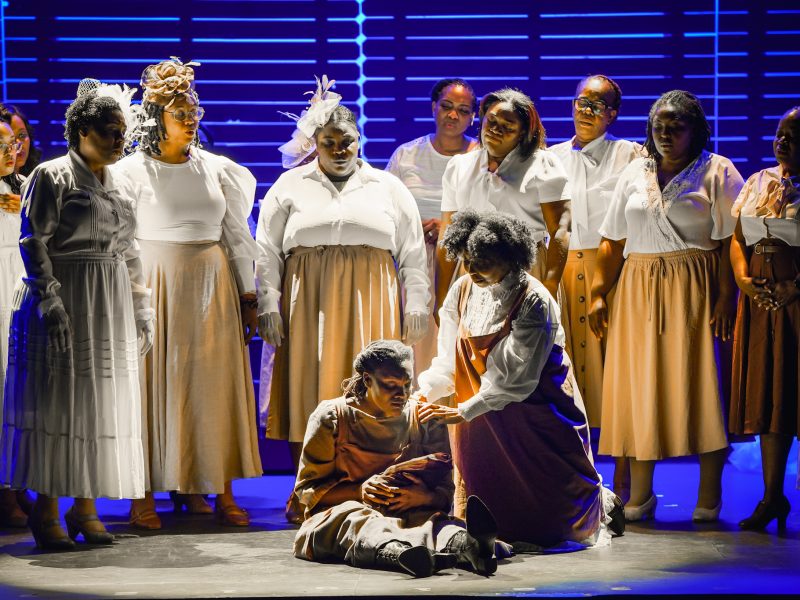
Powerful performances drive Theatre Albany’s ‘The Color Purple’
From the street, strands of purple ribbon wind around the white columns of the historic theater, hinting at the story waiting beyond its doors. Inside the foyer, a carefully curated slideshow flickers across a large screen, cycling through the faces of the cast. Some are seasoned performers. Others are stepping onto a stage for the very first time. Teachers stand alongside former students. Parents perform beside their children. People who worship in different churches, work different jobs and come from different corners of Southwest Georgia gather beneath the same lights to tell the same story.
