
Mowing done; now transform lawn into native perennial landscape
Special Photo: UGA/CAES
By Emily Cabrera
UGA/CAES
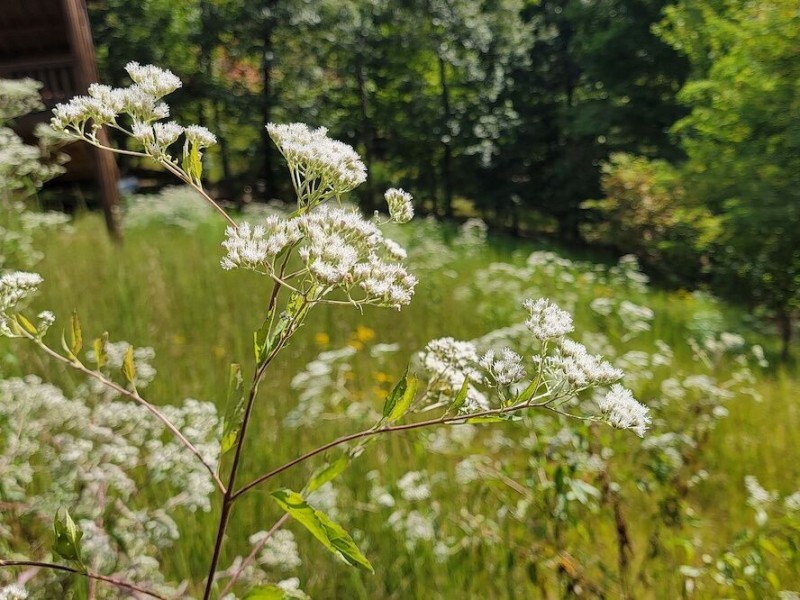
BLAIRSVILLE — On a tour of her Blairsville home, Becky Griffin navigates a swaying maze of perennial grasses interspersed with pussy willows, switchgrass and boneset.
Although it may not fit the traditional image of a well-kept lawn, this landscape is the result of careful planning and a deep commitment to ecological stewardship.
As a native plant enthusiast and coordinator of the Great Southeast Pollinator Census, Griffin hand-selected each of these native plants for the countless ecological services they provide year-round, from supporting pollinators to offering habitat for birds and mammals. For Griffin and a growing number of like-minded individuals, the beauty of a landscape lies not just in its appearance but in its function — an idea that has fueled the rising trend of “re-wilding” home spaces as an alternative to conventional, high-maintenance lawns.
The community and school garden coordinator for University of Georgia Cooperative Extension, Griffin said that as more people rethink the traditional lawn, the shift toward native prairies and wildflower meadows redefines what it means for a yard to be beautiful. By thoughtfully nurturing these ecological landscapes, homeowners can create a visually appealing outdoor space while providing essential habitat for local wildlife and reducing the need for weekly maintenance.
“The other benefit of using native plants,” Griffin said, “is that they are regionally adapted and have developed natural resistance to pests and tolerance to drought and other environmental extremes.”
Though it may seem chaotic, Griffin has cultivated her micro-prairie over the past few years by carefully removing unwanted non-native and invasive species and replacing them with native grasses and forbs, or wildflowers, that thrive in north Georgia. For her, the transition to this type of landscape was not only about the environmental benefits. The shift also served her desire to slow down as she moved into a different phase of life.
Before starting the transformation to a native, perennial landscape, think about how much lawn you’d like to keep. Griffin suggests that you don’t need a large area to see the benefits of native plants.
“In fact, having a smaller space to begin with can be easier for homeowners to manage and control,” she said. “One approach is to gradually replace sections of turf with native prairie or meadow plants. By removing a little bit of lawn each year, you can slowly cultivate the desired plants and observe how they naturally establish themselves.”
Griffin and her colleague Bodie Pennisi, the Vincent J. Dooley Professor in the Department of Horticulture in the UGA College of Agricultural and Environmental Sciences, have dedicated their careers to their love of plants and pollinators. Pennisi, who teaches the course “Plants, Pollinators and You,” adds that choosing the right plants for your conditions is key to long-term success.
When selecting plants, it is important to do a bit of preliminary research to know what kinds of plants grow well in your area. Understanding your hardiness zone and the local ecology will help you choose species that thrive in your specific conditions.
An Extension landscape specialist, Pennisi suggested following these general steps to help create a successful native prairie or meadow:
— Choose compatible plants. Select species that grow well together and are well-adapted to your environment.
— Focus on perennials. Prioritize perennials over annuals for long-term sustainability and to reduce the general workload over time.
— Include native grasses and wildflowers. For in-depth information on choosing species native to Georgia, check out “Native Plants for Georgia Part III: Wildflowers” and “Native Plants for Georgia Part IV: Grasses and Sedges,” part of a series of helpful guides produced through UGA Extension.
A few statewide plant options:
— Milkweed is the only plant that monarch caterpillars eat, making it vital to their lifecycle. These plants need full sun and well-drained soil.
— Mountain mint has a long bloom time throughout the heat of the summer and is attractive to all types of bees, wasps and beetles. The plant has a minty fragrance.
— The upright growth habit of broomsedge offers cover for ground-nesting birds and other mammals and provides overwintering habitat for many insects and birds. Its extensive root system prevents soil erosion, and the seeds are eaten by birds.
— Little bluestem is the host plant for many skipper butterfly species. It also provides food for many other insects and overwintering habitat for many insects and animals.
— Goldenrod is the common name for plants in the genus Solidago. It is considered a keystone species and supports a wide diversity of pollinators, blooming in late summer and early fall until frost, providing essential nutrients to fall pollinators, including migrating monarchs.
— Partridge pea pods are attractive to songbirds and game birds. As a legume, the plant fixes nitrogen and helps improve the soil. It is also drought-tolerant and helps prevent erosion. It is a bumble bee favorite and the host plant for many butterflies and moths, including the io moth and grey hairstreak.
— Many species of wild indigo are native to Georgia and serve as excellent pollinator plants, particularly for native bees. One of the most well-known is blue wild indigo (Baptisia australis). This plant works well as a shrub alternative and is a great option for filling larger landscapes.
Using a variety of plants makes the most efficient use of water, nutrients and sunlight throughout the changing seasons, with plants accessing nutrients from different soil depths and capturing light at various heights. Griffin said she prefers to copy what she sees in nature, setting things in motion and then letting them change naturally over time.
UGA Extension has several native plant guides and resources that provide a wealth of information when considering which plants to select. While the plant lists are robust, Griffin and Pennisi said to start with a few selections at first and then expand each year as you become more comfortable with your landscape and growing conditions.
Hardiness, moisture and sunlight requirements, and soil that supports the plantings will determine the overall success and sustainability of any type of garden. The key is to identify the unique characteristics of your own space and match the plants to those conditions.
Georgia has a wealth of endemic wildflower species that thrive in diverse habitats, from coastal dunes and pine sandhills to savannas, meadows and forests, Pennisi said. While many of these plants are found in undisturbed natural areas, some have adapted to human-made landscapes like roadsides and farms, often appearing along road banks and edges. The UGA Extension publication, “Visual Guide to Common Wildflowers of South Georgia,” provides a visual guide to common herbaceous plants in sunny areas of south Georgia. Though not an exhaustive list, it highlights easily recognizable plants that are valuable to wildlife.
No matter what your goals are, re-wilding your outdoor space with native plants will never disappoint. However, it may invite criticism in neighborhoods with homeowner association guidelines that prefer a more uniform, manicured aesthetic. Being considerate of public perception is an important part of living in community with others. In these cases, Griffin and Pennisi said maintaining a sharp, mowed edge along taller grasses can give the space a more purposeful feel.
Programs like the Georgia Green Landscape Stewards promote sustainable landscape practices at home and can serve as a means to educate neighbors on the benefits of using native plants in the landscape.
For assistance with the program and identifying native plants suitable to a given area, contact a local UGA Extension office at extension.uga.edu/county-offices.
Author

Related Articles

From cotton to cloud: In the data center debate, is rural Georgia once again being asked to carry the cost?
Across much of rural Georgia, the abandoned cotton warehouses and shrinking tax bases remain — enduring reminders that industries built to serve distant markets do not necessarily stay rooted in the communities that first sustained them.
My Grandpa Was Killed in World War II. I Met Him Through His Letters Home
Gina Wolf’s grandfather died before she was born. His letters sent to her grandmother from Europe during World War II made it possible to know what kind of man he was.

‘Sounds Like a Mutiny.’ Secret Recording Exposes Claims of Toxic Leadership After a Marine’s Suicide
This week’s War Horse story follows the systemic failures before and after the death of Cpl. Drew Mobley who was the third in two years at Marine Corps Base Quantico to die by suicide.
