
November full moon is largest ‘supermoon’ since 1948
Look! Up in the sky! It’s Supermoon!
By Jim Hendricks
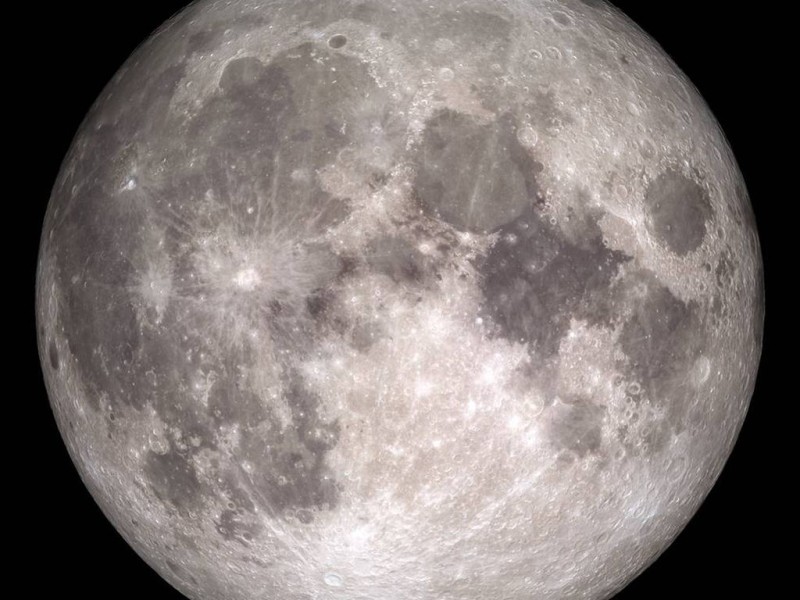
ALBANY — The term “supermoon” seemingly comes up frequently these days, but Monday morning’s full moon may live up to the billing, and Sunday night’s “preview” will be just as impressive to most skywatchers.
It will be the biggest and brightest full moon in 68 years.
Supermoon is a term used to describe a full moon that occurs on the same day when the Earth’s natural satellite, which travels around the planet on an elliptical path, is at perigee — its closest point to Earth.
As a result, officials say, a full moon at perigee — like Monday’s — can appear 14 percent larger and 30 percent brighter than a full moon at apogee — its farthest point from Earth in its orbit. At perigee Monday, the moon will be 221,524 miles from Earth. The distance between the two bodies will be 252,621 miles when it reaches apogee on Nov. 27.
Officials with NASA say Monday’s full moon — the November full moon is nicknamed the Beaver Moon — will be the closest to Earth since 1948. The next time the moon will become a full moon when it is this close to the planet will be 18 years from now.
Moons get these nicknames because of events that coincide with their appearance during the year. The Old Farmer’s Almanac says the names normally associated with full moons are the ones adopted by colonial settlers from Algonquin tribes in what is now the New England area. November was the month in which Native Americans and colonists set beaver traps before swamps froze over so they could obtain fur to make winter clothing, the almanac notes. It’s also known as the Frost Moon, because there usually is frost in that area when it appears in the sky.
For those who saw the October full moon, also known as the Hunter’s Moon, and thought it was brighter than normal, it also was a “supermoon.” The Dec. 13 full moon, nicknamed the Cold Moon or the Long Nights Moon, also will be a supermoon.
Monday’s moon, however, will be especially “super” because it will reach perigee at 6:22 a.m., only 2 1/2 hours before it becomes a full moon at 8:52 a.m. It’ll reach that full moon status about two hours after it sets in the Albany area. The moon rises at Albany at 5:22 p.m. Sunday evening and at 6:12 p.m. Monday, and the difference between viewing the moon earlier in the evening and at the time near when it is completely “full” — positioned opposite the sun so that the surface visible from Earth is completely in sunlight — will be unnoticeable.
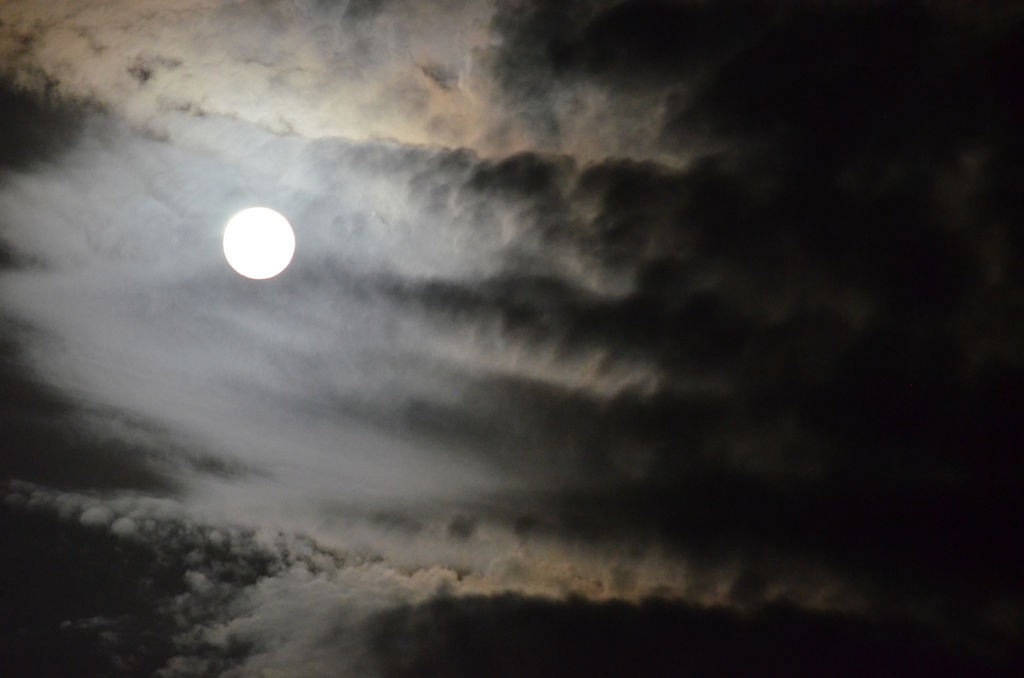
“I’ve been telling people to go out at night on either Sunday or Monday night to see the supermoon,” Noah Petro, deputy project scientist for NASA’s Lunar Reconnaissance Orbiter mission, said in an article posted on NASA’s website. “The difference in distance from one night to the next will be very subtle, so if it’s cloudy on Sunday, go out on Monday. Any time after sunset should be fine.
“Since the moon is full, it’ll rise at nearly the same time as sunset, so I’d suggest that you head outside after sunset, or once it’s dark and the moon is a bit higher in the sky. You don’t have to stay up all night to see it, unless you really want to.”
On Saturday, the forecast of mostly cloudy for the Albany area by the National Weather Service indicated that the view Sunday night might be obscured, though prospects were better for mostly clear skies Monday night.
If weather conditions don’t cooperate, moon watchers still have the Dec. 13 Cold Moon to look forward to, though it does come with a downside. The brightness of that full moon will adversely impact the ability to see another favorite for skywatchers — the annual Geminid meteor shower. Only the brightest of the meteors will be able to compete with the moonlight.
While most casual moon watchers just enjoy the view, NASA scientists study Earth’s closest neighbor to get a better understanding of the solar system.
“The moon is the Rosetta Stone by which we understand the rest of the solar system,” Petro said in the NASA article.
LRO has been mapping the moon’s surface and capturing high resolution images for more than seven years. NASA officials say the extensive mapping of the moon helps scientists understand the history of the Earth and of other planetary objects.
“Because we have the Apollo samples, we can tie what we see from orbit to those surface samples and make inferences about what has happened to the moon throughout its lifetime,” Petro said. “The samples tell us how old certain lunar surfaces are, and based on the number of impact craters on those surfaces, we can estimate the ages of the rest of the moon. Furthermore, we can then apply those models to estimate the ages of surfaces on other planets in our solar system — all by studying the moon.”
Related Articles

My Grandpa Was Killed in World War II. I Met Him Through His Letters Home
Gina Wolf’s grandfather died before she was born. His letters sent to her grandmother from Europe during World War II made it possible to know what kind of man he was.

‘Sounds Like a Mutiny.’ Secret Recording Exposes Claims of Toxic Leadership After a Marine’s Suicide
This week’s War Horse story follows the systemic failures before and after the death of Cpl. Drew Mobley who was the third in two years at Marine Corps Base Quantico to die by suicide.

Southwest Georgia artists recognized at packed opening of exhibition
The annual juried exhibition, one of the region’s largest showcases of visual art, features approximately 46 artists and nearly 90 works spanning painting, sculpture, ceramics, photography and mixed media.
