
Ruth’s Cottage and Patticake House a haven for abuse victims
Special Photos
By Tom Seegmueller
tom.seegmueller
@albanyherald.com
TIFTON – Talk to Kayla Myers, and it soon becomes apparent that domestic violence and sexual violence are two sides of the same coin. It also becomes apparent that both actions and the resulting consequences are far more complex than the stereotypical impressions most people have on the topic.
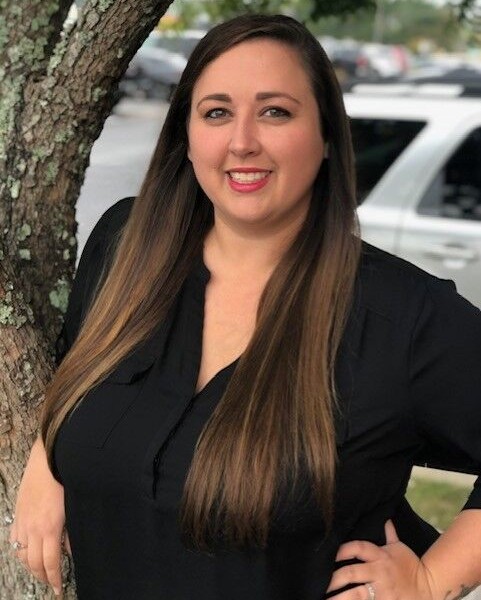
Myers is the sexual assault manager and the shelter manager at Ruth’s Cottage and Patticake House in Tifton. The facility provides a victim’s assistance program for those who have been victims of domestic violence, sexual assault and child abuse.
“One example I can use for sexual assault is a man who’s 5-foot-11 and well over 200 pounds,” Myers said. “He’s straight and he’s at a party when suddenly another male comes up and separates him from his friends and rapes him. He said he couldn’t fight back and he just kept saying over and over: ‘Why didn’t I do something? Am I not manly? Why did this happen? I didn’t want it. How do I handle this!’ It comes down to the fight or flight response.”
When it comes to fight or flight, in most cases the victim is so shocked by the attack they just shut down. Few attempt to flee, fewer attempt to fight back.
“It’s a shutdown of the body and brain; it is a protection mode,” Myers said. “They say, ‘Well she changed her mind. Why didn’t she say anything earlier?’ The brain shuts down. It puts the event into a little box. It only allows the victim to deal with the little bit they might be able to handle in the moment.”
Myers explains how suddenly, 10 years after an assault, a victim will start talking about what happened all those years ago.
“We had a speaker who was sexually abused her entire childhood,” she said. “She was able to run away and fall in love. Soon she was in the exact same scenario. She was able after a few years to leave and separate herself from it. Got mental health care and worked to change her life. She found someone who loved her back, treated her right, they had children and life was good. Then, she’s in her 50s, and she attempted suicide. Fortunately, she was unsuccessful. She said she didn’t know where the thought even came from. ‘Just one day my mind opened up.’”
In talking to her therapist, she learned her brain just said, ‘Oh, you’re better? Let me remind you about this’ and the box opened up and all the memories she had forgotten just came crashing through. Statistics indicate that 81% of women and 35% of men who are victims to sexual violence are impacted by short- or long-term post-traumatic stress disorder.
Acts of sexual and domestic violence occur at a much higher rate than most people realize. Statistics indicate that one in five women will be raped and one in 71 men will be raped at some point in their lives. In Georgia, during 2019 there were 52,282 calls to crisis lines for domestic violence and 10,400 calls for rape and sexual abuse.
The two main components of sexual and domestic violence are power and control. Myers breaks these into four subcomponents: A lack of coping skills, dependency, isolation and self-blame.
There are a number of factors that contribute to the lack of coping skills. The victim’s age and mental capacity are key factors in their ability to cope with an assault. This is an area where an abuser can also take advantage of those with mental and physical disabilities or those dependent on drugs and alcohol.
The victim’s dependency on their attacker can play a pivotal role in their inability to remove themselves from an otherwise intolerable situation. In this regard, many victims are led to believe by their abuser that they can’t make it on their own.
Isolation is an even more deliberate technique through which the victim is groomed into accepting a lifestyle change that separates them from friends, family and other interpersonal support.
“Think of your normal family traditions,” Myers said. “(Victims are told) ‘I love you so much and I know that you want to do things with your family. But it’s just you and me now and I want us to start our own traditions. Why don’t we have our own Thanksgiving?’ You’re not thinking that’s a bad thing. You think, ‘Yeah that makes sense.’ You don’t think they don’t want you around your mom and dad. They just pull you away a little bit at a time. Then it’s, ‘You can go but you know they don’t like me there. I wish you’d stay with me because I feel alone. Your friends don’t like me; I don’t know why.’ When in fact they are trying to get your attention and point out the red flags and tell you to get away.”
Self-blame is the real deal sealer.
“The abuser needs the control,” Myers said. “I swear I think there’s like a guidebook out there somewhere, because they all do the same thing.”
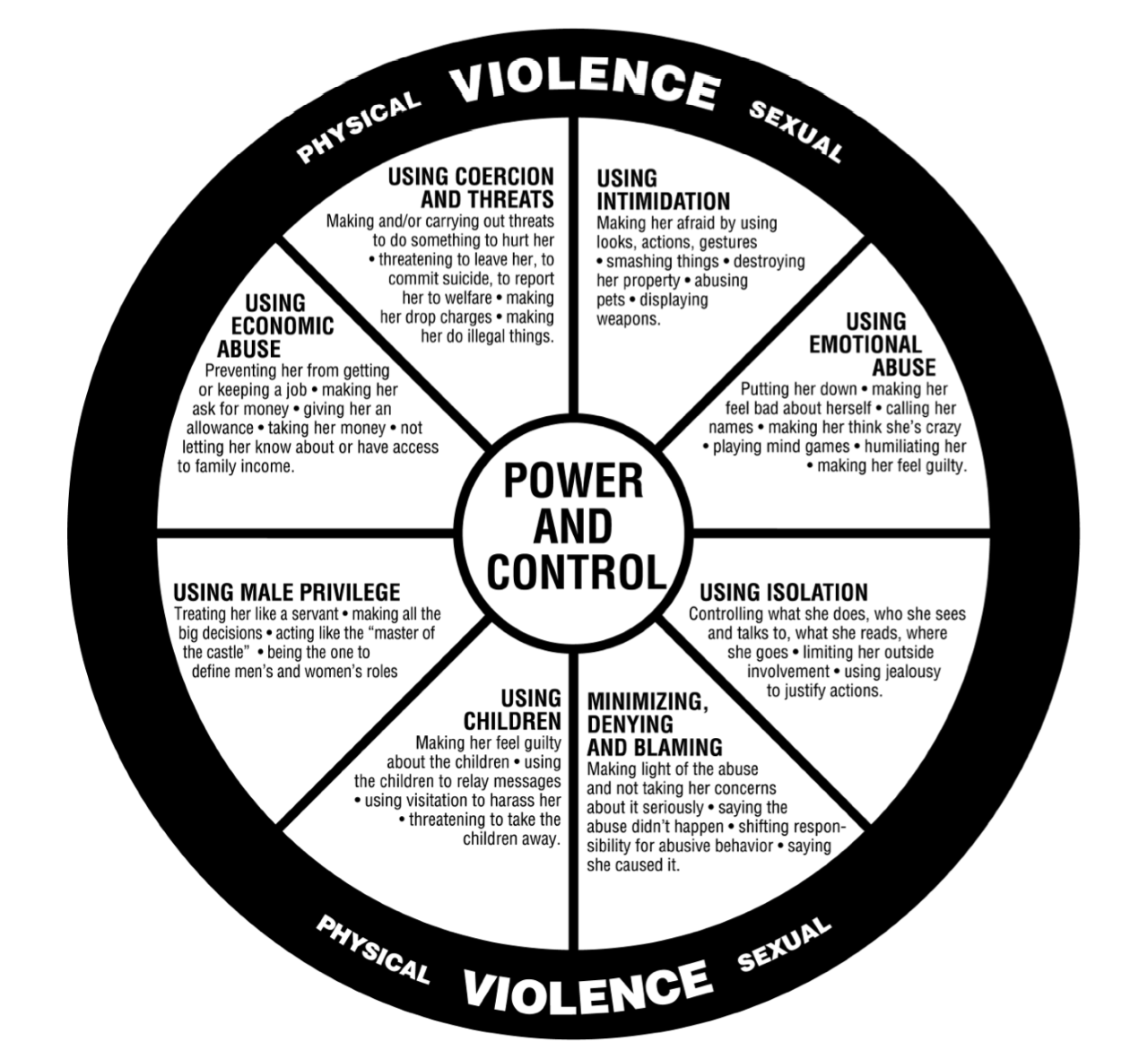
Advocates map these actions out on what they refer to as a power wheel. Each spoke of the wheel is an action used to control a victim. Acts of intimidation can range from gestures and looks to destruction of property or the abuse of children and pets to the display of weapons. Emotional abuse can range from berating comments to public humiliation. Acts of coercion and threat range from making a threat against the victim to actually carrying out the threat, be that physical abuse, abandonment or suicide.
Coercion can range from making the victim do illegal things or dropping criminal charges that they might finally make against their abuser. Acts of economic abuse range from withholding joint assets to preventing the victim from getting a job.
These actions, combined with the four other components Myers previously highlighted, make it difficult for therapists, advocates and the staff at Ruth’s Cottage to break the cycle of abuse trapping the victims they serve.
The first step in breaking this cycle generally begins with either a call to the crisis line or the involvement of law enforcement agencies if they become involved in an instance of abuse.
“If they call the crisis line, we determine if law enforcement needs to be contacted or if the victim needs immediate medical care,” Myers said. “Once those issues are addressed, we do what it takes to get them settled into their room. They never come straight to the shelter. We will meet them somewhere and bring them to the shelter, or law enforcement may bring them. That’s all done behind the scenes. They do not have an address for the shelter.”
Once residency is established at the shelter, staff reviews safety plans for staying in the shelter and participating in the program. Myers said predators and abusers are very savvy in how to use technology to track and control their victims. For safety reason the location of the shelter is masked.
The shelter has communal living areas and apartments to accommodate up to 24 people. The apartments can accept families or someone who is not comfortable in the communal setting. If a male is not comfortable in the mostly female setting of the shelter, staff has worked out arrangements with local hotels that can serve as an optional residence for victims in the program. Either of these options also may be preferable to members of the LGBTQ community who are victims of assault.
Everyone at the shelter gets their own program, which averages four to six weeks.
“We have some people that are only here for one night to get safely and quickly to somewhere else. Some have been here for three months,” Myers said. “We have victims who come here and tell us ‘I have to get away, my life almost ended.’
“We get them transportation, we get them medical care, we assist them in finding a job. We work with counselors; we get them mental health assistance and suddenly they just walk out of the shelter and go back to the abuser. You want to get so angry. But the real concern is their safety. While they are living here, they are safe.”
The reality is that the grooming and psychological manipulation by the abuser is frequently so strong that it requires multiple attempts by the victim to break their cycle of abuse. Myers said even though this is frustrating, it is just part of the intervention and healing process.
“We have workers here that have been past victims,” she said. “I asked them about this: ‘You were a victim, now you’re an advocate. What would you tell someone?’ Their answer: ‘Just listen. Even if they have gone back multiple times. There is a reason they go back. If they come to you multiple times, listen multiple times. The five times they came to you, they felt safe.’
“The most important thing I can tell anyone is just listen and believe. … We aren’t interviewers or the police. We aren’t that side of it.”
Myers has another weapon in her arsenal. Harley is her Australian Shepherd with multiple certifications as a therapy dog. She helps Myers break the ice, provide comfort, and gain the victim’s trust. For a number of years, Myers has operated Heeling Paws, an animal-assisted therapy program. The dogs also provide much-needed stress relief to the team at Ruth’s Cottage. Theirs is not a 9-to-5 job that you leave at the office.
Another fact staff at the shelter face that might seem ironic but in turn makes perverse sense is that most victims — in eight of 10 cases — are assaulted by someone they know.
“That’s something that happens all the time; you talk to the ladies here and you’re only going to get bits and pieces,” Myers said. “You don’t have to ask questions. You don’t need to put them on a timeline. It’s like putting a puzzle together, and it’s very rare for all the pieces of the puzzle to be on the table at the same time. That’s why we are so strong on just believing them and listening. As advocates, we don’t ask many questions. We just keep our minds and our doors open.”

Related Articles

‘Sounds Like a Mutiny.’ Secret Recording Exposes Claims of Toxic Leadership After a Marine’s Suicide
This week’s War Horse story follows the systemic failures before and after the death of Cpl. Drew Mobley who was the third in two years at Marine Corps Base Quantico to die by suicide.

Southwest Georgia artists recognized at packed opening of exhibition
The annual juried exhibition, one of the region’s largest showcases of visual art, features approximately 46 artists and nearly 90 works spanning painting, sculpture, ceramics, photography and mixed media.
Powerful performances drive Theatre Albany’s ‘The Color Purple’
From the street, strands of purple ribbon wind around the white columns of the historic theater, hinting at the story waiting beyond its doors. Inside the foyer, a carefully curated slideshow flickers across a large screen, cycling through the faces of the cast. Some are seasoned performers. Others are stepping onto a stage for the very first time. Teachers stand alongside former students. Parents perform beside their children. People who worship in different churches, work different jobs and come from different corners of Southwest Georgia gather beneath the same lights to tell the same story.
