
St. Teresa’s ‘little church’ is Albany’s oldest
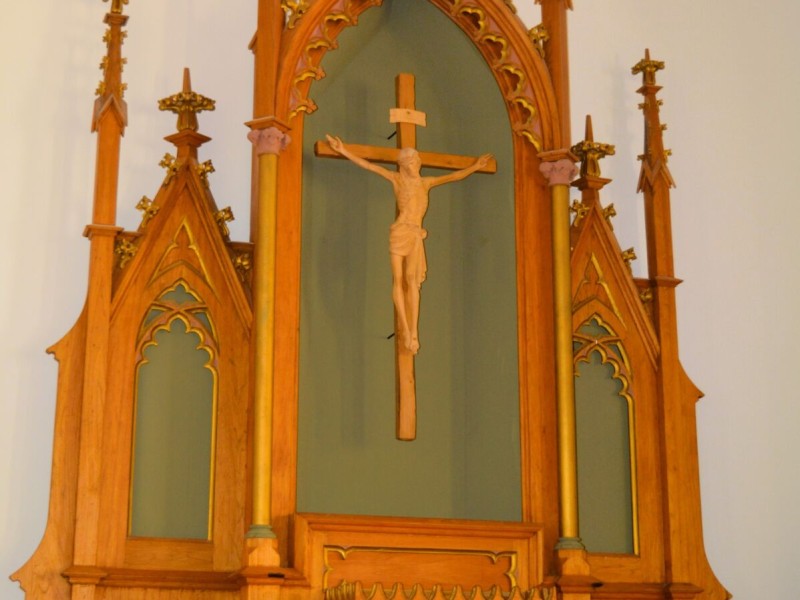
File Photo: Tara Fletcher
By Tara Fletcher | [email protected]
ALBANY
In the spirit of Catholicism, I must confess that most of the research for this story was literally handed to me by Angel Bradford.
In 2011, While working on her master’s degree in Theology, Angel wrote a detailed paper on the history of St. Teresa’s Catholic Church in Albany. Today, she gifted a copy to me and agreed that some plagiarism would be OK this one time.
In 1859, Albany’s founding father, Col. Nelson Tift, deeded a half-acre lot (at 313 W. Residence St.) to John Barry, the Bishop of Savannah, for “the erection of a Catholic church thereon.”
Construction of the small brick church, which wouldn’t be named St. Teresa’s until years later, began on Aug. 9, 1860, and was built under the direction of Irish priest Thomas O’Reilly, who was serving Albany as part of a mission of the Macon parish. (Side note: In 1864, during Gen. William Sherman’s march to the sea, it was Father O’Reilly who convinced Sherman not to burn the churches in Atlanta.)
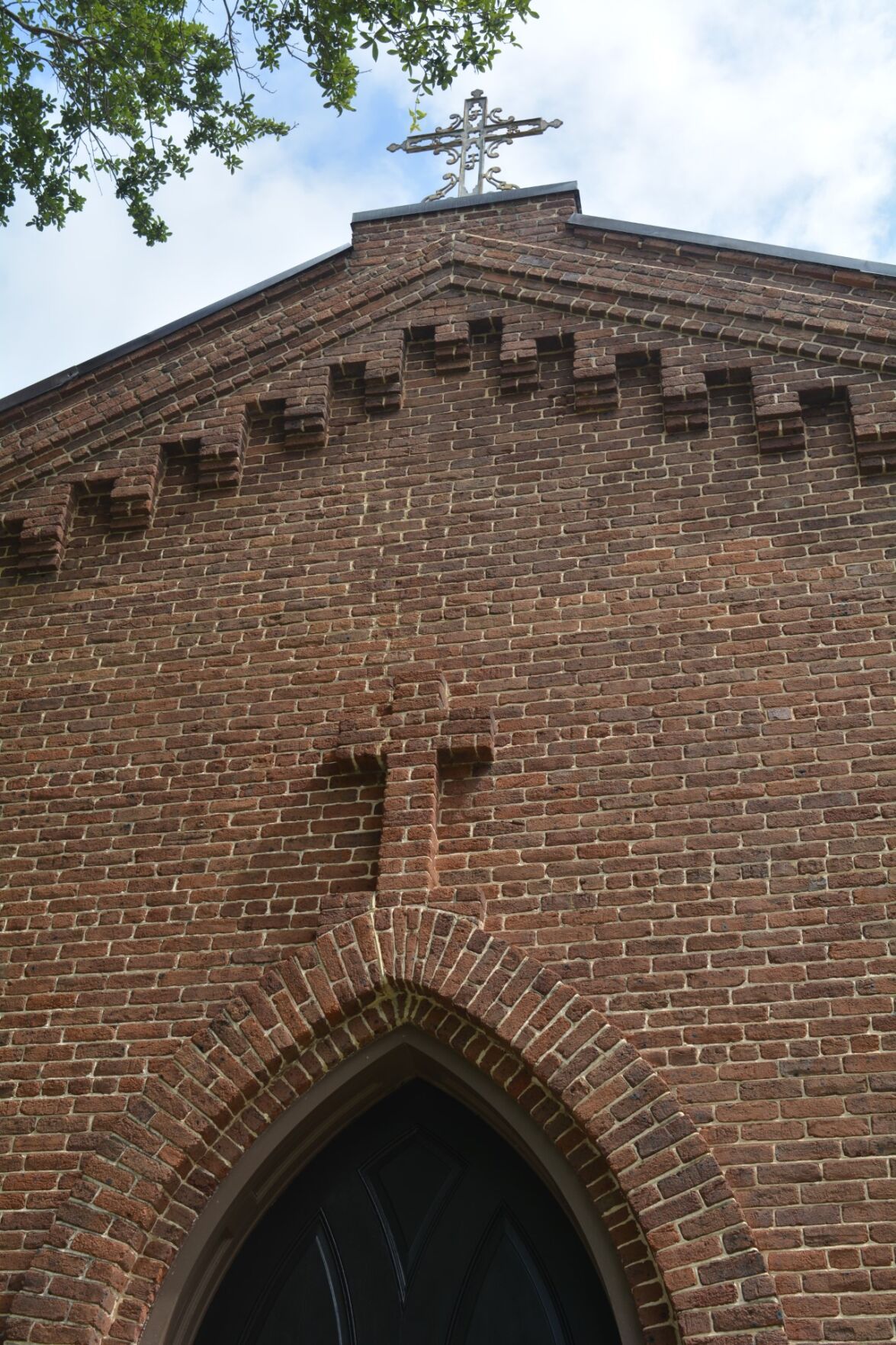
The bricks for the church were donated by Dr. S.L. Barbour and were hand-made by Barbour’s plantation slaves in Baker County. As testament to their craftsmanship, while resealing the brick just a few years ago, a brick company employee said, “Even with all the technology and knowledge we have today, we can’t duplicate these bricks.”
And although the design seems simple at first glance, close attention to the details shows that not only are the bricks something special, the masons were very skilled as well.
By 1861, the outside of the building was completed, and the plastering of the inside was underway. However the progress would take a hit when the plaster artist, Tom Churchill, stopped abruptly and rode away to follow Gen. Robert E. Lee in Virginia. Churchill died at Malvern Hill.
In October of 1864, Bishop Augustine Verot visited the unfinished church to find it was being used as a hospital for wounded Confederate soldiers. The church would remain unfinished until Lee surrendered to U.S. Grant in 1865.
After the war, the church was completed. In 1875, Father Stephen Beytagh added the Albany church to a list of churches he served, and one Sunday each month area Catholics would celebrate Mass there. Father Beytagh’s appointment lasted a little over a year, ending with his death from yellow fever at only 24 years old.
His successor, 29-year-old Father James Murphey, tragically died of the same disease only six months after his ordination.
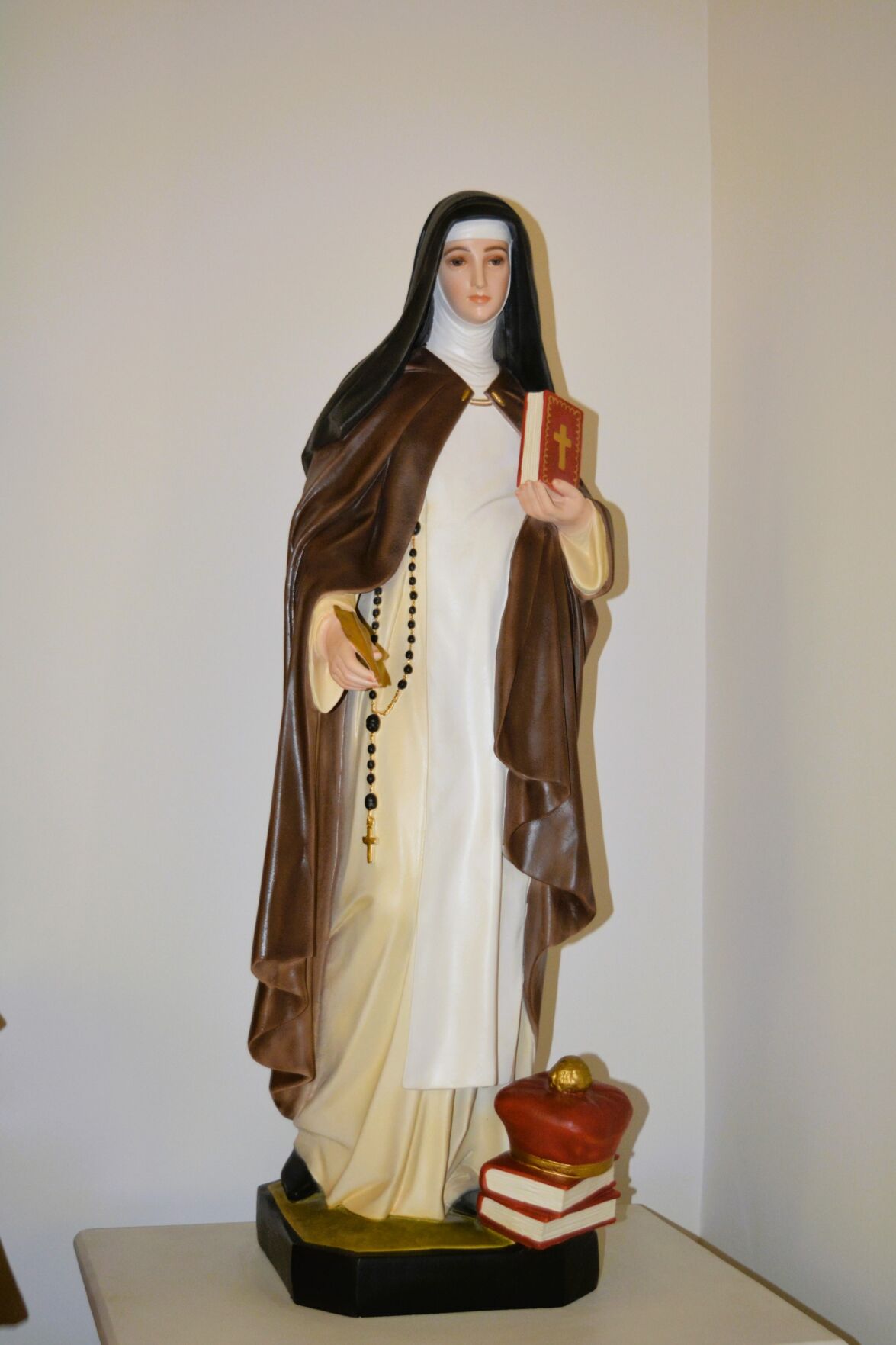
In 1882, under the leadership of Father Charles C. Prendergast, the church was finally dedicated under the patronage of St. Teresa of Avila.
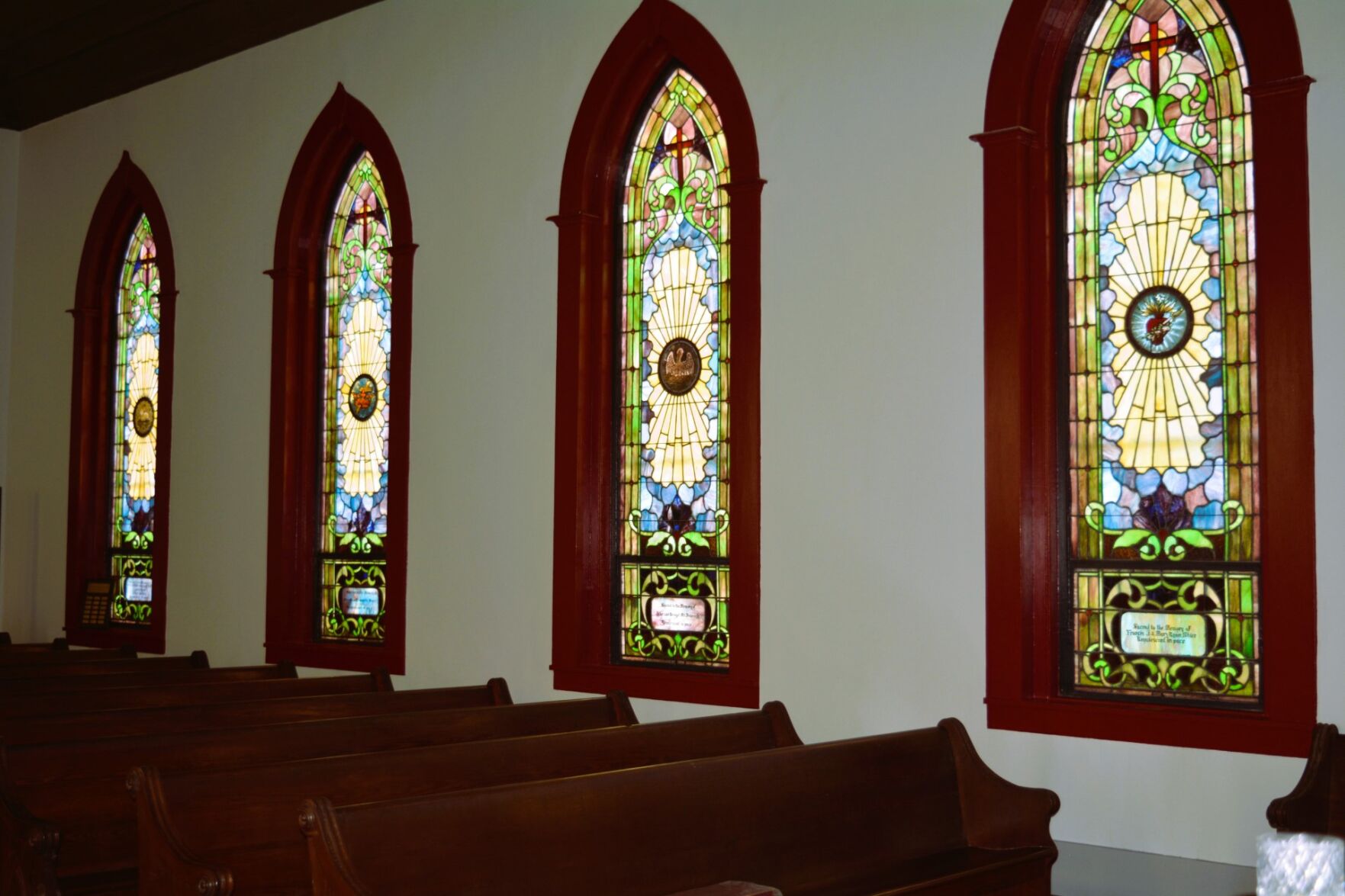
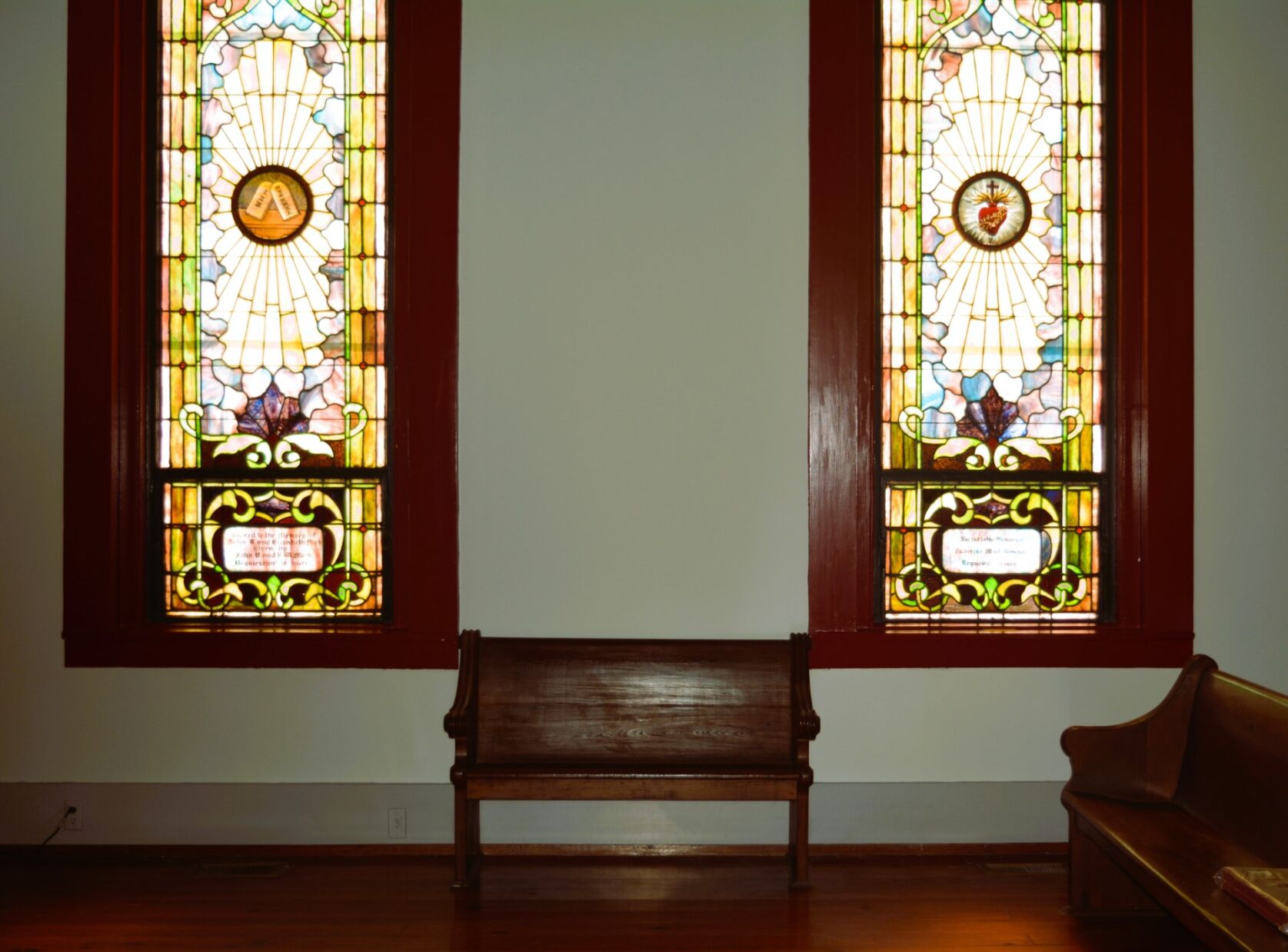
In 1901, a rectory was built next to the church, and in 1902 the interior of the church underwent extensive renovations. It was at this time the ceiling was redone, stained glass windows were added and new pine pews replaced the old benches.
During the first half of the 20th century, St. Teresa’s was the center of the largest Catholic mission area in the United States. As many as four priests lived in the rectory at one time and traveled all over southwest Georgia celebrating mass, teaching and administering the sacraments.
In the 1930s, the church was renovated again, and two lots between the church and Jefferson Street were purchased. Those lots were put to use under the direction of Father Daniel J. Burke with the opening of Albany’s first Catholic parochial school with 31 students from kindergarten to sixth grade. The original rectory was converted to a convent, and the house west of the church became the rectory.
By 1958, the oldest church in Albany and it’s buildings were no longer large enough to comfortably serve students and congregants, and St. Teresa’s officials broke ground on new facilities.
Between 1974 and 1980, the old rectory and convent were torn down, but the “little church” got a facelift. In 2011, more work was done to prevent deterioration and keep the building structurally sound.
Mass is still held at the location every Wednesday at noon, and special occasions, weddings and baptisms are held there as well.
The church is listed on the national registry of historic places and is just one of many buildings in Albany that you might usually drive by and not think twice about. But much of Albany’s history (good and bad) can be found within the walls of our oldest structures. If only those walls could talk.
Author

Related Articles
Southwest Georgia artists recognized at packed opening of exhibition
The annual juried exhibition, one of the region’s largest showcases of visual art, features approximately 46 artists and nearly 90 works spanning painting, sculpture, ceramics, photography and mixed media.
Powerful performances drive Theatre Albany’s ‘The Color Purple’
From the street, strands of purple ribbon wind around the white columns of the historic theater, hinting at the story waiting beyond its doors. Inside the foyer, a carefully curated slideshow flickers across a large screen, cycling through the faces of the cast. Some are seasoned performers. Others are stepping onto a stage for the very first time. Teachers stand alongside former students. Parents perform beside their children. People who worship in different churches, work different jobs and come from different corners of Southwest Georgia gather beneath the same lights to tell the same story.
The Worst Job in the Marines: Telling Parents Their Child Was Dead. It Was Also an Honor
Telling a family their child died in combat is something no one wants to do, but someone has to. Christopher Murphy described his service as a Casualty Assistance Calls Office as miserable but vital.

