
‘The Gift of the Elk’: Native American flutist Joseph FireCrow performs with Albany Symphony
‘The Gift of the Elk’ tells how the Cheyenne people got the flute
By Jim Hendricks
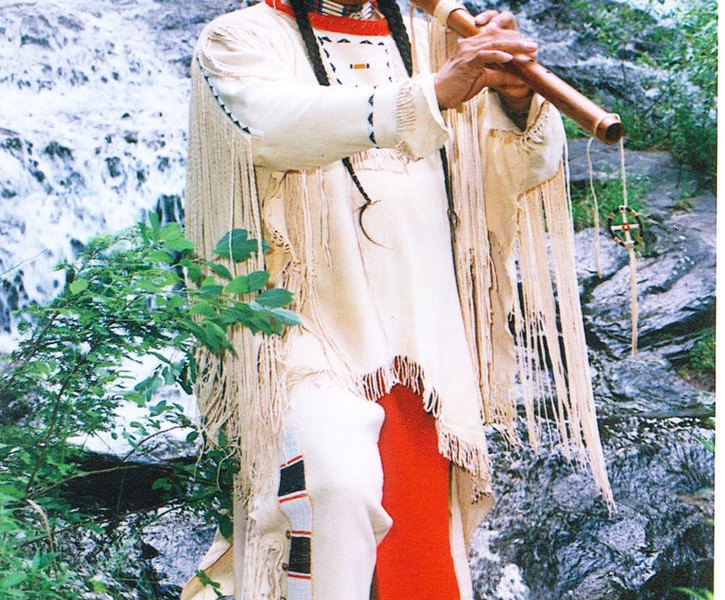
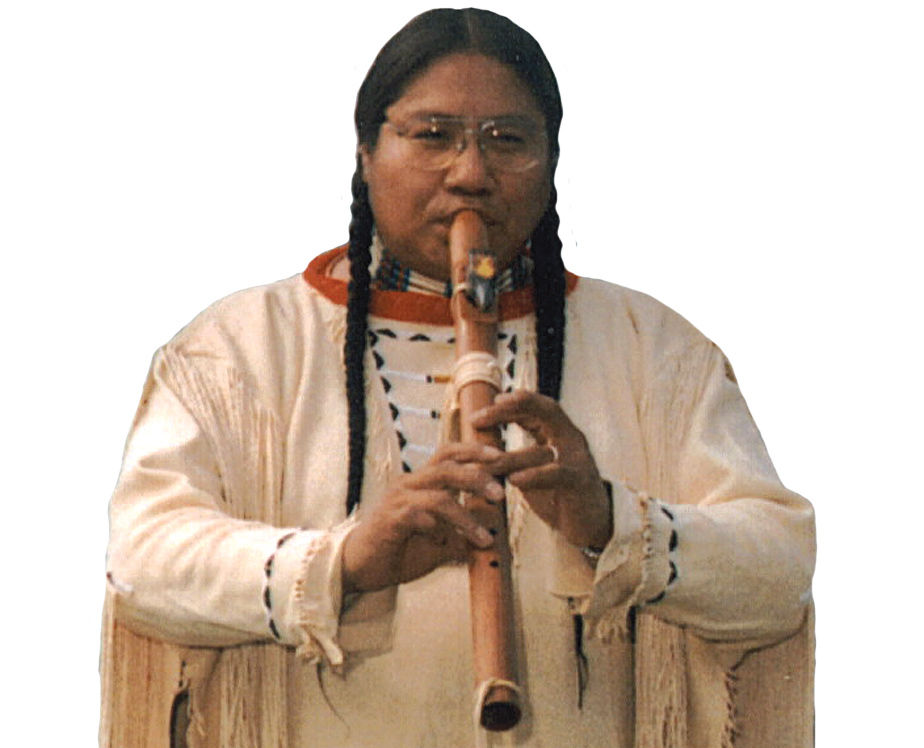
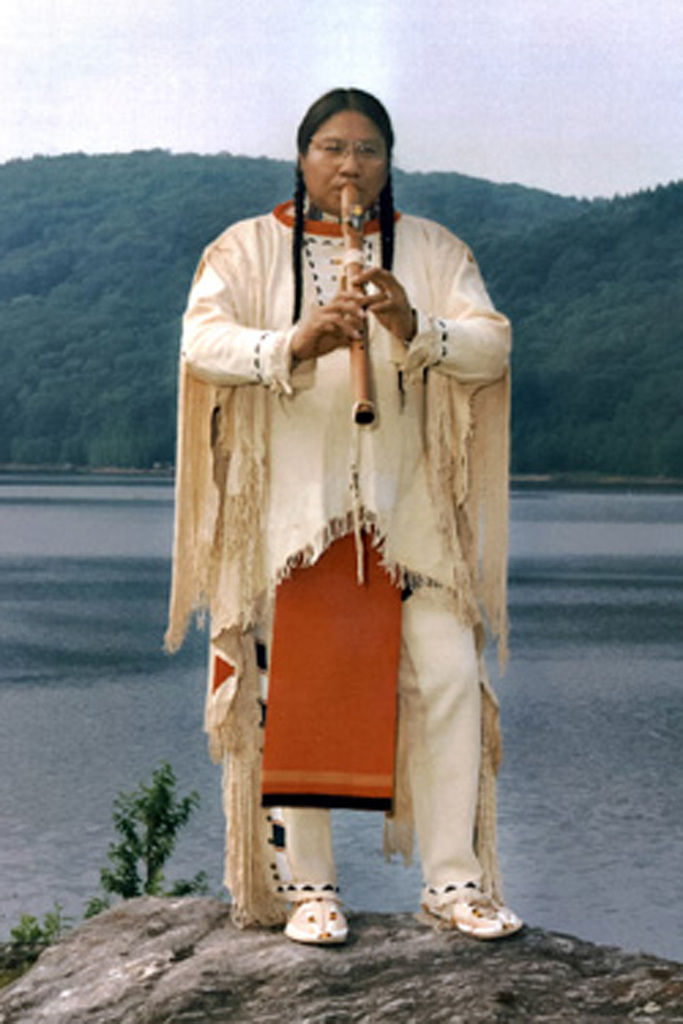
ALBANY — Southwest Georgians will get a chance to hear a rare symphony work based on Native American lore performed by a musician regarded as one of the top three Native American flutists when Joseph FireCrow joins the Albany Symphony Orchestra April 9 for its “The Gift of the Elk” concert.
In an interview last week from his home in Winsted, Conn., FireCrow said the piece he will perform recounts a Native American legend.
“It’s called ‘The Gift of the Elk,’” he said. “The story is about how the flute came to the Cheyenne people. … Instead of having movements, they’re called scenes and each scene will depict the story itself. I’ll be chanting, drumming, playing flute and also I will be using the spoken word to tell the story of how the flute came to the people.
“I’ll be dressed in traditional elk hide regalia, our equivalent of a tuxedo.”
The symphony will present FireCrow’s portion of the program in a multimedia format.
“They’re going to be using big photographs to depict the story that we’re going to be telling,” he said.
Claire Fox Hillard, music director of the Albany Symphony Orchestra, said he believes the imagery is “going to add a lot” to the impact of the performance.
The concert will have a distinctly spiritual, American flavor heavily influenced by Native American and African American music. In addition to “The Gift of the Elk,” composed by Jim Cockey of Boise, Idaho, the concert will feature three spiritual pieces by Adolphus Hailstork, an African-American composer from New York, and Antonin Dvorak, a Czech composer who wrote “From the New World” while residing and working in the United States.
Hillard said the selections will show how Native American and African American music “figures into classical music,” which is often seen as European in nature.
“There’s a deeper reason for doing it,” Hillard noted.
FireCrow had been scheduled to perform during the 2014-15 season’s final subscription concert, but the performance was delayed until this season so that his appearance could have greater effect. Hillard said there are plans for interaction with Chehaw’s annual Native American Festival that is on the same weekend, as well as visits to a pair of local elementary schools by FireCrow.
“We’re going to be able to maximize his visit the way we’d hoped to before,” Hillard said. “It’s a no-brainer with the Native American Festival that Chehaw does.” The festival is another example that there “are good things happening in Albany,” he said.
FireCrow said he was happy to be coming to the Good Life City. “We were disappointed, too (at last year’s postponement), and we’re just really happy to be able to make this happen,” he said.
He said his other appearances in Albany won’t be the same as the symphonic performance of “The Gift of the Elk,” which debuted in 2010 with the Cape Code Symphony Orchestra.
“We’ll be telling some other stories, maybe a little more flute-playing traditional style,” he said. “This piece (with the ASO) is strictly classical and, as far as I know, it’s one of the very few really true Native American for native flute for orchestra.”
Cockey, FireCrow said, “did a really beautiful job of telling the story. He wrote all the music arrangements. I helped him by letting him know what the flute could do and what it could not do as far as classical style goes.”
Playing the flute for classical music and traditional Native American style are “totally different animals,” he said. “In the classical world, it’s more strict and pitch is really important. You have to read music and express it that way. A lot of cross-fingering and covering half-holes on the flute, whereas if I’m doing a traditional piece or even an improvisation, then the style is totally different. I don’t have to stick to given measures or given tempo.”
But Native American music is steeped in tradition, he added.
“The songs that come from our flute, we call them wolf songs,” he said. “You have to perform them just the way they were passed down. You can’t add or take away from them. You have to do it the way it was in its original style.
“The wooden flute is a living tradition with our people. It’s been around as long as human beings have been around.”
FireCrow’s Cheyenne heritage and music training give him a unique perspective on the two genres.
“I’m a classically trained trumpet player from fourth grade and college,” he said. “That’s given me the ability to blend the traditional style of native flute with more modern genre and especially with classical music. It’s a wonderful experience to facilitate this type of music this way.
“As far as I know, it’s not done very often … a rarity, I think. For the people that come to see it, they can keep that in mind.”
FireCrow said the story and music are “powerful. It is beautiful and it evokes strong emotions, elation, and it’ll tug at your heart, too,” he said.
Cheyenne elders had to give approval for the musical work, which has not been recorded. FireCrow said it is important that Native American traditions survive for future generations.
“The oral tradition for our people is still alive and strong,” he said. “When we do the written form, it blends both together and it fits well together. Credit should be given to Jim Cockey, of course, as well as the elders of our people for keeping this kind of thing alive.
“To have their recognition and blessing and permission to do this is quite an honor. To be able to provide this for the community is truly awesome. I don‘t have enough gratitude in my heart to express it, other than to do the best I can.”
FireCrow is originally from Lame Deer, Mont. He moved east for a reason not uncommon to many married men. His “beautiful wife,” JoAnn, is from Connecticut.
“She has traditional roots, too. She’s Italian,” he said, pausing. “We have a lot in common.”
The couple complement each other. FireCrow performs, while his wife is booking agent, manager, personal assistant. “Everything, really,” he said. “She truly keeps all the ducks in a row.”
FireCrow reiterated the honor he feels for being able to bring a piece like “The Gift of the Elk” that is so important to the Cheyenne culture to others not familiar with it. He said he hopes that his work helps keep the traditions alive and strong.
“I’m approaching 60, so I guess I should consider myself an elder, too,” he said. “To perform this symphony across the country and for it to be very well received, I’m hoping that some young musician will perform it in the future.
“To me, that would be the ultimate, to know it’s being carried on for the next generation.”
The concert is scheduled for 7:30 p.m. April 9 at the Albany Municipal Auditorium, 200 N. Jackson St. It’s the final full orchestra concert of the 2015-16 season, though the Symphony @ the Museum chamber music series Sunday afternoons at the Albany Museum of Art will has one concert remaining on May 22.
Tickets for “The Gift of the Elk” range from $10 (students) to $40. They may be purchased by contacting the symphony offices at (229) 430-8933 or visiting online albanysymphony.org.
Related Articles
My Grandpa Was Killed in World War II. I Met Him Through His Letters Home
Gina Wolf’s grandfather died before she was born. His letters sent to her grandmother from Europe during World War II made it possible to know what kind of man he was.

‘Sounds Like a Mutiny.’ Secret Recording Exposes Claims of Toxic Leadership After a Marine’s Suicide
This week’s War Horse story follows the systemic failures before and after the death of Cpl. Drew Mobley who was the third in two years at Marine Corps Base Quantico to die by suicide.
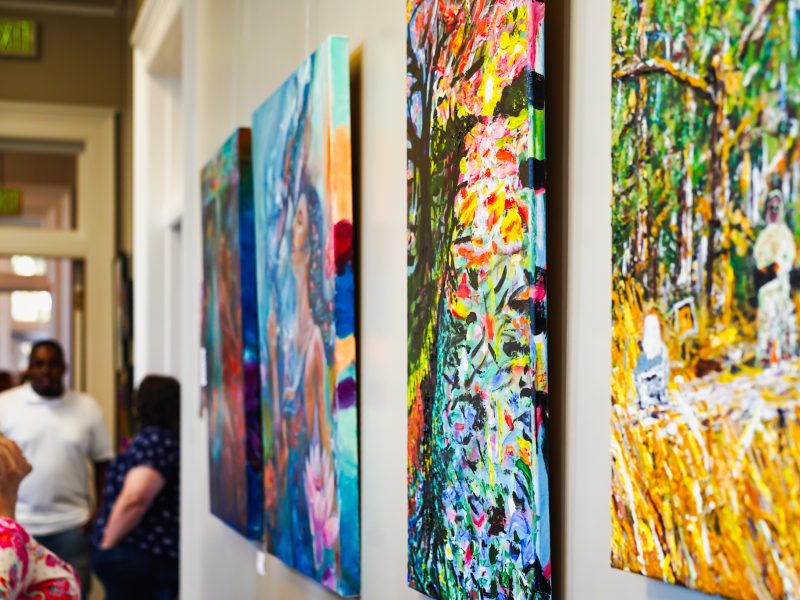
Southwest Georgia artists recognized at packed opening of exhibition
The annual juried exhibition, one of the region’s largest showcases of visual art, features approximately 46 artists and nearly 90 works spanning painting, sculpture, ceramics, photography and mixed media.
