
Outdoors Beyond Barriers: DNR initiative offers accessibility to Georgians with disabilities
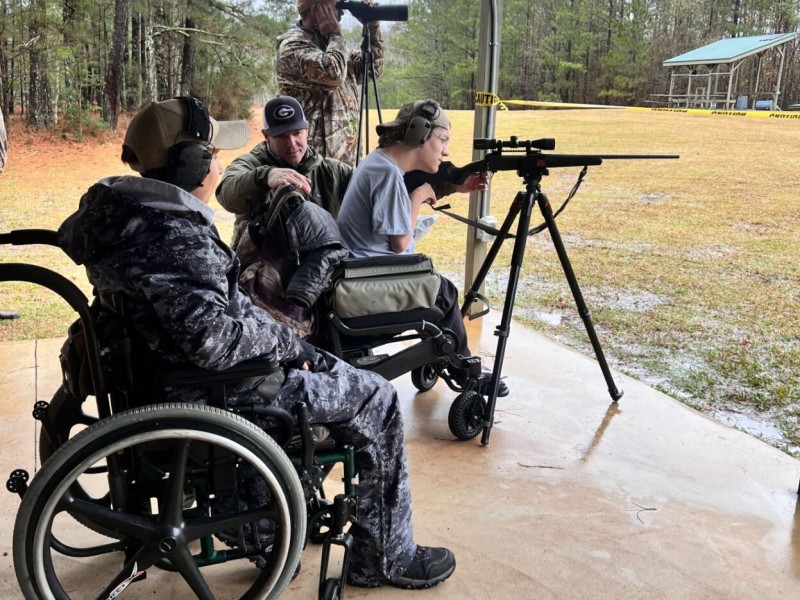
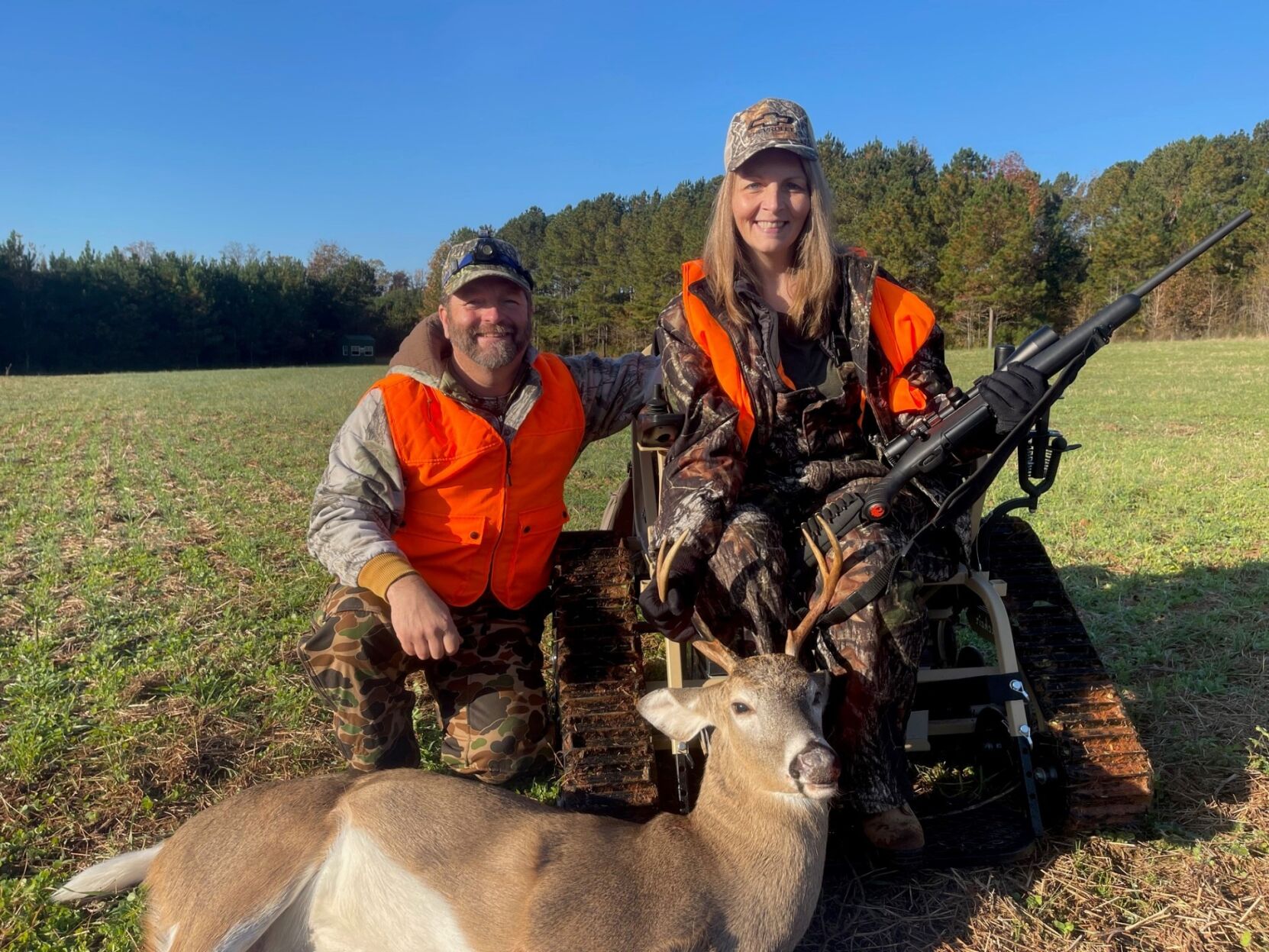
Special Photo: Georgia DNR
Special Photo: Georgia DNR
By Tom Seegmueller
[email protected]
ALBANY‒ Earlier this year the Georgia Department of Natural Resources announced its Outdoors Beyond Barriers initiative with a goal of increasing accessibility to Georgia’s state parks, historic sites, and outdoor resources to the more than 2.2 million Georgians with disabilities.
This week DNR announced that the initiative, which initially provided free, high-mobility all-terrain track wheelchairs at 10 state parks, historic sites and a wildlife centers, was expanding with nine additional track chairs, providing a significant increase in the opportunities for visitors with disabilities.
DNR Commissioner Walter Rabon said that 14% of targeted disabilities are mobility-related.
“Outdoors Beyond Barriers puts an increased focus on expanding existing and creating new adaptive outdoor opportunities,” Rabon said. “Having personally attended one of the initial adaptive hunts we introduced last year, I cannot wait to see the excitement of hunters taking part in some exceptional new opportunities this next year.”
For additional information about the Outdoors Beyond Barriers initiative, visit GADNR.org/OBB.
Following is a list of changes and opportunities for adaptive hunting, fishing and other activities at state facilities:
— Adaptive hunters have the opportunity to apply for one of seven new adaptive Wildlife Management Area hunting events on public properties across the state. To apply, visit GoOutdoorsGeorgia.com and select the “Events and Learning Opportunities” tab. The deadline for applications is Aug. 15.
— Previously, adaptive hunters could take advantage of an early waterfowl hunting opportunity on private land or participate in one of the multiple dedicated mobility-impaired hunts (for different species) on a variety of public land Wildlife Management Areas (WMAs). These opportunities will continue.
— Georgia DNR also is working on more accessible fishing events and seeking additional outdoor opportunities in partnership with private landowners throughout Georgia.
Other Adaptive Opportunities and Amenities in Georgia include:
• Action trackchairs available at Georgia state parks and historic sites.
• Accessible cottage/campsite accommodations at Georgia state parks.
• Accessible kayak launch at Hard Labor Creek State Park.
• Accessible horse ramps (Don Carter State Park and Charlie Elliott Wildlife Center).
• Georgia public fishing areas offer a variety of ADA-accessible fishing piers and facilities.
• Coastal public fishing piers are ADA-accessible.
• 12 public ranges (archery or shooting) in Georgia are ADA-accessible.
• Birding and wildlife viewing opportunities: Many DNR sites offer multiple accessible piers and trails for mobility-impaired visitors and others, including the Colonial Coast Birding Trail and the ADA bridge connecting the city of Winder with Fort Yargo State Park. Eligible participants must meet the requirements for a disability hunting and fishing license. However, hunters taking part in these new hunts do not have to possess a disability license if they already have an alternate legal license, such as a Lifetime License.
Disability License Change: Disabled hunters who complete the “Certification of Disability Application” (available at GoOutdoorsGeorgia.com) and are approved will receive an electronic certificate of disability and never again have to resubmit proof of their disability (as long as they remain disabled). The certification allows hunters to obtain their disability hunting or fishing license online or by phone.
The OBB initiative is working to remove obstacles for people with mobility impairments to help them connect with nature, explore the outdoors, and take part in activities like hunting and fishing that may have previously been unavailable. One reason for the initiative’s success is that it is not totally dependent upon State funding. The 19 all-terrain track chairs now available across the state are possible through a partnership between DNR and the Aimee Copeland Foundation.
“We wanted to have a partner where as many people as possible could use the all-terrain chairs, and we felt that the parks and historic sites were just a natural partner because you know there are so many across the state,” Melanie Dunn, COO of the foundation, said. “The foundation purchases the chairs that are housed at the DNR sites. All an individual needs to do to use a chair at no charge is to go online at www.allterraingeorgia.org to review requirements and become a certified member of All Terrain Georgia. The website also contains information on the sites where chairs are available and a ‘members only’ page for reserving your all-terrain chair.”
The ACF was founded by Copeland, who suffered a life-changing injury when the homemade zip line she was riding dropped her on the rocks in the lower Tallapoosa River near Carrollton. The wound to her calf required 22 staples to close. She returned to the emergency room the following day suffering from intense pain. A few days later, she was diagnosed with necrotizing fasciitis, a flesh-eating bacterial infection.
“While doctors worked hard to save my life, they had to amputate both of my hands my right foot and my entire left leg,” she said. “I was 24 years old and grateful that I survived, but the road to recovery that lay before me was overwhelming.”
Before her accident, Copeland had enthusiastically participated in a variety of outdoor activities.
“I quickly became frustrated with what seemed to be my new situation – just sitting in a wheelchair,” she said. “A huge part of who I was no longer seemed accessible to me. And I wasn’t alone. People who use wheelchairs are often separated from the outdoors due to mobility and accessibility issues.”
Today Copeland is a holistic psychotherapist, activist, certified yoga instructor and public speaker. She holds dual master’s degrees in psychology and social work, practicing therapy as a Licensed Clinical Social Worker in both Georgia and North Carolina. She credits a large part of her recovery to her love of nature.
“Since the accident, I have relearned how to connect with nature,” she said. “I bike, swim, kayak and lay in the grass – just like I used to. Reconnecting with the outdoors has been an essential component to my physical, mental and spiritual recovery.”
The belief, “that the magic of the outdoors can “transform physical, mental and spiritual health” is fundamental to the goals of ACF.
With each all-terrain chair costing approximately $7,500, the contribution by the Copeland Foundation is significant. Individuals, groups or businesses that would like to help support AFC and All Terrain Georgia in their efforts to “bring together people of all races, religions, and socio-economic status, raising awareness about differences and promoting inclusivity in our state parks,” can go to www.allterraingeorgia.org.
Author
Related Articles
Dawson’s $10.2 million sewer project leaves major financial questions unresolved
As Dawson’s finance director resigns and operating pressures mount, records show $10.2 million in sewer funding, frozen loans, missing audits and gaps in the public accounting of project money.
Foreclosures jump 52.9% across the region as buyers regain negotiating power
In Dougherty County, the number of residential properties advertised for foreclosure has nearly doubled this year. In neighboring Lee County, developers are preparing to add hundreds of new houses and apartments, including homes aimed at buyers who have struggled to find newer housing at an attainable price.
Terrell County school board calls special meeting to consider CFO consulting services
The Terrell County Board of Education will hold a special called meeting Tuesday to consider hiring outside financial consulting services as the school district continues work on its finance operations.
The meeting is scheduled for 5 p.m. Tuesday, Aug. 25, in Room 107 of the Terrell County Board of Education office, 761 First Ave. SE in Dawson.
