
The pros and cons of nonresident hunters in Georgia
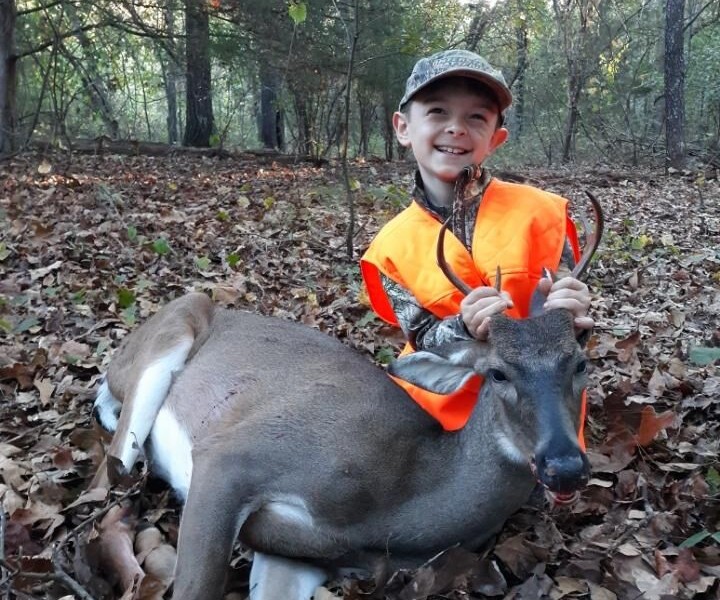
Special Photo: Georgia DNR
By Tom Seegmueller
[email protected]
ALBANY‒ Seasonal changes in southwest Georgia are subtle or often nonexistent. However, each year the sudden proliferation of Florida license plates on the pickup trucks in the region leaves no doubt that the opening day of Georgia’s deer season is rapidly approaching.
This observation is not merely the aspersions of a disgruntled Good Ole Boy, but one backed up by a recent report ranking Georgia as the state having the fifth-highest percentage of nonresident hunters in the United States. The report stated that 12% of the total hunting licenses issued in the state were sold to nonresidents. Only Montana, Colorado, Wisconsin and Idaho had a higher percentage of nonresident hunters, respectively.
In an effort to verify this report and get more details relating to the subject I reached out to the Georgia Department of Natural Resources. State Deer Biologist Charlie Killmaster with the DNR’s Wildlife Resources Division, who looked into the data he had available, provided a more in-depth look into the subject.
Killmaster’s data revealed that a total of 1,194,234 hunting licenses were sold in Georgia during Fiscal Year 2023, generating $20,736,312 in total sales revenue. It also shows that 1,046,960 of these licenses, or 88% of the total, were sold to Georgia residents, generating $9,901,326, or 48% of the total revenue generated from hunting license sales in the state. The other 147,274 licenses, or 12% of the sales, were purchased by nonresidents, generating $10,834,986 or 52% of the total revenue generated by hunting license sales in the state.
The fact that the nonresidents’ 12% of hunting license sales account for 52% of revenue generated by hunting license sales for FY 2023 is impressive. However, a closer look reveals this revenue is just a small part of the overall economic impact nonresident hunters have on Georgia’s economy. It also reveals that the identity of these nonresidents is far more complex than an abundance of Florida plates in SOWEGA.
In an effort to get a better insight into the issue and a broader perspective on other hunters’ opinions, I posted the following question on the “Georgia Deer hunters” Facebook group page: What impact do nonresident hunters have on deer hunting in Georgia?
Interestingly, the 179 comments on the group’s page were almost evenly divided between Georgians and nonresidents. A broader question — Interested in your opinion on the impact of nonresident hunters in Georgia and what or how they impact anything? — was posted on the SOWEGA Outdoors Group Facebook page.
The impromptu surveys immediately made it apparent that Florida is home to only a fraction of the nonresidents licensed to hunt in the state. Alabama, South Carolina and other states are also well-represented. Another misconception is that all of these hunters are focusing on grabbing up deer leases. To that end:
“Public land in Georgia is head-over-heels better than South Carolina. I maintain a license in both. Out-of-state hunters have only a positive impact. The biggest issue I’ve seen is hunters not killing enough does.” ‒ Vinnie Fletcher
“We reside in South Carolina, but we work in Georgia and own hunting land in Georgia. We pay taxes: our taxes and out-of-state hunting licenses.” ‒ Ammott Goff
There is no way to deny that the overall demand for deer leases has driven prices up. Over the decades, prices in southwest Georgia have risen from a few dollars an acre to more than $20, depending upon contiguous acreage, habitat quality, and other amenities and concessions. Contention over leases is often the catalyst for most anti-nonresident sentiment. Many Georgia hunters blame these price increases on nonresidents. Such as:
“The Florida guys come up here and have driven land lease costs through the roof. Back in the day, you paid the owner’s property taxes and had the use all year long. I’ve personally had a Florida guy lease out from under me because he could pay triple. I won’t get on a lease if there’s an out-of-state hunter on it.” ‒ Russ Brumbelow
“They have damn near all the land in south Georgia; been trying to find a club for four years. They won’t let Georgia hunters in cause we live too close, or they want $2,000 to join.” ‒ Scott Hancock
“I think Georgia should charge nonresident hunters a minimum of $1,000 a license. Too many people are hunting Georgia already, and it’s driving up lease prices. If $1,000 doesn’t cut the numbers, charge $1,500. Sooner or later, it’ll work.” ‒ Joey Youngblood
Trends indicate that the demand for property leases by nonresident and resident hunters will likely continue to drive the price of these leases higher. It is irrational to blame landowners for taking advantage of this reality. In many cases, the revenue generated from leases allows landowners to continue to manage their property with a focus on wildlife habitat, as well as the bottom line. The almost $11 million generated by nonresident licenses also allows the state to not manage their public lands but purchase or lease more property for public hunting in the future.
A second major point of contention is associated with the perception that nonresident hunters are not only taking away hunting opportunities from Georgians but are literally harvesting their deer with little regard to accepted management practices.
“You know those guys from Florida: If it’s brown, its down,” is a frequently stated assertion around campfires scattered across SOWEGA. However, Killmaster’s data indicate that the nonresident harvest appears to be an estimated 14% of the total harvest for the 2023-24 deer season.
This is approximately 42,000 deer harvested by nonresidents from the 300,000 total harvest for that period. Which is a 24% harvest rate compared to the 75% rate for resident hunters harvesting a reported 258,000 deer last season.
All of these statistics still don’t tell the whole story regarding the impact of nonresident hunters in Georgia.
“I’m from Florida, and let me tell you, every trip to Georgia I drop $300 to $400 a weekend … hotel, restaurants, corn or peanuts from local stores, license, fuel from service stations.” ‒ Timothy Phillips
Phillips’ expenditures are not uncommon. Other hunters responding listed a variety of items and services they pay for while in Georgia, including deer processing, ice, groceries, adult beverages, ammunition, firearms, clothing, archery supplies, deer stands, taxidermy, and other items directly or indirectly associated with their hunting activities. Other expenditures include repairs to automobiles, ATVs, tractors and other implements required for managing a hunting property or lease.
The proprietor of a pawn shop with a large inventory of hunting equipment was in the process of telling me about the positive impact on his business and how good those customers’ $100 bills spent, when a customer overheard our conversation. It turned out he does heavy-equipment repairs and had several “regular” customers who were nonresident hunters in the area and also appreciated the income he received from servicing their equipment.
It would be remiss not to also include another revenue stream generated by nonresident hunters in many rural counties across Georgia. There is justification to the allegations that some law enforcement officers are more prone to ticket “no constituents” than those that might be voting for them in the future. Having ridden with a number of nonresident hunters over the past few decades, I can attest to the accuracy of this opinion.
It is currently estimated that deer hunting has a $456 million impact on the Georgia economy. However, with a detailed study of quail hunting in SOWEGA showing an economic impact of almost $400 million, I believe the true impact of deer hunting in the state might be significantly higher than estimated.
“This is a wonderfully free country. If a man has the money, wants to pay to be in a lease, abides by the rules, does it matter what state they live in?” ‒ Thomas Sowell
Author

Related Articles

Wild Game Dinner marks 34 years as South Georgia Scouting reaches for next generation
More than a century after organized Scouting first took root in Southwest Georgia, local leaders say the program is working to preserve its traditional mission while adapting to a new generation of young people.
Dawson’s $10.2 million sewer project leaves major financial questions unresolved
As Dawson’s finance director resigns and operating pressures mount, records show $10.2 million in sewer funding, frozen loans, missing audits and gaps in the public accounting of project money.

Foreclosures jump 52.9% across the region as buyers regain negotiating power
In Dougherty County, the number of residential properties advertised for foreclosure has nearly doubled this year. In neighboring Lee County, developers are preparing to add hundreds of new houses and apartments, including homes aimed at buyers who have struggled to find newer housing at an attainable price.
