UpNestcompiled a collection of 10 images showcasing gorgeous homes built with alternative materials, such as straw bales, glass, and shipping containers.
INTREEGUE Photography // Shutterstock
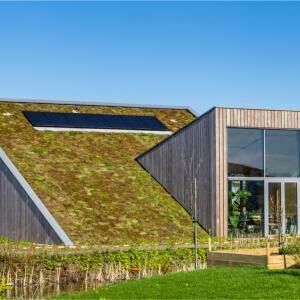
A green roof with vegetation can help moderate heat levels, decrease energy costs and reduce stormwater runoff—a major contributor to pollution and flooding in urban areas. This tiny home with a plant-covered roof is located in a 10,625-acre experimental community started in 2011 called Almere Oosterwold in the Netherlands.The project sets limits in order to maintain the area’s rural characteristics: The area is roughly 2% water, 8% roads, 13% public green, 18% construction, and 59% urban agriculture. The people who live and work in the community have the flexibility and freedom to design their space exactly how they want—whether it’s a tent or an eco-friendly tiny house—though it does need to meet certain codes.
oleschwander // Shutterstock
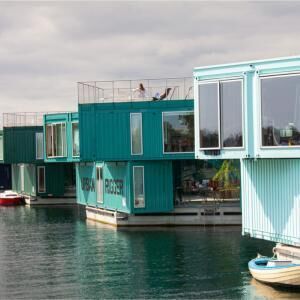
Urban Rigger is a sustainable housing concept designed by Danish architect Bjarke Ingels. The mobile floating community constructed of upcycled shipping containers (pictured here) is located in Copenhagen, Denmark, and serves as student housing, but the group says the concept can be replicated in other locations with access to a body of water.The development of Urban Rigger was inspired by the need to tackle 21st-century housing challenges, with sustainability being a key aim. For example, the structure works with the biodiversity of its aquatic surroundings—vital components of a thriving ecosystem, such as mussels, barnacles, and algae, are able to grow and live on the structure’s surfaces. The floating community also utilizes solar panels and leans on seawater and low-energy pumps as a natural heat source. The concrete used in construction is watertight, with Urban Rigger claiming it won’t need maintenance for the next century.