Household chores are more than inconvenient necessities or things to “make” your children do: They can function as building blocks for a young person’s development. The Centers for Disease Control and Prevention has even established a set of milestone criteria parents can use to both gauge their child’s development and make inroads toward longer-term developmental goals.Including children as young as 2 or 3 in certain daily chores can help with their development. Chores allow children to sharpen their time-management skills, deal with stress, and instill a higher capacity for responsibility and independent functioning. GoHenry researched how specific chores can contribute to developing skills and responsibility among children. The American Academy of Child & Adolescent Psychiatry recommends considering age-appropriate activities in which a child can efficiently complete tasks—from 2-year-olds putting toys away to a 12-year-old washing a car.Chores also help connect each child to the greater family unit. Once a child completes a task, the child can feel a sense of pride in contributing to the household. The extra help can also reduce household stress, strengthen relationships, and often impart valuable interpersonal skills such as agreement and negotiation.A multi-discipline study published in the American Journal of Family Therapy in 2014 found children’s routines and habits, including their involvement in things like chores, coalesce early and have little variation between third and 12th grade. This means instilling the habit, discipline, and expectation of doing chores can have immediate and long-term benefits for maturation. Rawpixel.com // Shutterstock
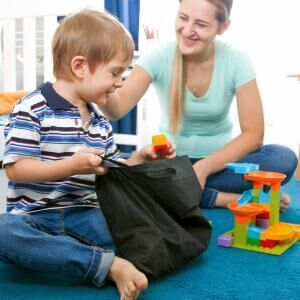
– Starting age: 3 to 4Preschoolers are well equipped to learn the basic tenets of shared responsibility. Simple cues and game-like challenges suit this age group well, such as having them put toys away as a “game” before dinner is served. General sorting chores—from sorting and organizing toys to color-sorting dirty laundry—is about much more than organization. Sorting is also a skill related to math and science, teaching children pre-numeracy skills such as classification and the creation of sets. Getting very young children involved in these activities will teach them where things go while preparing them for future mathematical and scientific lessons.
xavier gallego morell // Shutterstock
– Starting age: 3 to 4Young children respond well to routines, and helping to feed pets offers multiple benefits and skills. Gentle interactions with animals, a sense of responsibility for another living creature, the predictability of mealtime, and the satisfaction of pleasing an animal are powerful experiences for a young child.Parents should never leave young children alone to feed a large pet such as a dog or cat, but allowing them to help in doing so—or having a child help to feed fish or fill water bowls—can be a great developmental activity. Parents should also be careful not to give their children too many tasks when it comes to pets as this can overwhelm smaller children.
Dmytro Zinkevych // Shutterstock
– Starting age: 5 to 7While preschoolers should be able to help out with bed making, 5- to 7-year-olds are capable of pulling the task off independently. At this age, children may start to rebel against chores—but simple tasks, with decreased supervision, will give young people a sense of pride in their work.It may seem like a simple task, but making the bed can even reinforce obedience in children. Generally speaking, clutter and chaos can weigh people down. When a child gets into the habit of making the bed, the child learns the importance of orderliness and may even notice how much more comfortable the surroundings feel.
Lucian Coman // Shutterstock
– Starting age: 5 to 7Helping in the garden provides significant mental and physical developmental strides for children. Whether pulling weeds or navigating a hose or watering can, kids quickly improve their locomotor, body management, and object-control skills.For 5- to 7-year-olds, there are the added benefits of synthesizing care and attention with growth and health, along with instilling an early appreciation and sense of responsibility for the natural world. This also fosters cognitive development in children as they further their intellectual skills with remembering information and predicting outcomes. Children can also learn the names of various plants and the requirements for keeping plants healthy.
Dmytro Zinkevych // Shutterstock
– Starting age: 5 to 7Just like sorting skills for preschoolers, children between ages 5 and 7 can learn where items belong when not in use. As kids get older, tasks like loading or emptying a dishwasher can be part of a chore chart to help kids stay on track independently. Parents tend to want to help children with a task to get it done more efficiently, but there are opportunities for children to feel useful on their own. Even tasks such as emptying the dishwasher can be beneficial for children’s mental health. Experts say it’s important for children to develop self-efficacy, which instills a sense of confidence in each child’s individuality.
Red Stock // Shutterstock
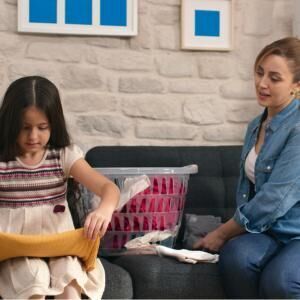
– Starting age: 6 to 8Laundry can be made into a fun activity, whether children are helping sort clothing by color or pairing socks together after the clothes are taken out of the dryer. The folding part may be a bit of a challenge at first, especially for smaller kids, but they can start by learning how to lay clothing items flat and then folding them in half. Kids can also help (with guidance) in placing clothing items such as socks and underwear in the drawers where they belong.Once the little ones start helping with laundry, it shows them when things need to be cleaned so they have fresh clothes to wear. It also teaches children how to be responsible for their own belongings.
Irina Wilhauk // Shutterstock
– Starting age: 6 to 8Even if they don’t cooperate all the time, children enjoy routines as they provide a feeling of security and structure to the day. Routines also help with behavior development as children learn to become aware of what’s expected of them and how to follow rules.Waking up around the same time daily and keeping the same snack and nap time, for example, helps children learn discipline. Routines also provide a sense of independence as children understand the morning starts the same way each day. For instance, oftentimes children enjoy taking the initiative to pick out their own clothes. This independence can foster more confidence in children when they know they can do certain tasks on their own.
eggeegg // Shutterstock
– Starting age: 8 to 10Preparing and cooking dinner may take a little longer when a child is involved, but it may be more fun, especially for the child. There are a number of ways to get kids involved with meal prep, such as taking them grocery shopping and allowing them to help pick out produce and other ingredients. Kids can help to wash the fruits and vegetables, peel the veggies with a kid-friendly food cutter, or set the table.A study conducted by a researcher at the University of Guelph in Ontario, Canada, found when children are involved in food prep, it gives them a sense of ownership in the meal. It’s also important to show children appreciation for helping with the meal, and the child in return will more likely eat it and try new foods once feeling involved and included.
Anton Watman // Shutterstock
– Starting age: 8 to 10In addition to providing unconditional love, pets can teach kids discipline and responsibility. Younger children can help to replenish a cat’s or dog’s water bowl or rinse and dry the pet’s supper dish after use. They can also help to put the pet’s toys away at the end of the day. This teaches them to keep their pet’s food and play areas tidy, and to put things away in their proper place each day.Older kids can help to brush the dog and even walk the dog. Pets rely on their human family members to take care of them. By engaging in taking responsibility for their care, kids learn to respect and appreciate other forms of life, which is a contributing factor in how owning a pet overall can spark empathy and compassion in kids.