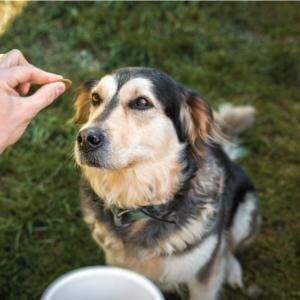
Like any other relationship, the best dog training is about building trust.Training isn’t about control. It’s first and foremost about communication and managing the situations a dog is put in. Every cue or command is a conversation between you and your dog. Dogs don’t come into the world knowing how to live within the context of human environments or expectations—they must be taught. And you can (and should!) teach old dogs new tricks.Not every dog needs to be an AKC Canine Good Citizen. For most dogs, being able to execute just a handful of skills and commands with confidence and consistency is enough to create a safe and enriching environment for them. To that end, dog and cat insurer ManyPets compiled a list of basic commands most dogs can pick up quite easily at home, along with tips for setting up an environment for success.Several camps exist in the world of dog training, particularly over the use of negative versus positive reinforcement, but science is disproving a long-held belief that owners must assert themselves as the alpha or pack leader, lest a dog gets ideas of grandeur. While training puppies is slightly easier because they aren’t simultaneously unlearning bad habits, there is no age at which dogs stop learning. Lifelong training can improve dogs’ overall health and happiness.Sharing a language and a set of vocabulary with your dog can be the difference between a pet gobbling up the toxic ibuprofen you dropped on the floor or walking away when you tell them to “leave it;” coming when called or chasing that squirrel across the park; and a dog never leaving the confines of a yard or being able to join you on walks through the neighborhood.When you’ve mastered the basics, you can level up training by incorporating the three D’s of dog training: distance, duration, and distraction. But before jumping into training cues, it’s essential to take time to learn about what motivates your dog. This will be how you reward them, so it’s important to know what they’ll work for. Dogs who are food-motivated will work for most treats. Other dogs may be more eager to work for a favorite toy, verbal praise, or owner affection.Every dog is different and will learn at its own pace. Just like it would be unfair for someone to expect a child to go from learning addition to learning algebra, it is also unfair to expect your dog to go from learning what a leash is to proper heeling in a week. Patience, praise, and consistency are vital to helping your dog progress. There are endless resources at your disposal to help you on your training journey, from video tutorials and veterinarian consultations to professional trainers and dog training classes—so don’t lose heart if a skill or method isn’t working. Set achievable milestones for you and your dog and remember that training should be an act of love above all else. MB.Photostock // Shutterstock
Arguably the most important aspect of dog training is not your dog’s ability to learn but your ability to communicate effectively.Training requires precision, like marking a desired behavior with a word or a clicker. It also requires discipline and consistency. Dogs are adept at recognizing patterns, making them fast learners of both good and bad habits—so training needs to be intentional and thoughtful. The best way to set yourself and your dog up for success is to do your preliminary research, gather the necessary tools and acumen, and dedicate a little time each day to training. Start with short sessions, easy wins, and realistic expectations.
Canva
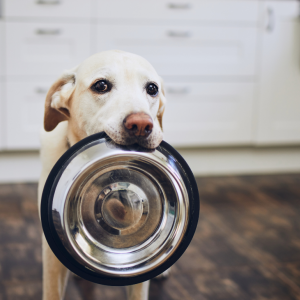
Mindlessly putting a bowl of food in front of your puppy is a missed opportunity for training. Instead, use mealtime as an opportunity to feed by hand while training—such as doling out portions of a meal for every successful completion of a training task. Working for food is mentally enriching but should only be done for as long as your dog is focused and happy. If your dog shows signs of stress, end the training and let them eat freely.
Reddogs // Shutterstock
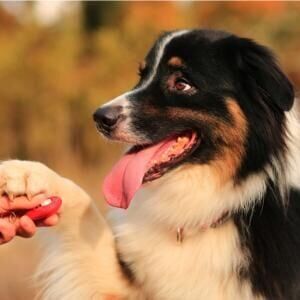
Knowing when and how to get and hold your dog’s attention will help shift focus from triggers out in the world that might put dogs over the threshold when they can no longer pay attention to anything except the trigger.This is especially important for reactive dogs: dogs who get aggressive or overly excited by specific external stimuli. If your dog is looking at you, it’s not looking at the trigger. You can start this training in your own home, rewarding your dog every time it makes unprompted eye contact with you. Treat often and generously. Eventually, they will learn that looking at you, or “checking in,” is a positive and default behavior. Practice this skill in gradually more distracting environments.
Ericaaa // Shutterstock
The world can be an overwhelming place for dogs, especially puppies who are experiencing it with all of their senses for the first time. Vacuums, sirens, skateboards, wheelchairs, people in hats, nail clippers, and sewer grates are just a few examples of the types of seemingly innocuous things that could be frightening.Slowly desensitizing or counterconditioning your dog to these triggers will help build their confidence and create positive associations with scary stimuli. Start small in your own home by treating your dog for every positive interaction it has with a trigger. If a vacuum is terrifying, for example, treat your dog with every glance, step toward, or sniff of the vacuum while it’s off. Over time, you can decrease the distance from triggers and increase the time spent interacting with them.
LightField Studios // Shutterstock
Teaching dogs patience can be difficult, but solidifying manners like “sit,” “stay,” and “wait” have practical and safety benefits.When guests enter your house, you might use these commands as part of a polite greeting routine. They can also be used as part of a polite greeting routine with dogs they encounter out in the world. Or, you might train dogs to stay whenever a door (house or car) is opened to prevent them from running out into streets or parking lots. Begin in your own home by rewarding patient choices your dog makes, even without a verbal cue. If your dog chooses to sit, treat them for it. If your dog calmly watches you move around without following, reward that behavior. Eventually, dogs will learn that these choices lead to positive outcomes.
Rohappy // Shutterstock
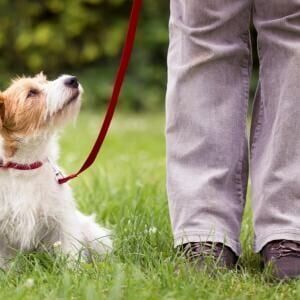
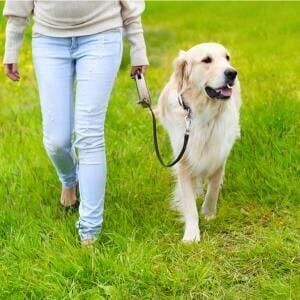
Leash training is critically important, especially if walking is one of your dog’s primary forms of exercise. No human likes to be dragged by a dog pulling on a leash, and no dog likes to be yanked constantly. Ideally, leash walking should be a choreographed dance with communication, cues, a leader, and a follower. Also, consider attaching the leash to a harness instead of directly to your dog’s collar—it’s safer and more comfortable for your pup. You can begin at home by letting your dog get used to the weight, feel, and sound of the leash. Practice walking from room to room or around the yard, slowly introducing tension. Whenever your dog “checks in” while on a leash, walks next to you, or walks with slack in the leash, reward them generously.
AssiaPix // Shutterstock
Being able to communicate with your dog about when to leave something alone could save their lives.Dogs are curious and will explore the world with their mouths, which could mean accidentally eating or chewing something dangerous. This type of impulse control is especially hard for dogs. It’s a big ask to expect a dog to leave a chicken wing on the street without getting something better in return, so training this command starts with small victories at home with safe objects—like rewarding your dog when they simply look away from the thing you want them to leave. Over time, with increased difficulty and many repetitions, your dog will be conditioned to simply walk away when they hear “leave it.”
ABO PHOTOGRAPHY // Shutterstock
Recall is one of the most important skills you can build with your dog to keep them safe. The best way to start is in your own home.Like most other skills, starting with small distances—like calling your dog to you from a few feet away—will help build confidence and understanding of the verbal cue and expected outcome. Reward generously and celebrate each time your dog makes it to you. You want to enforce that coming back to you is more exciting than any other distractions out in the world. Increase the recall distance when they are consistently coming when called.Next, you can move the training to your yard, which offers more real-world distraction. Eventually, when you move to even more distracting environments like a park or field, start with your dog on a long lead so you’re able to enforce the command and have them safely secured if they lose focus.
Sari ONeal // Shutterstock
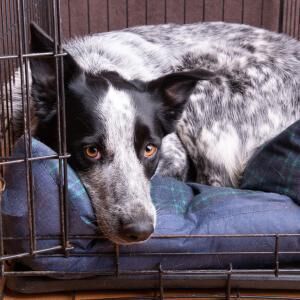
The place command instructs your dog to go to a specific spot and stay there. This is slightly more complicated than stay, but it creates a safe, comfortable place for them to relax in potentially stressful situations such as when guests arrive or if you’re cooking and don’t want your dog underfoot.“Places” can be dog beds, crates, or cots. Begin by designating a location as the “place” and reward them for interacting with it: looking at it, sniffing it, putting their paws on it, or lying down on it. When they are comfortable with that spot, you can add the verbal cue and increase the three D’s.