
Crime in Albany is flat. Residents’ fear of it isn’t
Albany police recorded 1,200 crimes against persons from January through July. In the same seven months of 2025, they recorded 1,202 — a difference of two incidents.
Through July, Albany police reported 118 fewer collective aggravated assaults, simple assaults and homicides than a year earlier, offset by 111 more sex offenses, intimidation reports and kidnappings. The result: Total crimes against people reported differed by just two incidents — 1,200 this year compared with 1,202 in 2025. Meanwhile, calls for police service rose 5.3%.
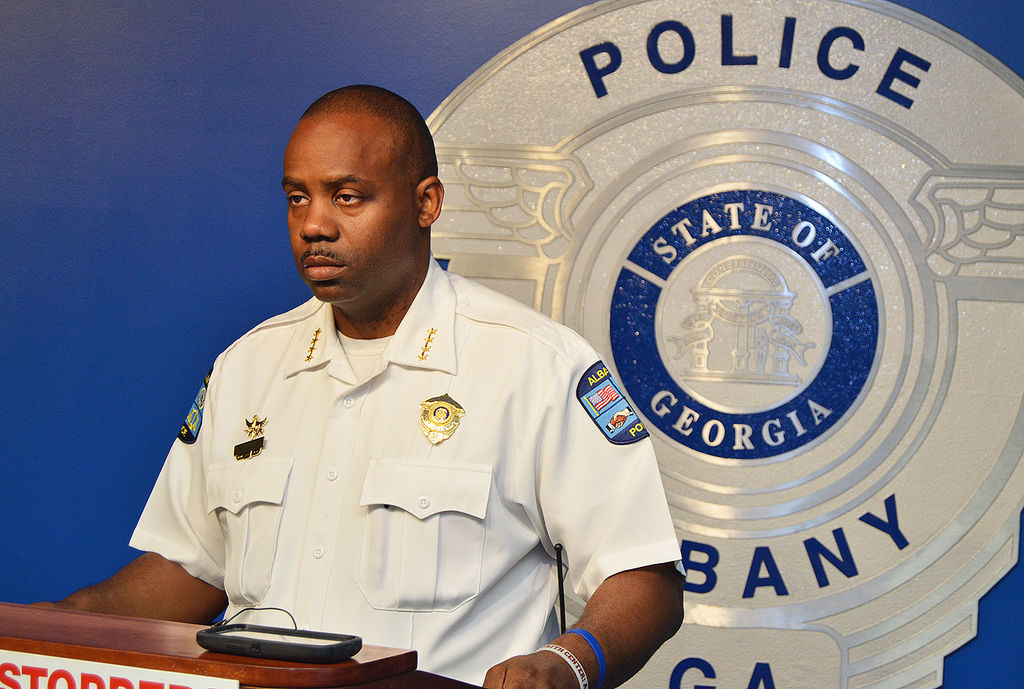
ALBANY — When The Albany Herald recently asked its Facebook readers a simple question — “How safe do you feel in your own city?” — the responses captured a widening gap between official crime data and public perception.
The post reached more than 16,500 people in three days and drew 117 comments. Some readers described changing the times when they leave home, where they drive and how closely they watch their surroundings.
“Yes it has increased,” Beverly Sutton wrote of crime in a comment on The Herald’s page. “No, I do not feel safe anywhere. Bolt up the doors at dark and stay in. Period.”
But others saw a different Albany.
“I never feel unsafe when I’m out,” Susan E. Bowser wrote. “Just keep your eyes open, and don’t ask for trouble.”
Thomas Charles Gieryic landed between the two. “I feel relatively safe, most of the time,” he wrote. “However, I do take precautions and try to be aware of my surroundings.” He pointed to a recent shooting near the Riverwalk as the incident that unsettled him.
Those experiences are real. But the Albany Police Department’s monthly crime reports as reported to the National Incident-Based Reporting System (NIBRS) to comply with statewide directives from the Georgia Bureau of Investigation through July do not show a city in the middle of a broad surge in violent crime.
They show something more complicated: a total that has barely moved, a mix of offenses that appears to change substantially underneath it, property crime falling, drug enforcement rising — and residents encountering police activity more often than the crime count alone would suggest.

A flat total, a different mix
Albany police recorded 1,200 crimes against persons from January through July. In the same seven months of 2025, APD recorded 1,202 — a difference of two incidents.
Across all offenses reported through the FBI’s NIBRS, the department logged 3,619 Group A incidents through July, down 1.4% from 3,672 a year earlier. Group A covers crimes against people, property and society. Adding less-serious Group B incidents, the total fell from 5,204 to 5,077, a decline of 2.4%.
But that flat headline number conceals a nearly even trade.
Assaults and killings fell across the board. Homicides dropped from 10 to eight. Aggravated assaults fell from 290 to 254, a decline of 12.4%. Simple assaults fell from 702 to 622, or 11.4%. Together, those three categories actually accounted for 118 fewer incidents than in the same period last year.
Three other categories rose by almost just as much. Reported sex offenses climbed from 42 to 70, an increase of nearly 67%. Intimidation reports rose from 138 to 219, or almost 59%. Kidnapping or abduction reports went from 18 to 20. Those three added 111 incidents.
The result is a category that looks unchanged in total while the experience inside it has shifted considerably. Albany reported meaningfully fewer beatings and shootings this year — with significantly more sexual offenses and threats.
That comes with a caveat that cuts both ways. NIBRS counts crimes reported to police, not crimes committed. A sharp rise in a category can reflect more offenses, more willingness to report them, or a change in how a department classifies and records them. The same is true of a decline.
Property crime is down
Property crime showed a similar disconnect between citywide statistics and individual experience. APD reported declines in burglary and theft through July, but some residents responding to The Herald described repeated property crimes close to home. One commenter cited “porch pirates” and break-ins in her neighborhood, while another said his business had been burglarized four times since December. Others said they routinely lock their cars and remain cautious but had not personally experienced break-ins.
Robberies dropped from 44 to 36 through July, a decline of 18.2%. Burglaries fell from 207 to 184, or 11.1%. Larcenies and thefts, the largest single category in the report at more than 1,000 incidents, fell from 1,102 to 1,056, a decline of 4.2%.
The exception was motor vehicle theft, which was essentially unchanged at 137 incidents compared with 136 a year earlier. Overall, crimes against property fell from 2,298 to 2,205, a decline of 4%.
What went up
Two measures rose, and neither is a count of people being victimized.
Crimes against society — a NIBRS category made up largely of drug and weapons offenses, which are typically discovered by officers rather than reported by victims — rose from 172 to 214 through July, an increase of 24.4%. Drug offenses drove nearly all of it, climbing from 74 to 102, or 37.8%. Weapon law violations were nearly flat, rising from 85 to 87.
Because many crimes against society are detected through police activity rather than reported by victims, the increase raises another possibility: Are officers finding more drug offenses because of more aggressive or more effective enforcement, rather than because drug activity itself has increased at the same rate?
The second measure was calls for service. Albany police received 50,014 calls from January through July, compared with 47,509 in the same seven months of 2025 — an increase of about 5.3%. Calls were higher this year in six of the first seven months. February was the exception.
A call for service is not a crime. It can involve a disturbance, a suspicious person, an alarm, a welfare check, a traffic matter, a domestic complaint or a situation that produces no criminal offense at all.
But both measures track something residents can see, and for many, that visibility becomes part of their lived experience of public safety. More drug offenses recorded and more calls for service can mean more patrol cars on neighborhood streets, more officers outside businesses and more police activity unfolding in public — even without a corresponding increase in the number of people victimized.
Residents do not experience public safety through a NIBRS spreadsheet. They experience it through what happens on their street, what they see on the way to work and what shows up on their phones.
Michael Moses, commenting on The Herald’s Facebook post, said he believes much of Albany’s crime is targeted or opportunistic. “Your everyday civilian is safe,” he wrote. “Of course that depends on what part of the city you’re in, too.”
The department’s own call data suggest he has a point about geography.
Geography matters — but the numbers are calls, not crime rates
Albany police divide the city into 15 beats.
In July, Beat 8 recorded 1,179 calls for service, by far the most of any beat and nearly seven times the 174 calls in Beat 13. The department’s map places Beat 8 in central Albany, immediately south of downtown. Nearby central-city beats also carried heavy loads: Beat 2 recorded 626 calls, Beat 3 recorded 625, Beat 7 had 578 and Beat 9 had 551.
Nine of the 15 beats recorded more calls in July 2026 than their listed 2025 monthly average. Beat 15, on the city’s southeast side, logged 307 calls against a 2025 monthly average of 235. Beat 8’s 1,179 compared with a 2025 average of 1,059.
Those comparisons are not neighborhood crime rates. They count calls for police service, and the department’s report provides a 2025 monthly average rather than a July-to-July figure. Still, the spread helps explain how two Albany residents can live in the same city and describe two different levels of safety.
Crime now arrives on residents’ phones
There is another difference between today’s Albany and the city many residents remember.
Police no longer wait for a newspaper or a television station to report an incident. The department publishes photographs of wanted suspects and persons of interest, asks followers to identify people, posts shooting updates and broadcasts Police Chief Michael Persley’s regular “Media Monday” briefings directly to the public. It also operates its own mobile app.
Persley has repeatedly argued that Albany’s violent-crime problem is more concentrated than the city’s reputation suggests. After a November 2025 shooting at 509 North Apartments, he said random violence was “rare,” noting that many shootings grow out of disputes or relationships with a history behind them.
That same thinking underpins APD’s Repeat Offender Initiative, launched this year to focus resources on the relatively small number of people police believe are driving much of the city’s gun violence. “We’re talking about that 1% that is actually committing crimes,” Persley said in January. At the same time, the department has expanded the way it communicates those incidents directly to the public.
In February, Persley promoted APD’s mobile app as “a reliable way to stay connected without relying on rumors or second-hand information that may be found on social media.” Together, those points sharpen the central tension in Albany’s crime picture: Police say much of the most serious violence is concentrated among a relatively small group of people, while the information about those incidents is distributed instantly and broadly across the city.
That change could matter. A single Albany shooting can now generate an initial police alert, a department Facebook post, a news story, a television report, a follow-up seeking a suspect, an arrest update and a stream of resident posts discussing each development.
Those are not seven shootings. There may be seven separate encounters with information about the same shooting — multiplying the number of times one incident enters a resident’s field of view and potentially making isolated events feel more frequent than the underlying crime data show.
Access to historical Facebook data from other news outlets is limited, making determining outright whether the overall volume of crime-related posts actually increased a complex issue, but an in-depth review of recent material from several news outlets’ social media presence does show how fast a single incident can travel.
When $30 outruns a shooting
One such example occurred on Aug. 18, when Albany police posted a photograph seeking help identifying a man who officers said picked up $30 that another shopper dropped at the North Slappey Boulevard Walmart and did not turn it in. It exploded online.
By Aug. 24, a local television station reported that the original police post had drawn nearly 3,000 reactions, about 4,400 comments and 600 shares. The public reaction became a news story of its own. Current Sociality.io tracking of the post shows thousands of additional interactions.
Its reach dwarfed much of the serious crime material posted around it. Recent department posts seeking suspects in shootings, aggravated assaults and a homicide drew hundreds of interactions. The $30 post drew thousands.
The episode illustrates the problem with treating social media visibility as a measure of public danger: What spreads is not necessarily what is serious. Humor, outrage and novelty can carry a minor incident much farther than a killing. And once news organizations cover the viral response, the original event gets another cycle of exposure.
One Herald commenter, Yaz Johnson, argued that Albany’s reputation is shaped by what residents continuously see and hear, saying “negativity” leads people to expect something bad to happen.
Those are opinions, not evidence that coverage causes fear. But they point toward a question that can be measured.
A seemingly local feed can carry crime from far beyond Albany
A snapshot of local news reporting feeds shows how geography blurs online.
Among 21 recent posts from well-known sources of local news media captured in a Sept. 6 review, eight involved crime, alleged crime or criminal investigations. Most of that crime was not in Albany. The posts included a fatal shooting in Americus, a shooting in Cordele, arrests after a mall shooting, a workplace shooting in Florida, a sexual assault conviction in Wisconsin, an alleged murder in Colorado, a financial crime case and a law enforcement pursuit in Quitman.
A one-day sample cannot establish that more crime is being posted about now than it did in 2025, but it does illustrate the breadth of geographical content the information environment facing someone scrolling Facebook in Albany presents: Violence from Albany, from surrounding counties, from elsewhere in Georgia and from across the country, often arriving within minutes of one another.
The open question is whether readers consciously differentiate between those locations, or simply absorb the repeated message that another person has been shot, arrested, robbed or killed.
Bad information spreads, too
Locally, Police have already had to confront the other side of fast crime communication.
After a June 30 shooting in which a 15-year-old was wounded while playing basketball, the department addressed online claims that three people had died. “At this time, reports circulating on social media claiming three people are deceased are false,” it said.
Social media has become more than a place where Albany residents talk about crime. It is now part of how police investigate it, how newsrooms report it, how residents learn about it and, sometimes, how rumors about it spread.
Two pictures of the same city
That leaves Albany with two accounts of public safety that don’t fit together neatly.
One comes from the police department’s own data. Through July, total reported crime was down 2.4%. Property crime fell 4%. Robberies, burglaries and thefts all declined. Crimes against people came within two incidents of last year’s count — while the offenses inside that category shifted from assaults toward sex offenses and threats.
The other comes from residents. Some, particularly those who are typically considered more vulnerable, “lock themselves inside after dark”. Some avoid particular parts of town. But some say Albany is no more dangerous than comparable cities.
Michael Druckenmiller Jr. argued that most local violent crime involves people who know one another rather than random attacks. “If you stay away from known problem areas and don’t involve yourself with the wrong crowd,” he wrote, “you are generally safe.” The available crime data do not directly measure whether victims and offenders knew one another, but they are consistent with that broader picture: Through July, homicides were down 20%, aggravated assaults fell 12.4% and robberies declined 18.2%, even as residents continued to report concern about shootings and public safety. Persley has made a similar distinction, repeatedly describing random violence as relatively rare and saying many shootings have a prior dispute or “backstory.”
Others make no such distinction when deciding whether they feel safe.
“I don’t feel safe at all, especially when the sun goes down,” NaCole Stripling Knutson wrote. “Even during the day I am constantly looking around.”
Both can be true while the overall count holds steady.
The unresolved question is no longer simply whether Albany has more crime. It is which crimes residents are encountering, where they are concentrated, how often police activity itself shapes what people see — and how many times a single act of violence reaches them again through a screen.
Information is no longer scarce.
The harder task now belongs to Albany residents: separating frequency from visibility, repetition from reality and perception from the broader picture the data provide. If Albany is to reclaim confidence in its long-time identity as the “Good Life City,” that distinction may actually matter as much as the crime numbers themselves.
Related Articles
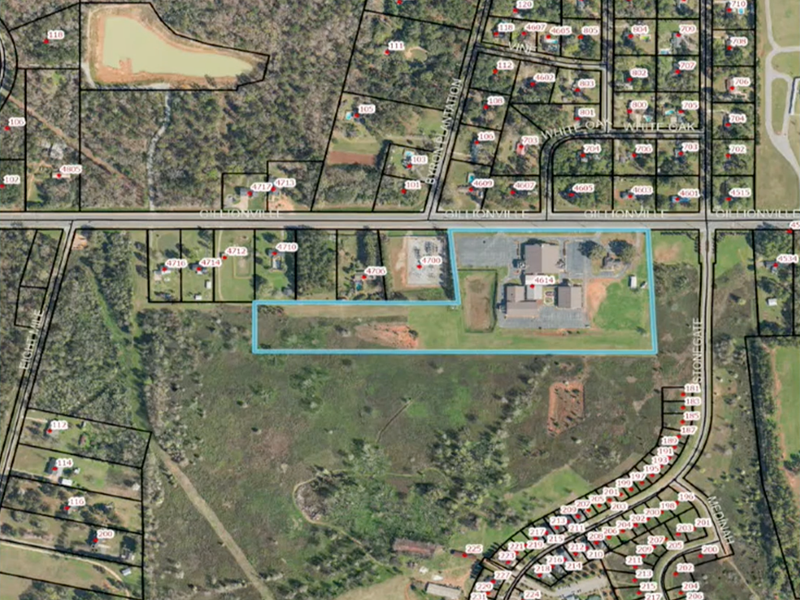
County approves 198-foot Gillionville Road cell tower; no speakers at public hearing
Dougherty County commissioners unanimously approved a 198-foot cell tower behind a church on Gillionville Road, with no one speaking for or against it at the public hearing.

An insider’s (semi-fictionalized) look at Cruising Albany’s Slappey Boulevard
Graylon Brunson has written and published a pair of books about Cruising Slappey Boulevard as a teenager.
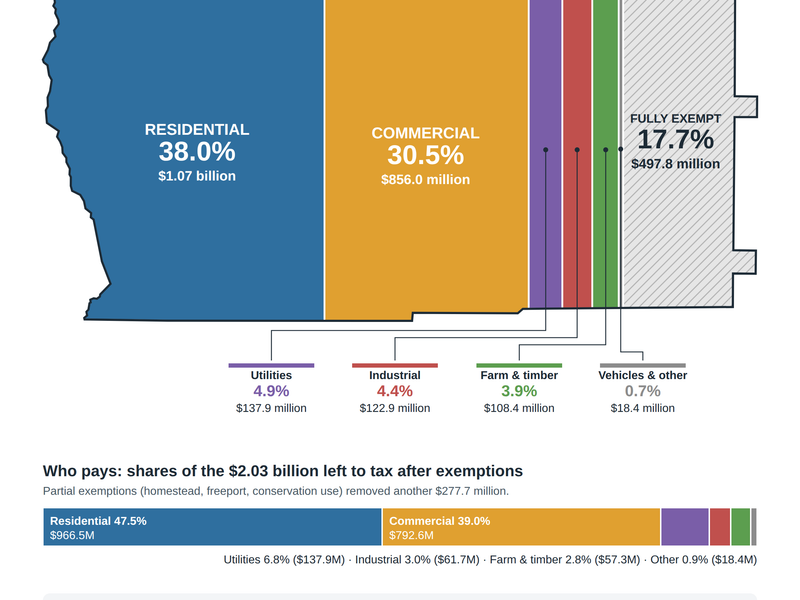
Who’s not paying?
Nearly 1 of every 5 dollars of property value in Dougherty County pays no property tax at all.
With new assessment notices hitting hard after Dougherty’s first full revaluation since 2007, and many residents are facing sharply higher values, the question of who carries the tax base is no longer abstract.
