
BOB KORNEGAY: Outdoors folks amass wealth of a different kind
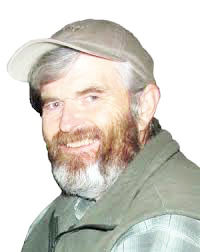
Bob Kornegay
Occasionally, a budding outdoor scribe has asked my opinion of various aspects of our profession. Sooner or later, the subject of compensation arises. My standard answer has always been, “If you’re in it for the money, get out now.”
Monetarily, you see, outdoors writers are quite poorly paid. To profit, we must produce tons more copy than most successful wordsmiths laboring in other literary fields.
Why, then, do we continue? Why not instead write the high-priced material that sells for big bucks in trendy publications that lure readers with self-help, sex, psychology, and social commentary? From a business perspective, it seems like a no-brainer.
For me and some others I know, the answer to that is simple. Outdoors writing keeps us in touch with “our” people, folks we understand and who understand us. It also pays dividends that are priceless, regardless of the fact that they will never show up on our bank statements.
Outdoors writers bear witness to things that renew their faith in what is right, decent, and ethical. It is pleasantly surprising that these observed philosophies and actions far outweigh those our detractors use to try to convince us that outdoor life is on its way to hell in a handcart.
For instance, there was this professional bass angler I once met, a superstar who for over a decade was one of the most successful fishermen in the history of the sport. This then-undisputed king of the bass-tournament trail was not only perhaps the best fisherman I’ve ever encountered, but an unashamed practical environmentalist as well. Unlike some pseudo-ecologists who make a lot of noise, but do little except toot their own horns, this fellow simply expressed his sometimes-scoffed-at “green” outlook with a hand-scrawled “Leave No Tracks” message written across the back of his fishing vest. More impressive, he religiously practiced what he preached.
A while back, I surprisingly observed a golfer gently nudging a large gray rat snake off the fairway and into the rough with his five-iron. When urged by his playing partners to kill the slithering “trespasser,” the man asked, “Why? He ain’t guilty of nothin’ ‘cept crossin’ this golf course.”
Ten years ago, I watched a teenage fly fisherman gently unhook and release a 20-inch rainbow trout into North Georgia’s Chattooga River. Not a totally uncommon act, granted, but how many youngsters would do such a thing with no idea anyone was watching them, particularly with a fish that size?
Or how about the South Georgia farmer who stepped down off his tractor long enough to steer a venerable old gopher tortoise out of harm’s way? I saw that, and was moved.
Last spring, I went bream fishing with an old curmudgeon named Arlo Price, a man whose verbal persona makes him seem about as caring and understanding as Attila the Hun. We located and caught a couple of hefty redear sunfish from an easy-to-reach bedding area on a shallow Lake Seminole flat. A father with two small boys in his boat drifted by and, as fishermen are wont to do, asked how they were biting.
“Just found a purty good wad (typical Arlo lingo) of shellcrackers over here,” Arlo growled. “Come on and let them young’uns catch ‘em a mess.”
Mr. Price punctuated the invitation by gently poling our own boat out of the way and allowing the trio sole access to the fishing hole. Arlo, by the way, is the same individual who once borrowed a neighbor’s boat to go fishing because his had a nest of Carolina wrens beneath one of the swivel seats. Your secret’s out, Arlo. Sorry.
These are just a few of the bonuses I have been “paid” as a long-time chronicler of the outdoors. Through the years, there have been many more and I expect the number to continue to rise.
So, why do I consider such things worth so much?
I’m not really sure, but maybe, just maybe, it goes back to an old man who once made a 12-year-old kid wade a bitterly cold cypress pond to reluctantly retrieve a downed wood duck.
When I returned to shore, the old man said, “Learn to do the right thing now and you’ll likely always do it; even when you’re by yourself.”
See? Outdoorsmen (even outdoors writers) aren’t so poorly paid after all.
Related Articles

HAPPY 250TH ANNIVERSARY AMERICA
America Celebrates 250 Years???

Classifieds – July 4, 2026
Albany Classifieds: Real Estate for Sale: 1835 Arlington Park Circle… Jobs: Irrigation Tech needed…
Squawkbox – July 4, 2026
Regarding the changes to the Squawkbox… Lee County officials encountered a screw-up with… Bo and Preacher Lorenzo and his disciples should reflect on why…
