
Economy adds more jobs in June even as hiring slows
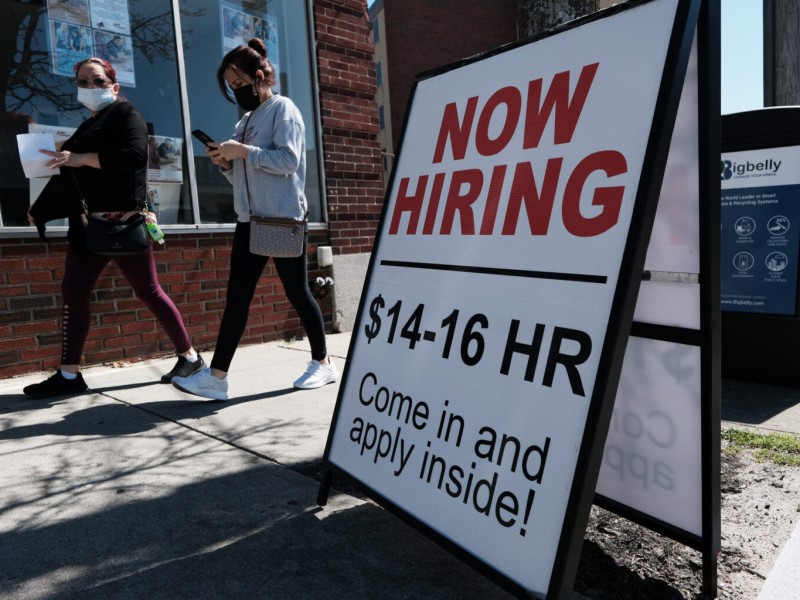
Spencer Platt via Georgia Recorder
By Casey Quinlan
Georgia Recorder
WASHINGTON — Although hiring inched down in June, the U.S. labor market is still showing signs of strength, with unemployment falling and earnings continuing to rise, the latest jobs report from the U.S. Department of Labor showed.
The economy added 209,000 jobs as the unemployment rate fell to 3.6% from 3.7% in May.
“In excess of 200,000, you’re easily pulling more workers off the sideline and you’re keeping up with the population growth,” Elise Gould, senior economist at the Economic Policy Institute, said. “It’s strong. It’s not hot, but it’s also not cool. I think we’re in a good place right now.”
The employment-to-population ratio, which the World Bank considers an indicator of how efficiently the economy supplies jobs for people who want to work, was 80.9% for people 25 to 54 years old, the highest it’s been in more than 20 years. Women’s employment-to-population ratio was 75.3%, exceeding its high before the pandemic of 74.6%.
“That hit another series high,” Gould said of the women’s ratio. “It’s been high for a couple of months, and now it’s hit a new high, the highest on record. … That’s back to 1948. I think that’s a really important milestone that’s been reached.
“Men also did see improvements. They’re narrowing their deficit from [before the] pandemic, but they just haven’t hit it yet.”
Employment in federal, state and local government shot up by 60,000 in June and by 56,000 in May, which is notable for a sector that has been slow to recover from the pandemic. It has added 63,000 jobs per month on average this year compared to 23,000 each month in 2022. Although this job growth is a positive sign, the government would need to add 161,000 more jobs to meet its February 2020 level.
Average hourly earnings increased by 12 cents to $33.58, and over the past year those earnings rose by 4.4%. Economists say these gains have been particularly important for low-wage workers who have had more leverage in this economy.
Becker said that wages have improved because of policy choices made since the pandemic such as the American Rescue Plan and expanding the child tax credit.
“We really put a lot of money in people’s pockets, and this led to a really strong labor market which has led to a lot of job opportunities and that’s really benefited people at the bottom of the income distribution the most,” he said. “Over the last couple of years, we’ve seen really strong wage growth, especially for those workers at the bottom.”
Gould said workers have found leverage through switching jobs and getting on a new career path. The pandemic government support made them less desperate to take the first job that was available to them, she said.
According to a ADP Research Institute and Stanford Digital Economy Lab report, private sector employment shot up by 497,000 jobs in June, which was much higher than median economist expectations from a Bloomberg survey. ADP, a payroll service provider, often has different data than the Bureau of Labor Statistics because its employment information comes from payroll transactions while the BLS data comes from surveys.
Still, economists said the unemployment rate for black people in June is concerning at 6%, from 5.6% in May and 4.7% in April. The April unemployment data marked the first time since the Labor Department began collecting the data that the unemployment rate for black workers dropped below 5%. The unemployment rate for 16- to 19-year-olds was 11%, up from 10.3% in May and 9.2% in April.
Becker said that he believes that the Federal Reserve’s interest rate increases, which it just decided to pause a few weeks ago, are undoing some of the progress made in narrowing the gap between the unemployment rate for white workers, which was 3.1% in June, and the unemployment rate for black workers. The Fed has indicated that it may resume interest rates this year in its quest to reduce inflation.
Author

Related Articles

Dawson proposes borrowing up to $420,000 to stay afloat as finances unravel
Documents obtained by The Dawson News show city officials are proposing to balance the budget through a transfer from the Public Utilities Fund while simultaneously seeking authority to borrow as much as $420,000 from a private financial institution to continue meeting payroll and other operating expenses as Dawson works to complete financial audits that have remained unfinished since 2023.

Regional catering business finds new home at Warrior Creek Mercantile
For months, Marchbanks said she had been asking God for an opportunity to serve others. “I just kept praying, ‘God, use me as a servant,'” she recalled. “I didn’t care what it was. I just wanted to be used to help people.”

Leesburg business reflects growing trend toward multi-use downtown spaces
Beyond the pristinely curated lunch spot, owner Sheri Smith has created a small hub of health and wellness services, retail and local partnerships — an example of the type of multi-use business model many small communities are increasingly embracing as they reinvest in historic downtown properties.
