
Check out charitable organizations before you give

The Albany Herald Editorial Board
As an effort to make the Tuesday after Thanksgiving catch on with the public as “Giving Tuesday” picks up steam, people, many of whom already are feeling charitable from the advent of the Christmas season, are looking for ways to help the less fortunate.
It is the act of charity most fully embraces the season the celebrates the birth of Christ.
There are, however, some who take advantage of the generosity of others, diverting money and items needed by those who are struggling to get by or simply down on their luck. Stealing from the most vulnerable at a time when need is felt the most is a reprehensible act.
So, while we hope our readers and others will contribute to make the holidays happier for others, we also hope people will take the time to ensure that the check they write, the toy they donate and any other act of kindness they extend goes to those who truly need the help. For that reason, we’re sharing some tips from Georgia Secretary of State Brian Kemp on charitable giving.
— Research charities before you contribute. The percentage of your contribution that a charity spends on fundraising activities, employee salaries, or expenses which do not directly support the charity’s stated mission varies greatly by organization.
— A number of online resources can help you research charities. The Better Business Bureau (give.org) and GuideStar (guidestar.org) provide detailed information about nonprofit organizations. Also, take time to review the organization’s own website.
— Be wary of telephone solicitors asking for contributions. If you are solicited by phone, ask that the individual put their request in writing and provide complete information about the charitable program. Also, ask if the person conducting the solicitation is a volunteer or a paid solicitor.
— Never give your credit card, debit card or bank account information to a telephone solicitor. Also, be particularly cautious of couriers willing to rush out to your home or business to pick up your contribution.
— If a tax deduction is important to you, make sure the organization has a tax deductible status with the Internal Revenue Service. “Tax exempt,” “non-profit” and “tax deductible” mean different things. Just because a solicitor says their organization is non-profit or tax-exempt, that doesn’t mean you can legally deduct your contribution. Only “tax deductible” means your contribution is deductible on your income tax return. Make sure you get a receipt which shows the amount of your contribution and states that the contribution is tax deductible. The IRS website (irs.gov/charities) has a searchable database of organizations eligible to receive tax-deductible charitable contributions.
— Many charitable solicitors ask for contributions of clothing, other household items and vehicles. IRS rules concerning valuations and receipts have changed significantly in recent years; be sure you understand them completely (irs.gov/charities/contributors).
— Not all organizations with charitable sounding names are actually charities. Many organizations adopt names confusingly similar to well-known charities. Be sure you know exactly who is asking for your contribution.
— Watch out for organizations that use questionable techniques such as sending unordered merchandise or invoices after you have turned them down for a donation. You are under no obligation to pay for or return items received under these circumstances.
— Most police and fire departments are funded by tax dollars. However, their unions and social organizations may solicit you for contributions. These groups typically use paid fundraisers to solicit donations. If you are solicited by an organization using the words “police” or “firefighter,” call your local police or fire department to verify that the group is actually supporting the department, and to find out how much of their contributions actually are used for their programs.
— Be skeptical of organizations which list only post office boxes, “PMB” addresses or mail drop suite numbers.
Citizens who feel they’ve been taken advantage of can file complaints against an organization on the Secretary of State’s Professional Licensing Boards Division website: http://www.sos.ga.gov/plb. Additional questions be answered by contacting the Georgia Secretary of State’s Investigations Division at (404) 656-4793.
— The Albany Herald Editorial Board
Related Articles
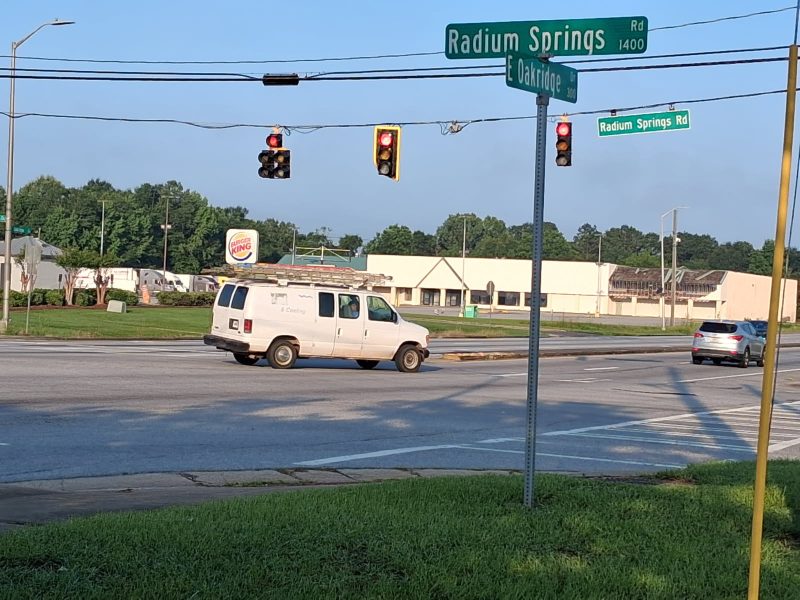
Red light violations will bring citations at a dozen Albany intersections
“That was always the goal of the school zone cameras, to change the behavior. It’s the same with the red lights, we want to change the behavior. When you see a yellow light, you need to slow down and prepare to stop.”

Private $37 million fiber investment aims to boost Albany’s digital future
Construction is underway on what could become one of the largest privately funded infrastructure investments in Albany’s recent history, as fiber internet provider Wire 3 begins building a $37 million network expected to bring high-speed internet service to more than 37,000 homes and businesses over the next 12 to 18 months.
Bringing (positive) changes to The Herald’s Squawkbox
The Herald, as part of The Georgia Trust for Local News, is altering the way the Squawkbox is presented.
