
City of Edison’s debt, missing audits stress city residents and Calhoun County officials
File Photo: Lucille Lannigan
By Lucille Lannigan
[email protected]
EDISON — The revelation by Edison City Attorney Tommy Coleman that the city is $450,000 in debt has sparked a panic among city residents and Calhoun County officials alike.
A portion of the debt is owed to the Bank of Edison, Coleman said. He had to ask the bank for an extension on about $160,000 in loans in order for the city to pay it off. The city is now making monthly payments, he said.
Additionally, the city failed to file a legally required annual audit, which details a city’s financial dealings to curtail inefficiencies or fraud, since July 2018 when a new city clerk, Tami Fincher, took over. Fincher has since resigned for health reasons.
About 1,200 people make up the population in Edison, a small city in Calhoun County some 40 miles southwest of Albany. A group of these residents began looking into the city’s finances in 2020 after the city received COVID-19 funds.
This investigation revealed financial records riddled with inconsistencies and gaps as well as a lack of answers from city officials on how Edison ended up in debt, Marcia Killingsworth, a 68-year-old Edison resident, said.
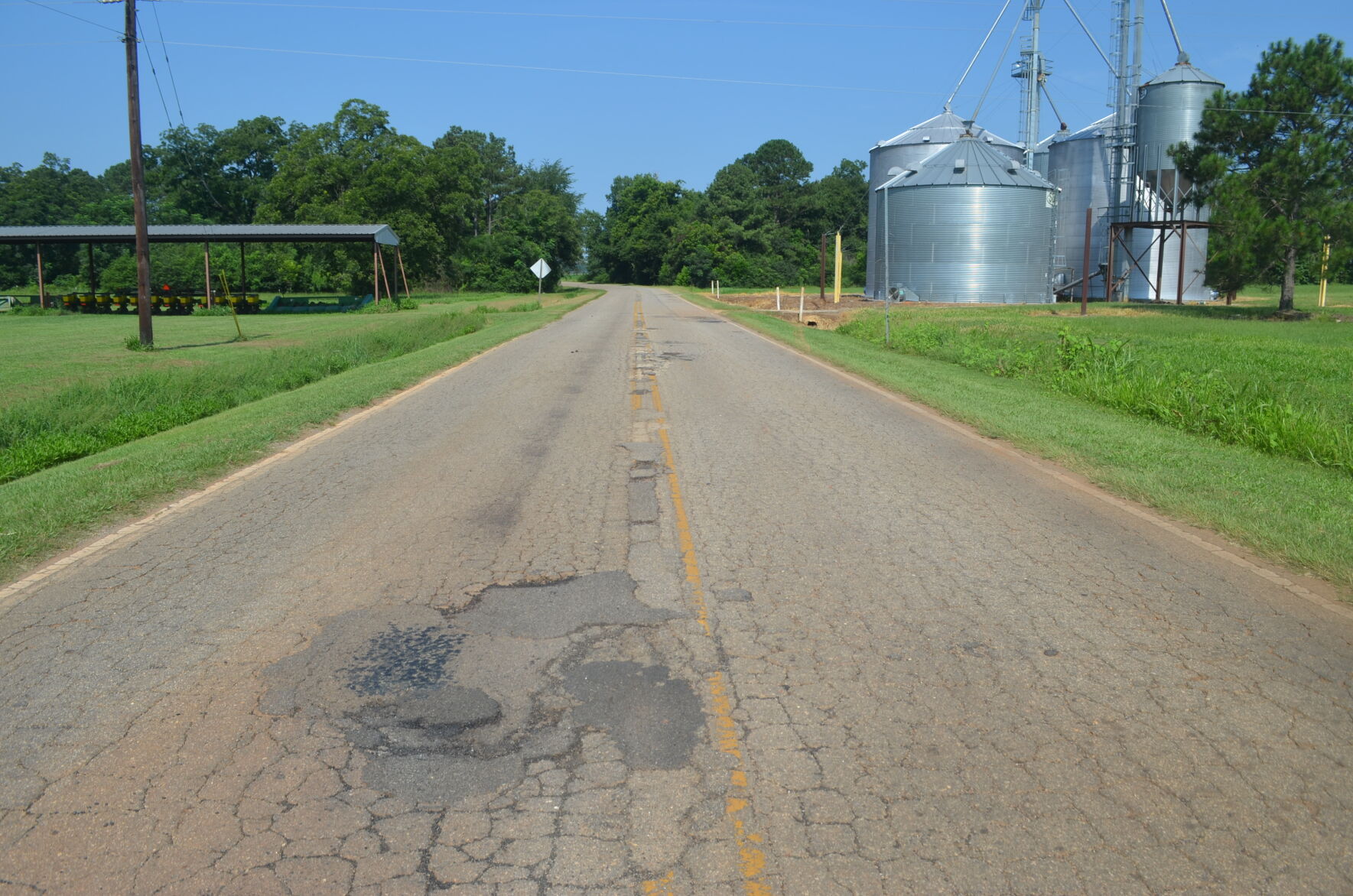
Signs of city neglect and misused funds in Edison can be found in the cracks and holes of Bluffton road.
A few blocks from the Georgia municipality’s town center, Bluffton, is a connector to Blakely and U.S. Highway 37 South. It’s frequented by cotton or peanut farmers as well as shoppers trying to reach Dothan, Ala.
The speed limit is 45 to 55 miles per hour, but one better slow down when entering the road as it’s riddled with deep potholes and patched-up cracks. Edison residents say it’s been like this for at least five years.
The state of the road was brought up in 2020 City Council meetings that Killingsworth attended multiple times. Walt Pierce, the public works director at the time, warned Edison’s Mayor Reeves Lane, that the road had been patched as much as it safely could be and that it needed to be completely resurfaced, Killingsworth said in an email.
Residents began wondering why the transportation special-purpose local-option sales tax (T-SPLOST), a local tax collected specifically for transportation purposes, wasn’t used to repair the road. A group, including Killingsworth, made a Georgia Open Records request for information on 2020 T-SPLOST allocations and expenditures, she said.
These documents, shared with The Albany Herald by Killingsworth, showed Edison received $56,945.90, according to a Calhoun County document. However, the city’s response to the records request showed only $30,775.41 received. This leaves a $26,170.49 discrepancy in T-SPOST funding, Killingsworth said.
Three years later, Bluffton Road remains cracked and dangerous. Killingsworth calls this “the first discrepancy.”
She and others began requesting more records such as budget planning documents. Killingsworth was told these documents don’t exist, she said.
“How do you create a budget out of thin air?” Killingsworth said.
She’s asked at council meetings for clear answers on how money is being spent, she said. In response, she said she gets vague answers.
“They don’t know,” Killingsworth said. “The mayor doesn’t know; the council isn’t curious enough to ask. They just sat by with all of these red flags flying all over the place with the city’s books and just let this train crash happen.”
City, county and even state officials are echoing some of these sentiments.
State Rep. Gerald Greene, R-Cuthbert, said he’s very concerned about the situation in Edison, but the state is limited in what it can do to help.
“In my 41 years, I’ve never had to deal with a situation like this,” he said.
There are about 100 cities and counties that haven’t completed audits, Greene said.
“Mainly they are rural, small cities and counties,” he said. “They did not have the manpower or expertise to handle these situations.”
Because of this, Greene said he’s working with the state auditor to look at legislation to handle these situations.
“There’s got to be a way we can catch them earlier and try to work with them to resolve before it goes on to deter them,” he said.
However, Edison is just one of eight cities in Georgia that has fumbled its audit report for the last four years.
Greene said he reached out to Edison’s mayor to urge him to reach out to State Auditor Greg Griffin to help get the city’s audits straightened out, but five years of missing audits will take a long time, he said.
Calhoun County Commission Chairman Conner Collins called the situation a result of incompetency on the council’s part.
The lack of state funding leaves the city at risk for infrastructure problems, he said, adding there’s no funding for sidewalks or new street lamps. And there is a real concern for the sewer line that runs on the south side of town at the intersection of state routes 216 and 37.
“It’s breaking down,” Collins said. “It probably costs $200,000 to fix that, and if it fails, we don’t have that. I don’t know what we would do.”
Closing down these roads to fix a failed sewer line would be a major operation, he said, an operation the city can’t afford.
Edison’s financial crisis put a strain on the county’s law enforcement. The city cut itself down to two police officers who work during the day, and former Police Chief Tracie Alexander resigned during the last council meeting on July 10.
The county will have to hire an extra deputy, Collins said.
“The county as a whole is gonna have to pick up the slack,” he said. “The citizens of the county will be penalized for the sloppy work the existing council has done.”
Calhoun County sheriff Josh Hilton said the department lacks the manpower to make it work.
“We can’t provide 24/7 protection for the citizens, and it bothers me,” he said.
Despite being a small city, Edison still has its share of burglaries or domestic violence calls, Hilton said. Without city police officers working at night, he worries about sending county officers to the city without backup.
Cheryl Timpson, a 62-year-old Edison resident, said she worries crime will increase with less city police officers. This creates a safety concern for all residents, but especially senior residents or those who have to work at night, she said.
Timpson, a near lifelong Edison resident, has also been active in council meetings alongside Killingsworth. She said she worries about the city’s lack of transparency to its residents.
Edison lacks a city website or any form of social media. Notices of council meetings are posted on the city hall’s front doors, which Killingsworth said, is not an area that receives much foot traffic. Audio or video from these meetings is not recorded, and the room where city officials meet lacks a PA audio system.
The city seems to be trying to keep citizens from answering questions, Timpson said. She pointed out an ordinance that was adopted where people must sign up to be placed on meeting agendas in order to speak. Few citizens know about this ordinance, and with no city website, signing oneself up on the agenda can be confusing.
“I feel like the city council is trying to shut its citizens out,’’ she said. “If you don’t want people to ask questions, I feel like you’ve got something to hide.”
Residents want answers as to how city officials are going to work toward recovering from this debt, and they want accountability, Timpson said.
The city attorney said it’s going to take years for the city to dig itself out of this hole. There is no bankruptcy for cities and counties in Georgia.
“What will happen, ultimately, is that they won’t pay somebody and they’ll get sued by them, and some court will order them to levy a sufficient number of taxes to pay,” Coleman said.
But Coleman said he hopes it doesn’t come to this.
“They are in an existential crisis, and they’ve got to find a way to get themselves to the end of the year,” he said.
Coleman said he has seen no proof of criminal activity, indicating city officials simply spent more money than they had.
Now, they must work to solve the crisis, he said.
Coleman is in touch with the Georgia Municipal Association to arrange for somebody to review enterprise funds like water and sewer.
One way the city may try to cover its expenses is increasing the millage or tax rate; however, Calhoun County Commission Chairman Collins said this could lead to a 50% increase in taxes, which burdens residents, especially property owners who pay higher taxes.
Ultimately, Edison’s residents are fed up with the confusion from city officials. At the last council meeting, about 250 residents showed up to get answers from the mayor and councilmen and -women.
Killingsworth said she hopes the city’s residents don’t slack up on pushing for accountability, especially when school starts back.
Many people choose to trust that the people who are elected are doing a good job, she said. “However,” she added, “we are still in a deep financial problem.
“In a small town, who’s really invested in going to city council meetings and local politics? It’s not a part of their daily lives. It’s not top of mind, and it shouldn’t have to be.”
Author

Related Articles

Lee County hospital bonds: What the $200 million plan means for taxpayers
The Hospital Authority of Lee County will hold a public hearing at 3:30 p.m. today on a plan to issue up to $200 million in bonds for a proposed acute-care hospital off Grand Island Drive.

Chehaw looks to reactivate volunteer group, grow revenues
Chehaw’s Zoo is looking to celebrate 50 years in operation next year. Ahead of that milestone the Chehaw Park & Zoo board is looking to reactivate the Firiends of Chehaw group of volunteers.
Albany Rescue Mission in recovery but still can use some help
“We can’t do this without the community. We are so grateful for the willing vessels. We just can’t thank them enough. We also appreciate the other ministries that have sown seeds into our ministry.”
