
Dawson’s budget hearing: What the law requires and residents should ask
Dawson residents will have an opportunity Sept. 24 to question the city’s proposed budget before the City Council decides how to fund police, fire protection, streets and other services for the fiscal year already underway. But the documents available for review leave a basic question unanswered: How much does the city plan to spend, and what money will pay for it?
A Sept. 24 public hearing gives residents a chance to question how Dawson will pay for city services. This guide explains the proposal, the council’s authority and the answers needed to show the budget balances.
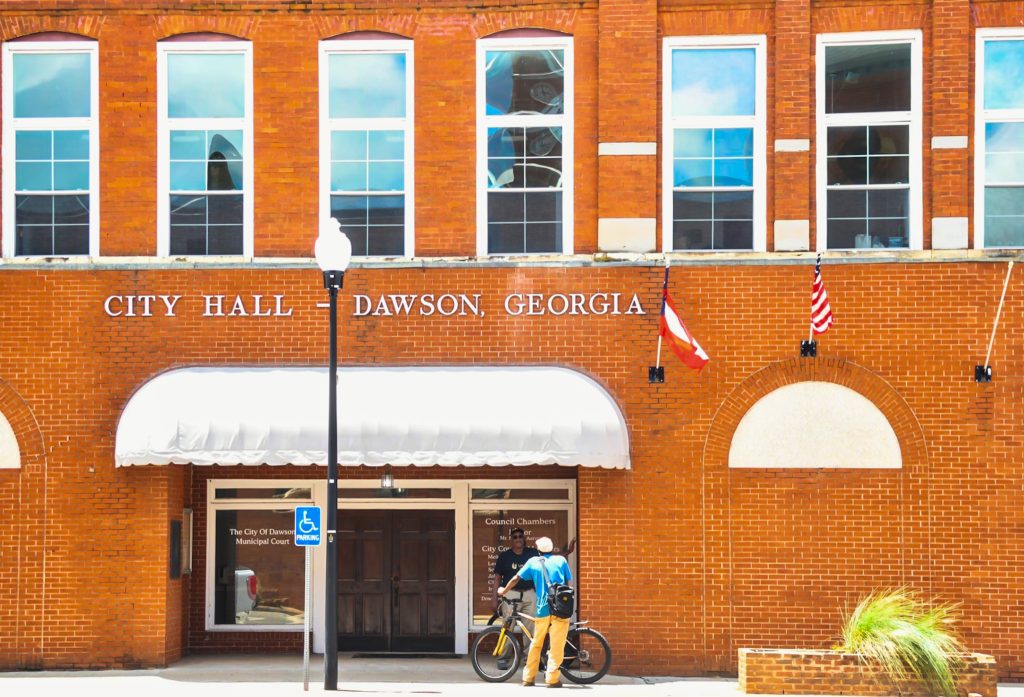
DAWSON — Dawson residents will have an opportunity Sept. 24 to question the city’s proposed budget before the City Council decides how to fund police, fire protection, streets and other services for the fiscal year already underway. But the documents available for review leave a basic question unanswered: How much does the city plan to spend, and what money will pay for it?
The public hearing is scheduled for 5:30 p.m. at City Hall, 101 S. Main St., ahead of an Oct. 8 adoption vote.
The proposal contains no general fund spending total, identifies no accumulated funds being used to cover expenses and shows no planned transfers between funds. Repeated costs and inconsistent account codes also raise questions about whether its figures accurately represent the city’s intentions.
Those problems do not establish that Dawson plans to spend more than it has. They leave the council and residents unable to determine whether the proposal balances as Georgia law requires — and what it could mean for taxes, utility bills and city services.
What the figures show
Dawson’s proposed General Fund revenue totals $3,232,250. Printed departmental spending totals add up to approximately $3.89 million. A separate $400,000 allocation to repay a tax anticipation note brings the apparent spending plan to approximately $4.29 million, about $1.06 million above anticipated revenue.
That calculation assumes every amount represents a separate cost. The document provides reasons to question that assumption.
The same unemployment account number appears six times across six departments, with amounts totaling $16,500. Other account numbers repeat for liability insurance, workers’ compensation and retirement expenses.
Identical amounts also appear across departments: $17,500 for liability insurance in 11 departments, totaling $192,500, and $18,226 for workers’ compensation in 11 departments, totaling $200,486.
These could be intended allocations of citywide expenses. They also could reflect costs copied into multiple sections without being divided correctly, inflating the apparent spending total. The proposal does not explain the calculation.
Several unemployment and workers’ compensation expenses in the gas, water and wastewater sections also carry general fund account numbers, although those operations are presented as enterprise funds supported primarily by customer charges.
Account codes identify the fund and department responsible for a cost. Inconsistent codes leave readers unable to tell whether the problem is a labeling error, a duplicated expense or an intended allocation between funds.
What a balanced budget requires
Georgia law requires annual balanced budgets for the General Fund, special revenue funds and debt service funds, and project-length balanced budgets for capital projects funds.
Under O.C.G.A. § 36-81-3, estimated revenue plus any accumulated fund balance appropriated for use must equal appropriations — the amounts authorized for spending. Current-year revenue therefore does not have to cover every expense if sufficient money from prior years is available and budgeted to make up the difference.
Dawson’s proposal identifies no such use of fund balance.
It also provides no beginning balance showing how much general fund money is available after existing obligations and restrictions. Without that information, the council cannot assume accumulated money will cover the apparent gap.
The uncertainty is compounded by Dawson’s outstanding audits for Fiscal 2023, 2024 and 2025. Neither the proposal nor the unaudited year-end report establishes the city’s available financial reserves.
A reconciliation showing beginning balances, anticipated revenue, transfers, proposed spending and projected ending balances would allow council members to assess the plan.
Why last year’s report needs reconciliation
The report for Fiscal 2025-26 shows the general fund recording approximately $3.70 million in revenue and $7.52 million in expenses, an apparent difference of $3.81 million.
Much of that difference may arise from how payroll and internal transfers appear in the report.
Departmental accounts collectively show about $4.59 million in expenses against approximately $5.16 million budgeted. The largest expense outside those accounts is $2,735,191.31 labeled “Transfer to Payroll.” No amount was budgeted for the line, and no payroll fund appears in the report to receive it. Public Utilities shows another $409,230.25 payroll transfer.
Meanwhile, salaries and benefits appear separately within departmental accounts.
A plausible explanation is that Dawson pays employees through a central payroll account and assigns the costs to departments. If the report includes both the money transferred to that account and the departmental payroll charges without the necessary offsets, it could count the same cost twice.
The payroll ledger, transaction records and year-end adjustments are needed to establish whether that happened.
Simply removing the $2.74 million entry would leave a difference of approximately $1.08 million between reported general fund revenue and expenses. That calculation is illustrative, however, not a corrected financial result: Other entries may also require adjustment, and the report does not show whether accumulated funds financed any spending.
Following money between funds
A transfer moves money between funds. The amount leaving one should have a corresponding entry in the fund receiving it.
Dawson’s report shows approximately $1.77 million transferred from Public Utilities into the general fund, while a Public Utilities expense line shows $175,000 transferred to the general fund. Other transfer entries appear with different descriptions and signs.
Those figures cannot be reconciled by comparing those two lines alone. They call for a schedule matching the transfers across all affected accounts.
The Gas Fund presents a similar difficulty. Its expense total is reduced by more than $726,000 in negative transfer entries, contributing to a reported surplus of approximately $1.03 million. Excluding those entries changes the arithmetic to approximately $303,000, but does not establish the fund’s actual operating result without knowing what the entries represent.
These distinctions matter because authorized utility transfers can help fund general government services. Money paid by water, sewer and gas customers may support police, fire, streets and administration, subject to applicable restrictions.
The proposed budget shows no planned transfers, leaving residents unable to see whether utility revenue is expected to support those services in the coming year.
Who controls spending
The elected governing authority adopts the budget. Administrators prepare and carry out the financial plan within the authority granted to them.
Georgia law generally allows the budget officer to move appropriations below the city’s legally established level of control. At the statutory minimum, that level is the department within each fund requiring a budget. A city may establish stricter controls.
That means a repair bill exceeding its individual line-item budget does not automatically require a council amendment if an authorized adjustment within the department covers it. Increasing the department’s controlling appropriation, however, requires governing-authority approval by ordinance or resolution, unless applicable charter or local law provides otherwise.
Dawson’s prior-year report contains several entries requiring that distinction.
Fire vehicle repair and maintenance shows $463,807.55 against $45,000 budgeted. Street lights show $95,771.85 against $25,000. The 2019 transportation sales tax fund records $140,194.57 in spending with no appropriation or revenue shown in the report.
These entries warrant explanations but do not alone prove unauthorized spending. Costs may have been miscoded, authorized adjustments may have occurred, or the report may omit amendments and continuing project appropriations.
The city should be able to connect the recorded expenses to the applicable spending authority. Where spending exceeded the controlling appropriation, it should identify the council action authorizing the increase.
Council members can approve, reject or amend the proposal and require explanations from the administration. Delegating its preparation does not transfer the governing authority’s responsibility for adopting it.
The council previously approved temporary spending authority beyond the Aug. 31 fiscal year-end while the new budget was being prepared. The scope of that authorization is separate from whether the annual proposal now before residents demonstrates a balanced spending plan.
Debt and services need explanations
The proposal includes $400,000 to repay a tax anticipation note — short-term borrowing in anticipation of tax collections — and $22,400 in interest.
It does not clearly identify the payments due on Dawson’s Georgia Environmental Finance Authority water and sewer loans. The prior-year report records approximately $3.17 million in GEFA loan proceeds and some principal and interest payments, but the corresponding interest lines in the proposal are blank.
The amount borrowed does not establish how much is due during the coming year. Loan terms, repayment schedules and any principal forgiveness determine those obligations. Council members need those details to assess whether the proposal provides for required payments.
The proposed payment associated with the Police Department’s federal loan also falls from $40,128 to $12,000 without an explanation of whether the obligation changed.
Other significant differences concern everyday services and tax collections.
Sanitation shows no revenue or garbage-hauling expense, although the prior-year report recorded more than $1 million in garbage revenue and approximately $707,763 in hauling costs. The proposal does not explain whether the billing arrangement changed or the activity moved elsewhere.
The 2023 SPLOST fund shows $2.298 million in revenue and an equal amount in spending, compared with approximately $88,958 in collections recorded in the prior-year report. SPLOST, the special-purpose local-option sales tax, finances approved capital projects. The proposed figure may include accumulated money, but the document does not distinguish existing funds from expected collections.
The proposal also anticipates $445,000 in local-option sales tax revenue after the year-end report recorded approximately $197,848. The difference may reflect incomplete posting or another reporting issue, but council members need the basis for the estimate.
What residents need before the vote
Georgia law requires the proposed budget to be available for public inspection and requires notice and a public hearing before adoption. Dawson’s notice says a copy is available at the city clerk’s office.
The budget must identify anticipated revenue by source and proposed expenditures at the required level of detail. Residents should not have to reconstruct that information from unexplained accounting entries.
To understand the proposal and assess its financial basis, residents need answers to just four questions:
- How much money is available for use in each fund?
- Where will additional money come from?
- How much spending is the council being asked to authorize?
- How much will remain in each fund after that spending?
As presented, the documents do not give the City Council enough information to establish that the proposal balances as Georgia law requires. Before adoption, the figures need to be reconciled and the revenue, transfers and available fund balances supporting the spending identified.
A vote to approve the document would not resolve those unexplained differences. Until they are resolved, the council cannot determine from the materials presented whether the financial plan it is authorizing meets Georgia’s balanced-budget requirement.
Related Articles
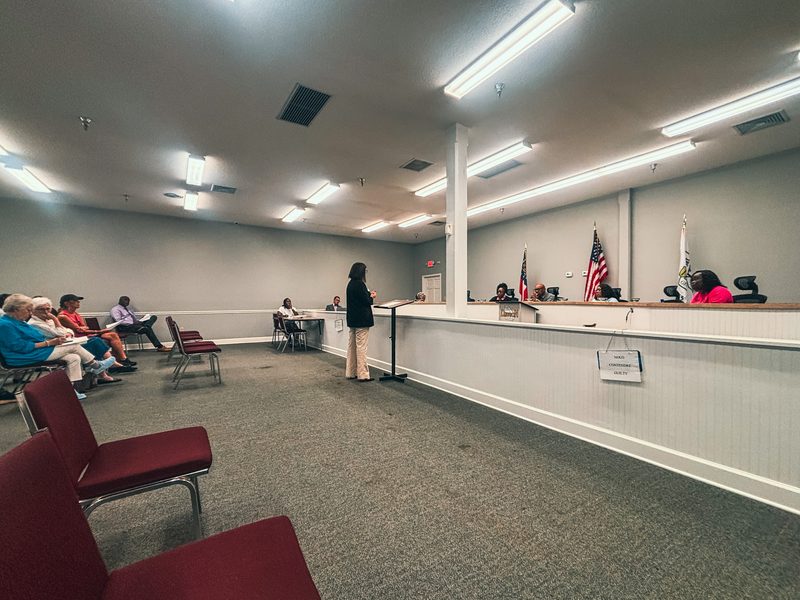
No budget, overdue audits: Dawson extends spending through November
More than five weeks into its fiscal year without an adopted budget, Dawson has authorized spending through November while officials work to close a projected general fund shortfall.
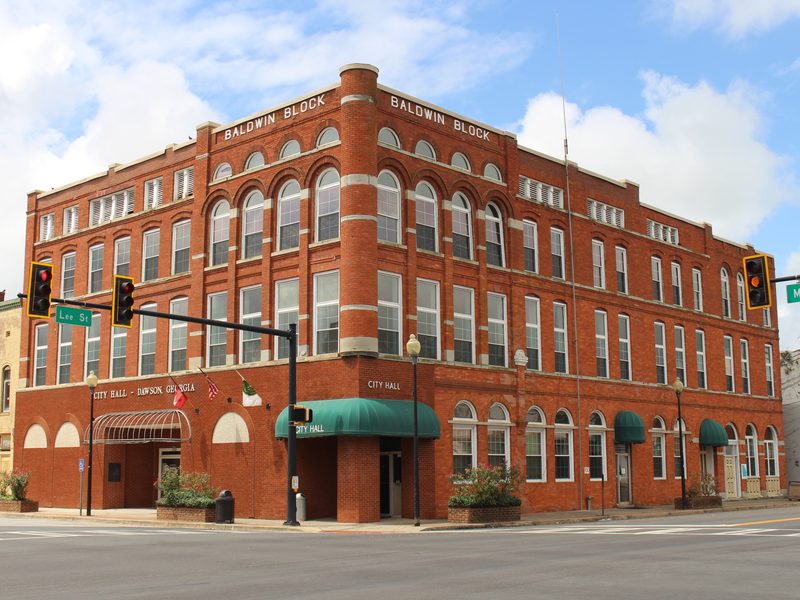
Dawson City Council update: Downtown plans, sewer work and medical office lease
Efforts to reactivate Dawson’s Downtown Development Authority should include an open application process to identify residents interested in helping shape downtown’s future, a Georgia Municipal Association representative told the City Council on Oct. 8.

PHOTOS: Albany State Homecoming President’s Circle Recognition
Click the arrow to scrol through the photos.
