
No budget, overdue audits: Dawson extends spending through November
More than five weeks into its fiscal year without an adopted budget, Dawson has authorized spending through November while officials work to close a projected general fund shortfall.
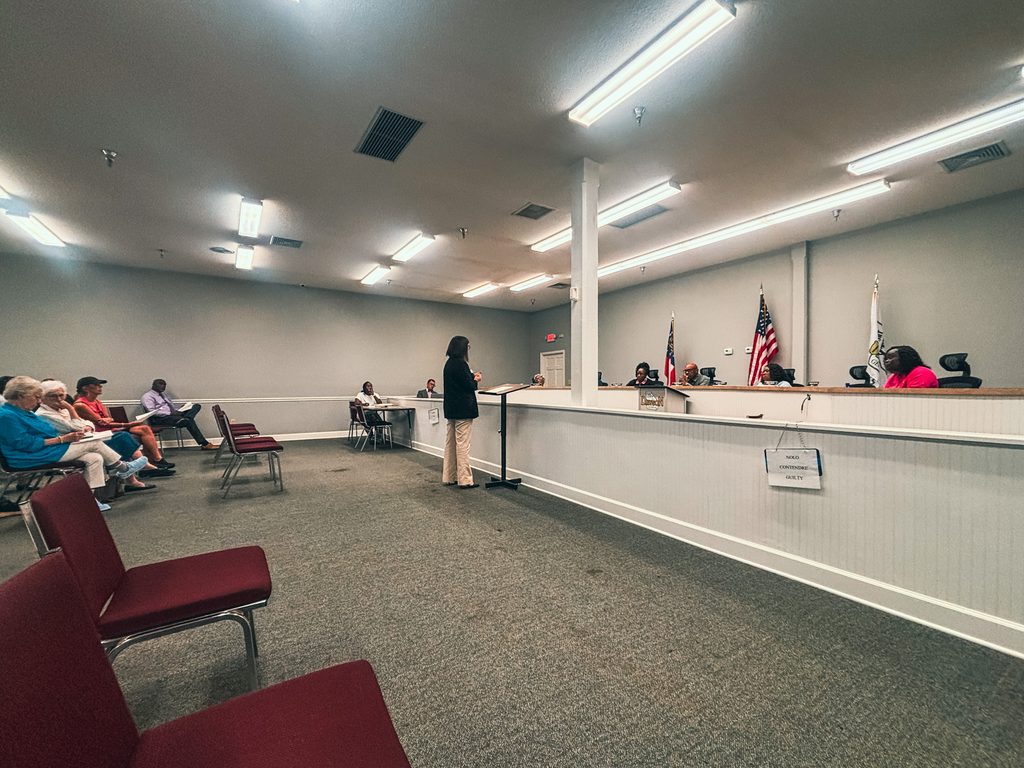
DAWSON — More than five weeks into its fiscal year without an adopted budget, Dawson has authorized spending through November while officials work to close a projected general fund shortfall.
The Dawson City Council approved the temporary spending measure Oct. 8, the night previously scheduled for budget adoption. Officials also set aside a proposed financial services agreement intended to help the city catch up on overdue audits.
The delays have consequences beyond City Hall. Emily Davenport, a member services consultant with the Georgia Municipal Association, warned that unresolved audit problems threaten access to grants. Mayor Robert Aaron said Dawson needs that money to repair failing water lines.
“So we can’t adopt an unbalanced budget,” City Administrator/Clerk Roxie Powell told the council. “So I’m asking for an extension.”
Ordinance 2026-14 authorizes spending for October and November and sets a limit tied to one-twelfth of the final amended budget for the fiscal year that ended Aug. 31, plus debt service and capital expenditures known to be due. It does not explicitly state whether that limit applies separately to each month.
Powell described the measure as an extension of “another 30 days,” although the ordinance names both October and November. Neither the ordinance nor the discussion established what authorized spending in September, the first month of the fiscal year.
Powell said she plans to present a balanced budget, schedule a public hearing and seek adoption sometime in November.
She said she is using last year’s property tax revenue to prepare the budget but has not eliminated the projected general fund shortfall.
“I’m still coming up with a little deficit in the general fund, but I’m still looking to see what we can come up with in that area,” she said.
In July, Powell told the council that the previous budget included at least $200,000 in revenue the city did not collect. The city subsequently authorized a tax anticipation note of up to $400,000 to cover operating expenses ahead of property tax collections.
Powell did not explain during the Oct. 8 discussion how the new proposal accounts for those previously identified revenue overstatements or repayment of the short-term borrowing.
A separate delay affects the city’s property tax rate. Powell said the tax digest — the compilation of assessed property values used to calculate taxes — is not expected until late November or early December.
Without it, she said, she cannot prepare the five-year tax digest and levy history needed before the council adopts its millage rate.
The financial uncertainty also affected a smaller spending request. A proposed $1,500 allocation for a downtown trick-or-treat event received no motion.
Powell said she had held off planning the event “because of the financial situation with the city, being that we haven’t adopted the budget or anything.”
The agenda packet included a proposed agreement with Bennett Financial Tax Advisory, dated Sept. 22. Powell asked that consideration be postponed.
Under the draft, the firm would serve as financial adviser and internal auditor, reconcile the city’s books monthly and prepare records to support independent audits for Fiscal Years 2023 through 2026.
The agreement called for a $4,150 monthly retainer beginning Oct. 1, totaling $49,800 during an initial term ending Sept. 30, 2027.
It also proposed $5,000 performance payments for each completed and submitted audit for Fiscal Years 2023, 2024 and 2025. An additional $5,000 would be earned if all three overdue audits and the Fiscal 2026 audit were completed and delivered by the end of the initial term.
Other terms included automatic annual renewal, a 3% yearly increase in the retainer and written notice of nonrenewal at least 60 days before a term ends. The city would remain responsible for retainer payments through the end of the term and any earned performance fees.
The draft also provided for an accountant’s login to city bank accounts to monitor transactions and perform reconciliations.
The agreement cited findings from the city’s 2022 audit, including expenditures exceeding budget appropriations in violation of state budget law. The packet copy was unsigned.
Powell said she plans to meet in person with Davenport and the city’s accounting firms, followed by a meeting with the Georgia Department of Audits and Accounts and county officials.
The goal is “to try to go ahead and complete 2023, so we can move forward with 2024 and 2025,” Powell said.
Davenport explained that CKH Group is helping reconcile the city’s books, while Mauldin & Jenkins performs the independent audits.
She said, according to information from Powell, the city’s transition from an older AS400 accounting system to Tyler software appeared to be a major source of difficulty. Staff turnover and the absence of a finance director have added to the workload.
“With her being city clerk and city manager, that is a lot on one person,” Davenport said, “and not having a finance person in here too is going to make it that much more challenging.”
Davenport said some records requested by auditors may be unavailable. She recommended adding a monthly audit update to the council’s agenda.
According to the Department of Audits and Accounts, state agencies cannot provide state grant funds to a local government that has not submitted all audits required by law within the preceding five years. Georgia’s Community Development Block Grant rules also require previous recipients to resolve outstanding audit or monitoring findings before applying.
Although the proposed Bennett agreement describes Fiscal Years 2023 through 2026 as delinquent, the Fiscal 2026 audit is not yet overdue. Davenport said it is due in February 2027.
Aaron said community development block grants have paid for previous water and sewer repairs and are needed again.
“Until we get those kinds of grants, we cannot do anything with the water lines that we have that’s bursting all over the city of Dawson,” he said.
The fire department’s September report described a vehicle encountering a sinkhole on Walnut Street after a pipe developed another leak following repairs by city workers. One person was taken to the emergency room, according to the report.
Aaron said the city had purchased asphalt and planned to begin pothole repairs the following week, weather permitting. But he cautioned that the larger problems would persist.
“So I want to be clear: the potholes are going to be with us for a while,” he said.
Related Articles
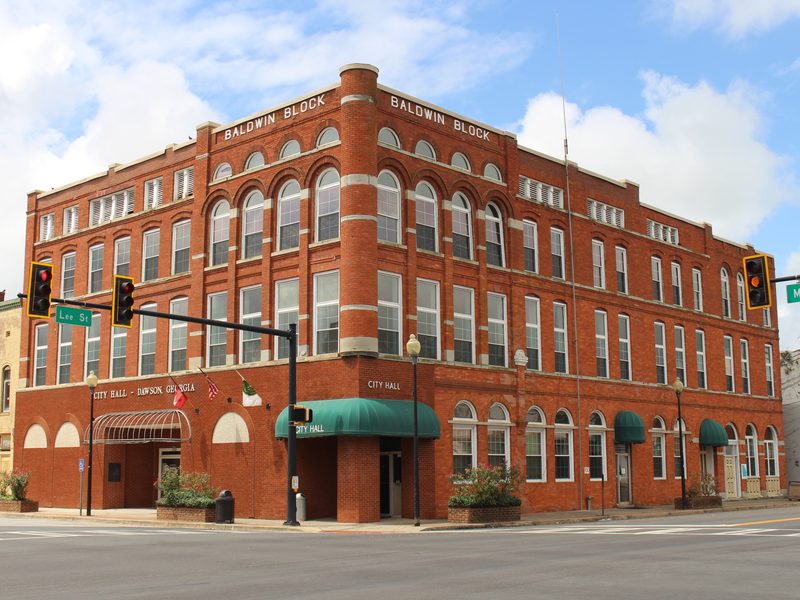
Dawson City Council update: Downtown plans, sewer work and medical office lease
Efforts to reactivate Dawson’s Downtown Development Authority should include an open application process to identify residents interested in helping shape downtown’s future, a Georgia Municipal Association representative told the City Council on Oct. 8.
PHOTOS: Albany State Homecoming President’s Circle Recognition
Click the arrow to scrol through the photos.
PHOTOS: Albany State’s Homecoming Albert Smith Endowment Breakfast
Click the arrow to scroll thorugh the photos.
