
DNR continues study of invasive blue catfish
Special Photo: Georgia DNR
By Tom Seegmueller
[email protected]
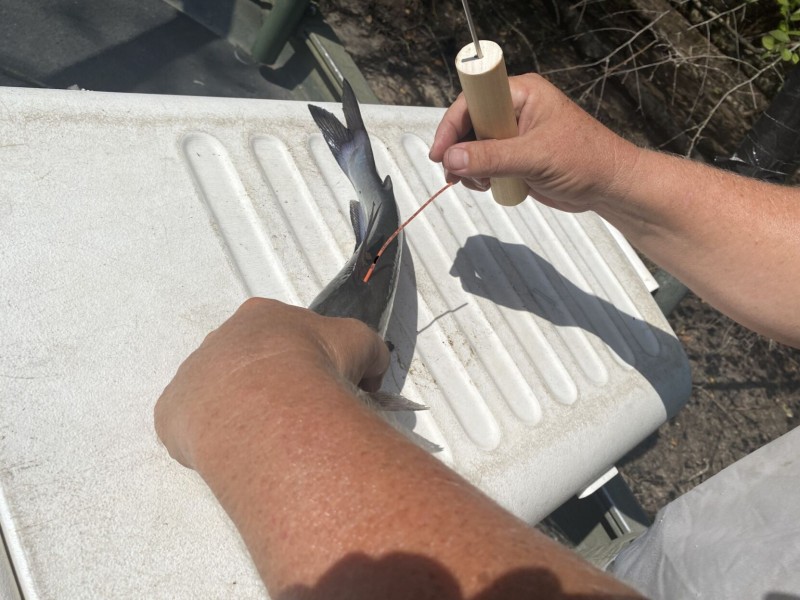
ALBANY ‒ For the second year in a row, Georgia Department of Natural Resources’ Wildlife Resources Division researchers are conducting a blue catfish tagging project on the Satilla River and need anglers’ help.
Fisheries managers say they hope this study will allow them to learn more about this non-native species and better assess its impact.
“As a large non-native species in the Satilla River, blue catfish have the potential to negatively impact many of the existing native species in the river, including the prized redbreast sunfish,” WRD Senior Fisheries Biologist Jim Page said. “These tagging efforts will provide fishery managers with important data to better understand movement of the fish in the river; assess how quickly fish are growing; and yield some information on fishing mortality for the species.
“In exchange for reporting tag information, anglers will be rewarded, so get out there and fish so you can have a chance to get some free swag.”
Although blue catfish are considered invasive species in Georgia, they are popular with many anglers looking to target a large freshwater species. They often reach weights exceeding 20 pounds with the current state record weighing in at 110 pounds-6 ounces. Blues feed primarily on live prey, including sunfish and other small fish. Adding to their potential threat in Georgia’s waters is the fact that a female blue catfish can produce 2,000 to 4,000 eggs per pound of body weight. So a 20-pound female Blue can produce more than 40,000 eggs.
Blue cats prefer swift-moving deep waters with cover such as submerged logs, rocks and ledges.
A tagged fish will be sporting an orange dart tag with a unique number and mailing address. Anglers who land a tagged fish should remove the tag and keep the fish. Tags may be mailed (address listed on the tag) or reported via phone (912 285-6481). The following information (whether mailing the tag or reporting by phone) is needed: total length (in inches), weight (in pounds), contact information (name, address, phone), and information on the catch (e.g., GPS coordinates; nearby landmarks).
Reporting anglers will receive a custom hat and information relating to the tagged fish. For more information about non-native species found in the Satilla River visit GeorgiaWildlife.com/ans. For more information on the Satilla blue catfish tagging study, call the Georgia DNR Wildlife Resources Division Fisheries Management Office in Waycross at (912) 285-6481.
Author

Related Articles

Albany police make arrests in murder, robbery cases
Officials with the Albany Police Department have announced a number of arrests in cases that involved a homicide and a pair of thefts.

Dougherty Jail graduates first class of female GED recipients
“It was an escape. I can say this has been challenging. I want to express my gratitude for being able to attend this program.”

From cotton to cloud: In the data center debate, is rural Georgia once again being asked to carry the cost?
Across much of rural Georgia, the abandoned cotton warehouses and shrinking tax bases remain — enduring reminders that industries built to serve distant markets do not necessarily stay rooted in the communities that first sustained them.
