
Dougherty County Commission mulls data centers
“Georgia has seen a lot of data center development in recent years. Georgia hosts the their-highest (number) of data centers and operates the most square footage.”

ALBANY – Data centers get a bad rap, and there are some good reasons for that. Neighbors complain that they’re noisy, and the facilities can be massive, using huge quantities of electricity, and in some cases sucking up several million gallons of water per day.
But the building boom for data centers is not likely to subside any time soon. The devices that millions keep in their pocket, when they are not fidgeting with them to watch animal videos or catching up on social media, are dependent on them. They are also a backbone for the burgeoning artificial intelligence (AI) technology.
And while so far the majority of data centers in Georgia have been located in the Atlanta region, companies are reaching out to more rural areas.
The Crisp County Commission in June 2025 approved rezoning for a 2.1 million-square-foot data center expected to cost more than $6 billion and scheduled for completion in several phases between 2029 and 2033. An application also has been filed for a potential data center in Blakely that reportedly would come with a 12 million-square-foot campus.
Seeing these developments, the Dougherty County Commission this week heard a presentation on data centers, with an eye toward planning for how it will respond in the event a company looks to locate a center in the county.
“AI is no longer science-fiction fantasy,” Alicia Vaughn, county consulting services associate for the Association County Commissioners of Georgia, told commissioners during their Monday meeting. “(It’s) reality. It’s hard to know exactly how many data centers there are in Georgia.”
So far, Virginia is the state with the most data centers. That state’s Loudoun has been dubbed “data center alley,” with some 200 of the facilities located there. Texas has the next-most centers.
Georgia, however, is coming more into play due to moves by the state legislature, Vaughn said, and developers are starting to look at more rural areas in the Peach State.
“Georgia has seen a lot of data center development in recent years,” she said. “Georgia hosts the highest (number) of data centers and operates the most square footage.”
While the stories about data centers often center around the complaints of residents located near proposed sites, Vaughn said there can be a net positive in allowing the centers. Some counties have been able to fund their entire general fund budgets with taxes paid on facilities, she said.
In Loudoun County, companies have paid for fire trucks and other capital expenses, she said.
“Data centers can be a very responsible partner in your county,” Vaughn said.
She recommended that the commission begin planning ahead of time in the event a proposal comes knocking. That planning should include how to avoid electricity price increases related to a data center.
“They use a lot of power,” she said. “There is no getting around that. They do consume water. It’s very important to start having conversations with power providers. You want to be thinking about all the environmental issues and how you can ensure that data centers are not a nuisance in your community. Absolutely you want to be proactive. That is what you are doing today, and I commend you for that.”
The commission also could consider enacting a moratorium from accepting applications while it works to put ordinances in place to govern data canters, Vaughn said.
Under current ordinances, a data center’s application would be treated as if the applicant was a manufacturer, Albany-Dougherty Planning Services Director Paul Forgey said.
“It’s not ideal,” he said. “I’ve been approached by a couple of people who are interested. For that reason, I think you ought to consider a moratorium.”
Commissioner Clinton Johnson recommended sending the issue to the commission’s Governmental Affairs Committee for discussion and drafting of ordinances.
“It’s very contentious, but I do think it’s important to have that discussion,” Commissioner Gloria Gaines, who chairs the Governmental Affairs Committee, said.
Author

Related Articles

‘Flywheel’ comes home as Kendrick brothers bring Brazilian remake to Albany
Twenty-three years after a $20,000 movie made with church volunteers launched their filmmaking careers, Alex and Stephen Kendrick returned Thursday to the Albany theater where “Flywheel” first reached an audience — this time with a Brazilian cast telling the story.
Heated exchanges, lengthy delays precede Lee school board’s 17.96-mill vote
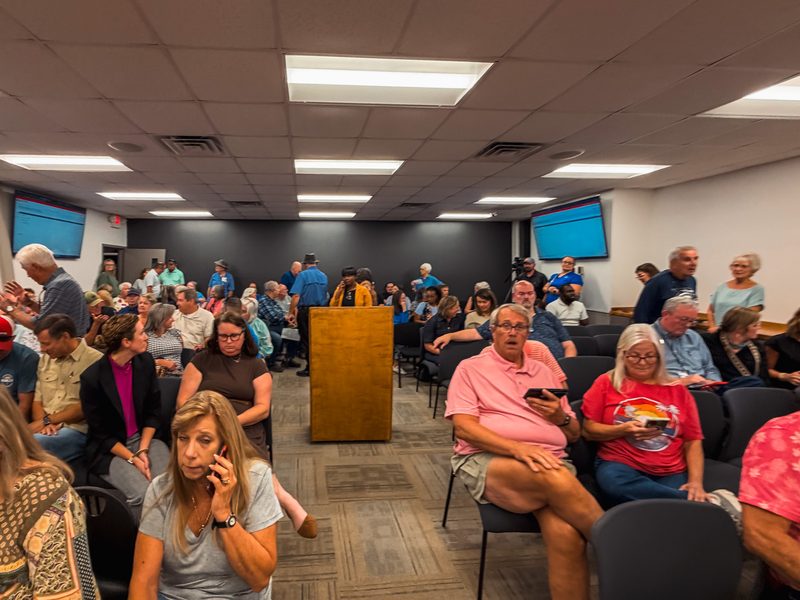
The Lee County Board of Education adopted a 17.96-mill operating tax rate Thursday after a crowded public hearing and a lengthy wait for a vote that left frustrated residents at the meeting until close to 9:30 p.m.
Turnout steady during first week of early voting in Dougherty County
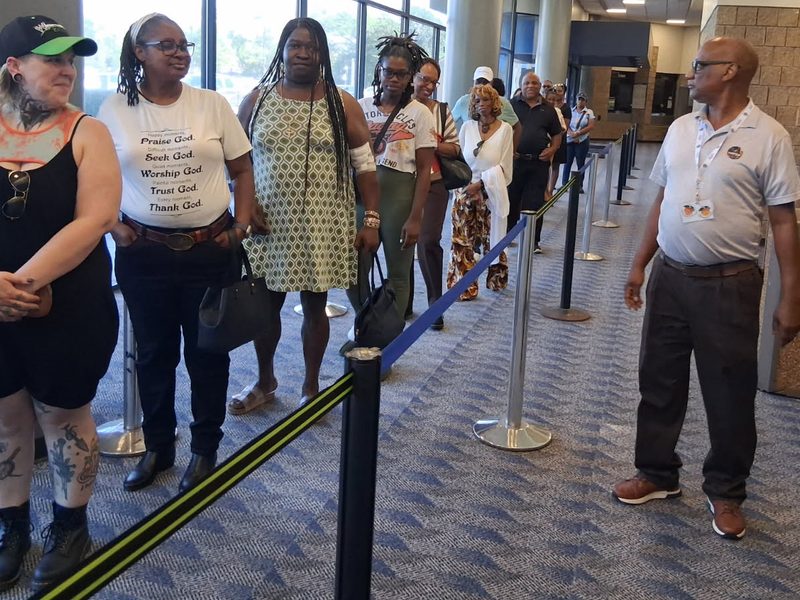
Early voting started statewide on Tuesday, giving voters three weeks to cast ballots ahead of the Nov. 3 election.
