
Dougherty County Jail inmates, medical personnel isolated after testing positive for coronavirus
File Photo
By Alan Mauldin
[email protected]
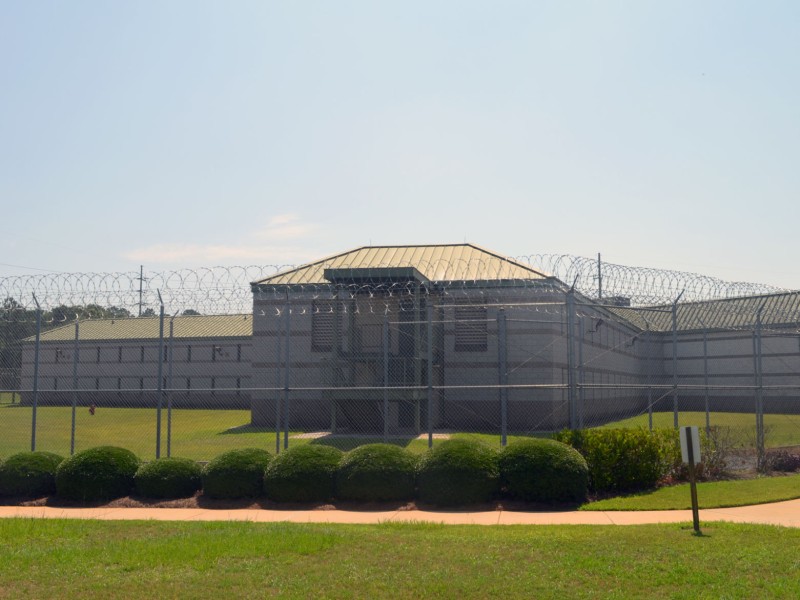
ALBANY — After escaping the novel coronavirus during the worst of the pandemic, two Dougherty County Jail inmates and two medical staff members tested positive after the first case was confirmed two weeks ago.
“We actually had a person come to jail who, after he came to our facility, we learned he had tested positive,” said Col. John Ostrander, director of jail operations for the Dougherty County Sheriff’s Office, which operates the jail.
The inmate apparently was aware of the positive test before his arrest but did not notify jail staff. Since that time, two other inmates tested positive, as did two jail nurses.
The nurses had contact with the first innate who tested positive. Medical personnel wear protective gear while working with inmates, so it was not known whether that contact was the source of their infection, Ostrander said.
The nurses and inmates tested positive in the days after the arrival of the initial coronavirus-positive inmate, who remains at the facility. Of the other two inmates, one is still in the jail medical unit and one has been released.
The jail followed procedures for medical isolation of the inmates and nurses, Ostrander said.
“We quarantined and tested about a dozen (additional) inmates; they were not exposed,” he said. “We managed the infection that popped up about two weeks ago.”
Jails and prisons have been hot spots for the coronavirus during the pandemic. This week the Arizona Department of Corrections reported that some 517 of 1,066 inmates at its Tuscon Whetstone Unit tested positive.
Despite Dougherty County being hit hard early in the COVID-19 crisis and a recent resurgence in cases, the impact has been limited compared to other locations.
A Johns Hopkins Bloomberg School of Public Health Study that examined the second quarter of the year found a case rate of more than 3,200 per 100,000 inmates. The researchers said the infection rate for inmates was 5.5 times greater than that of the public at large.
Ostrander said that the sheriff’s office took steps early to prevent an influx of the disease into the jail population. Jail leadership consulted officers from the top to the bottom of operations to come up with a plan.
“As soon as the pandemic started, we (initiated) protocols,” he said. “We had to get creative.”
All new inmates are quarantined initially, and those staying long-term have no contact with other inmates for 14 days. The normal pre-coronavirus population of 600 was reduced by nearly 25 percent and is now at about 475.
“They’re not allowed into the general population until they clear quarantine,” Ostrander said. “Medical staff do a screening of every inmate. There was a conscious de-incarceration effort. The best way to protect the jail population is not to have one.”
Jail staff also take the temperatures of inmates twice each day as part of each shift’s head count routine.
The jail established sanitary requirements for frequent hand-washing and use of hand sanitizer in the facility.
“I feel like we’re doing everything we can to protect peoples’ family members,” Ostrander said. “We hate they have to sit here during this. We’re doing everything we can.”
Author

Related Articles

Putting on the Ritz: The rise, fall and renewal of Albany’s Harlem District
On July 7, the Albany City Commission unanimously approved final construction drawings for a comprehensive restoration of the Ritz Theatre and Cultural Center, clearing the way for the project to move into competitive bidding after years of planning and preservation efforts. The decision marks the latest chapter in a decades-long effort to preserve one of Southwest Georgia’s most significant African American landmarks.

Albany City Commission set to vote on skate park funding
“There have been other sites discussed. Based on information (from) the community, we decided on the current site. That’s the only site we’re looking at right now.”
Following Lee’s lead, Terrell County hits pause on data centers
The Terrell County Board of Commissioners voted unanimously Tuesday to adopt a six-month moratorium on new data centers, giving county officials time to develop zoning regulations governing where such facilities could be located and how they would operate.
