
Dourado’s ’60 Second Leader’ is a quick read
Phil Dourado lets you know everything you need to know about leadership in one-minute bites through “The 60 Second Leader.”
You can finish this book in an evening of reading. If you are a leader and you are just too busy to read, this is the book for too busy to read folks. In 30 one-minute mini-chapters, Dourado provides valuable information about what great leaders in any position in an organization can do, and so can you, too.
“The 60 Second Leader” is composed of 30 one-minute topics divided into five sections: personal (self) leadership, leading the organization, leading people, distributed leadership and great leadership.
The 30 chapters also provide a quote from a person from various walks of life in a leadership position. In each chapter, you will find a very useful concept that is discussed. Insights are taken from business tycoons, management gurus, government luminaries, military officers, a couple of ancient Greek philosophers, world class athletes and many others.
There are several types of leaders discussed in the book. There are unrecognized leaders, who are referred to as informal leaders. People who are in formal leadership positions are another type of leader. People who are would be leaders, some of whom are being groomed as leaders by the organization that you might work for.
Finally, the most interesting are should be leaders, the many potential leaders who do not even think of themselves as leadership material. Often these people just do not want to be burdened with the responsibility of leading others. But silently, they impact the lives of all around them in some way.
What is a leader? In the book, leader is defined as an executive who is the person at the top. This definition says that leadership is synonymous with a position. According to Peter Senge, if you define a leader as an executive, then you absolutely deny everyone else in an organization the opportunity to be a leader. Dourado shows us how ordinary people at any level can lead and achieve extraordinary results, and how radically different leadership styles can be equally successful.
The chapter that I benefited most from was chapter three, called “Decisions.” The discussion on group decision using smart groups to show how having group discussions can bring power to your organization was interesting. For example, the Boeing 777 jet airliner emerged from an exercise in group decision making to help identify where Boeing should go next. This involved participative leadership through critical mass intervention.
Another example, Hewlett-Packard and Innocentive, a spin-off of Eli Lilley, have both experimented with the smart-groups principle to create internal decision markets with predicting which products would win out in the marketplace. According to Dourado, smart groups beat individual decisions if they have:
*Diversity of opinion (each person should have some private information, even if it’s just eccentric interpretation of the known facts).
*Independence (people’s opinions are not determined by the opinions of those around them).
*Decentralization (people are able to specialize and draw on local knowledge).
*Aggregation (some mechanism exists for turning private judgments into collective decision).
The useful concept in this case is ODDA Loops. This stands for observe, orientate, decide and act. You cannot just look for leadership at the top of the tree. Listen to leadership wherever it is expressed. Regardless of your job or job title, effective leaders are more connected to people and to networks. Network connectors bring talented people together to form partnerships.
We have often heard that we must learn from our mistakes. What does the learn-from-your-mistakes concept mean where leaders are concerned? It means that leaders need the ability to fail and then get up and go on. If you fail as a leader, but get up and get on you will show people by matter of your example that they too must get up and move on.
LaVerne Laney McLaughlin, Ph.D., is an associate professor and the library director at Albany State University.
Related Articles

Dawson City Council addresses budget, fire fee, wastewater spending
The City of Dawson will enter new fiscal year without adopted budget as council considers creating a new fire assessment and approves wastewater equipment, K-9 agreement

Dougherty County assistant county manager declines top position in Harris County
“It is a beautiful community. I was thankful that they thought of me. They offered, but it didn’t come through in the end.”
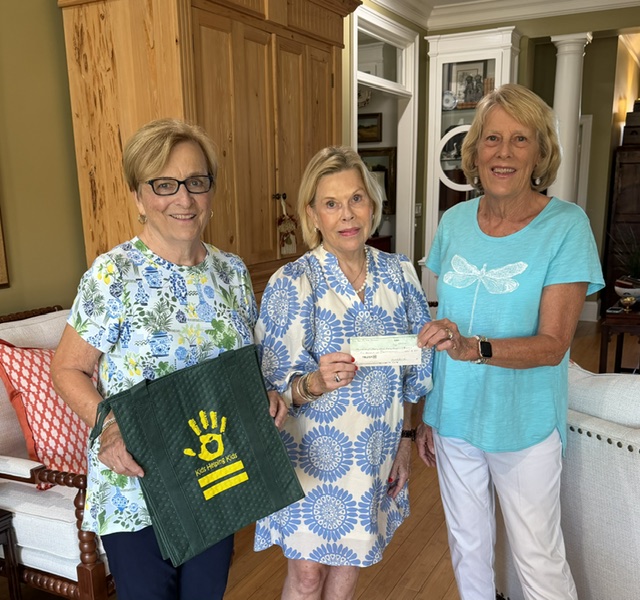
Helping Hands to serve 1,100 Dougherty families weekly with help from Paula Deen foundation
Paula Deen’s Bag Lady Foundation has donated money to Helping Hands Ending Hunger, providing enough funding for about 1,100 cooler bags as the Dougherty County School System program begins another year of getting unused school food into the homes of local families.
