
EDDIE SEAGLE: Citrus trees add curiosity to our landscapes
Eddie Seagle
“My life, I realize suddenly, is July. Childhood is June, and old age is August, but here it is, July, and my life, this year, is July inside of July.”
— Rick Bass
Our 4th of July holiday has come and gone. With two long months until the next holiday (Labor Day), we try to stuff as much into these months as possible, including summer vacations, weekends at the beach, short trips before school starts again and so forth. We are a more mobile society than ever before and have many opportunities for travel that our ancestors never had.
During our travels, we see landscapes and plants that catch our attention. Our first thought is whether or not these plants will survive back home. Citrus are such plants whether for aesthetics or for flavor that add to the curiosity of our landscapes.
Shrubs and trees (such as the grapefruit, lemon and orange) in the genus citrus are evergreen, flowering plants usually with spines, leathery and aromatic leaves and juicy, edible fruits surrounded by a leathery aromatic rind. Citrus is a common term for these plants which are believed to have started in the southeast Asia area bordered by northeast India, Myanmar and the Yunnan province of China.
It is believed that the Spanish initially introduced citrus into the continental United States near St. Augustine, Fla. in the late 1500s, and these plants ultimately made their way to Arizona and California in the 1700s. There are two types (sweet and acid) of citrus that can be grown in our landscapes for fruit and aesthetics. Environmental conditions, cultural practices and pest activity can dictate the degree of success achieved in growing citrus in this area.
The sweet types of citrus include grapefruit, mandarins and sweet oranges, which grow into appealing, medium to large trees. Grapefruit do not withstand cooler temperatures very well. The farther the site is from the warm coastal areas, the more difficult they are to grow and survive. Redblush and Star Ruby (red fruit) and Marsh (white fruit) are seedless cultivars which are often planted with favorable success. Royal and Triumph (white fruit) are seedy varieties that offer good fruit quality.
The mandarin class of citrus has loose skin (easily peeled), deep coloration and good flavor. Such citrus include the mandarins, satsumas and tangerines. The terms mandarin and tangerine are often used to identify the same loose-skinned fruit depending on where you are. What is called a mandarin in California may be called a tangerine in Florida. Cross pollination is necessary for best fruiting of most tangerine varieties.
The satsuma, which is self-fruitful, will tolerate colder temperatures and produce more consistent fruits than other types of sweet citrus. Thus, these fruit grow very well in south Georgia. Cultivars include Owari, Silverhill and Changsha. With satsumas, the fruits may be fully ripened while the peel is still green.
The tangerine is also another good type of citrus to plant because of its cold tolerance. The satsumas and tangerines are more cold tolerant than grapefruit and sweet oranges. Cultivars of tangerine include Dancy (self-fruitful), Ponkan (self-fruitful) and Clementine (cross pollination).
The tangelos are tangerine-grapefruit hybrids that produce loose-skinned, tangerine-like fruits. Cultivars include Orlando, Lee, Robinson, Osceola, Nova and Page. However, plant alongside Dancy or Clementine for cross pollination for best fruiting.
If an effort is made to grow sweet oranges, then cold protection will also be needed (cold damage occurs at or below 20 degrees Fahrenheit). Cultivars include Hamlin and Ambersweet. The naval orange is also a good choice to grow. Cultivars include Washington, Dream and Summerfield.
The acid types of citrus provide favorable fruits and make effective ornamental specimens. They are self-fruitful and do not require cross pollination. The kumquats are the most cold tolerant of this group. They will withstand temperatures as low as 15 degrees F. The small orange-like fruit is about one inch in diameter and can be eaten fresh (peel and all) or used in making jellies, marmalade and candies. Cultivars include Nagami (oblong to pear-shaped fruit with acid pulp), Marumi (round and sweet) and Meiwa (round and sweet).
The calamondins have small, round fruits with acid pulp and look like a tangerine. These can be grown as a container planting, either indoors or outdoors, and have good cold tolerance (low 20s degrees F). The fruits are yellow to orange in color and can be used as lemon or lime substitutes.
The lemon is another good choice of citrus for the landscape and will tolerate temperatures in the mid-20 degrees F. Meyer is a good cold-tolerant cultivar. The limequat is a very cold tolerant (low 20 degrees F) lime-kumquat hybrid which makes a very attractive container plant. They produce fruit resembling the lime in looks and quality. Eustis, Lakeland and Tavares are cultivars of the limequat.
The Thomasville citrangequat is a cold hardy citrus tree with good fruit and makes a great lime substitute with a kumquat/orange flavor. The tree is named for Thomasville, Ga. where it first fruited and is will tolerate temperatures to 5 degrees F once established.
For all citrus, proper rootstock selection is critical. Trifoliate orange (Poncirus trifoliata) is an effective rootstock for satsumas, oranges, kumquats and tangerines. Other rootstocks include sour orange, Cleopatra mandarin and Rusk and Carrizon citranges (sweet orange and trifoliate orange crosses). Cleopatra mandarin makes a great rootstock for mandarins-tangerines and sour orange is not compatible as a rootstock for kumquats.
Citrus trees are self-fruitful and do not require cross-pollination, excepting Clementine tangerines and Orlando tangelos. The self-fruitful types of citrus may be grown as single trees in the landscape for aesthetics and fruit. They produce fruit best when grown in full sun, but large tree canopies can provide some degree of winter protection. Do not plant these trees near septic tanks or drain fields. Citrus trees do best in sandy loam soils with good drainage.
Blossom, fruit and leaf drop can be noticed in citrus and happens naturally. Such natural shedding of flowers and fruits prevents citrus from overproducing which minimizes stress to the plant. Citrus leaves remain intact for about two years and then drop. However, some leaf drop occurs throughout the year as is the case with most evergreens. Also, be aware of other causes for leaf drop and poor plant health such as environmental conditions, cultural practices, disorders, insects or diseases.
If you elect to grow citrus in your home landscape, research your choice before purchasing in order to fully understand what is needed to keep the plants healthy and attractive. Look for citrus that are cold tolerant and do well in the south Georgia environment.
May the results of your immediate efforts be long-lasting so that you can enjoy the fruits of your labor for seasons to come. Think sustainability! Keep your hanging baskets and potted plants refreshed with water and food. Remember to feed and water the songbirds, and give your pets the care they need (do not leave them unattended in a hot car or tied to a tree all day long). Also, be on lookout for children playing along the streets and roadways throughout our communities this summer. Let’s keep everyone safe!
“And when the Chief Shepherd appears, you will receive the crown of glory that will never fade away.” 1 Peter 5:4. “In Him [Jesus our Lord] and through faith in Him we may approach God with freedom and confidence.” Ephesians 3:12.
Eddie Seagle is a sustainability associate, Golf Environment Organization (Scotland); agronomist and horticulturalist, CSI: Seagle (Consulting Services International); professor emeritus and honorary alumnus, Abraham Baldwin Agricultural College, and associate editor of The Golf Course, International Journal of Golf Science. Direct inquiries to [email protected].
Related Articles

Who decides elections in Terrell County? Data show older voters dominate turnout as turnout declines
According to the Georgia Secretary of State, 1,731 of Terrell County’s 6,048 active registered voters cast ballots in the May primary, a turnout rate of 28.6%. Four weeks later, only 922 voters participated in the June 16 primary runoff, reducing turnout to 15.2%.
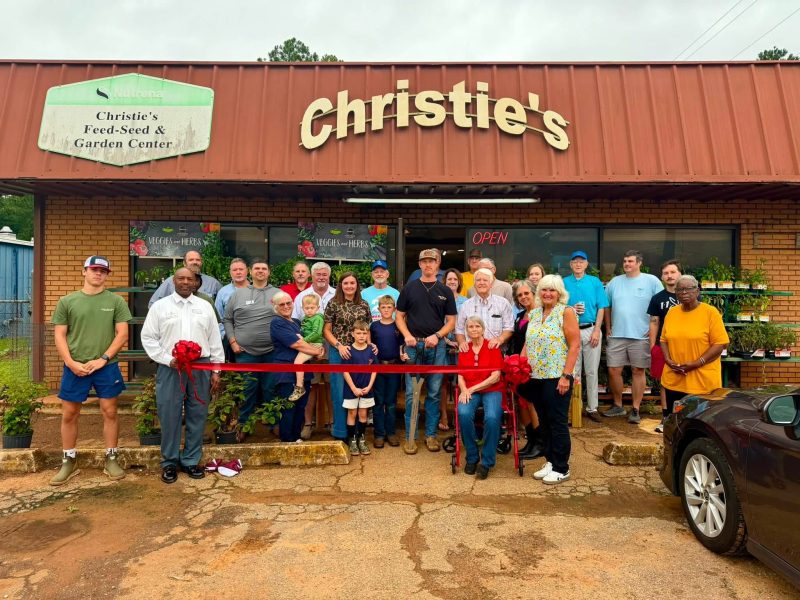
Christie’s Feed & Seed enters new chapter under new ownership
A longtime Dawson business has entered a new era as Riley and Jessie Davis officially assumed ownership of Christie’s Feed & Seed, with the Terrell County Chamber of Commerce marking the transition during a ribbon-cutting ceremony.

Dawson News grows online with Albany Herald website, Facebook page
Residents can now find Dawson News coverage alongside regional reporting on the Albany Herald’s website while also following breaking news, community events and feature stories through the Dawson News Facebook page.
