
Five years after Hurricane Michael: Recovery looks different for Georgia pecan farmers
By Lucille Lannigan
[email protected]
ALBANY — Five years later, traces of Hurricane Michael’s devastation exist in the gaps between the rows of 100-foot pecan trees on southwest Georgia farms.
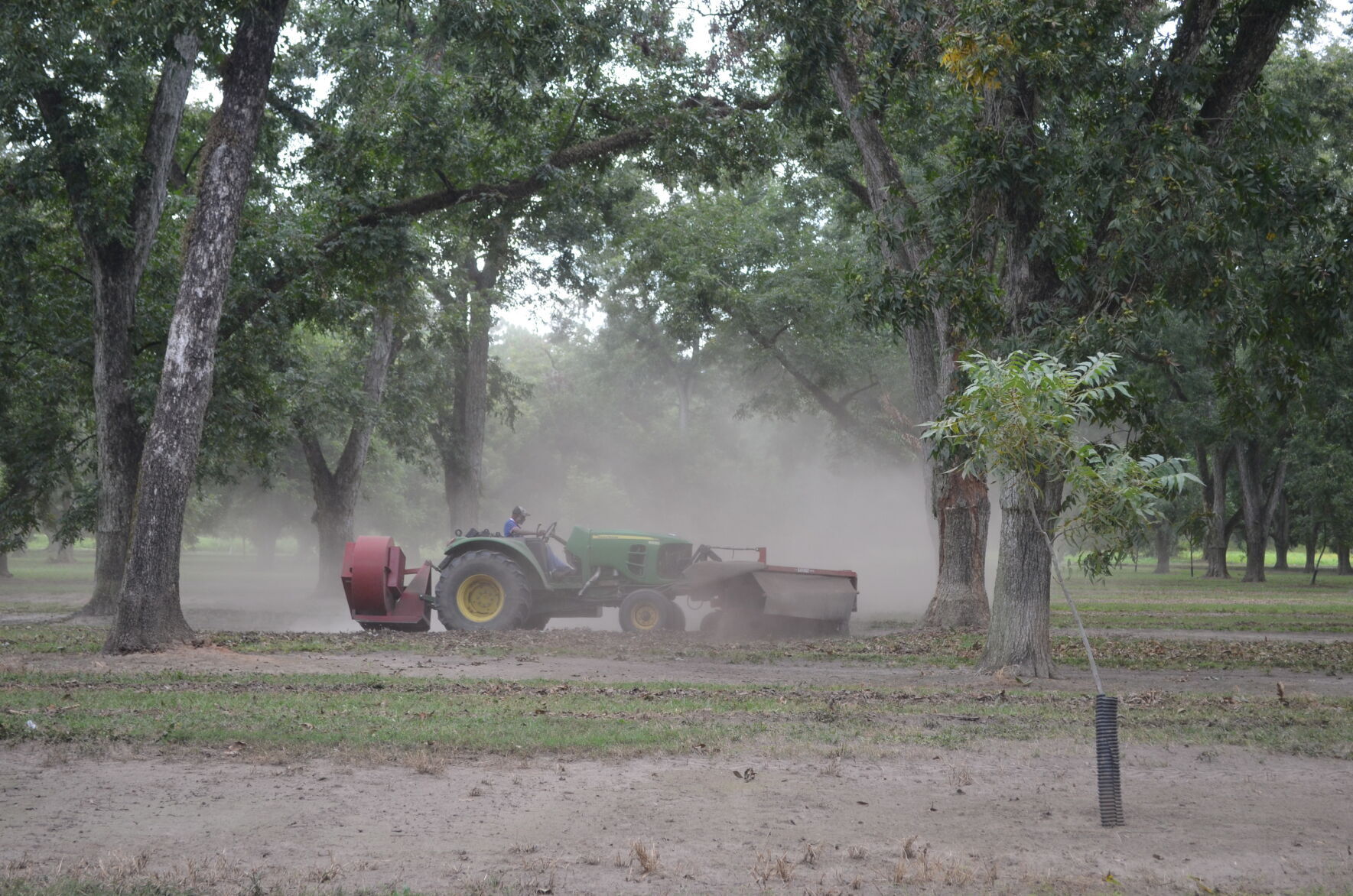
Baby trees grow in the gaps. Newly planted after the storm, it will take them about 10 years before they are producing nuts that can be harvested, Gordon “Bo” Morey, a pecan farmer with orchards across Dougherty, Mitchell and Colquitt Counties, said.
Morey lost about 1,500 trees in the storm — some more than 100 years old. Five years later, his farm isn’t even close to bouncing back, he said.
“At this point it’s not about making profits but just trying to stay in business,” Morey said.
The storm hit Florida’s panhandle and southwest Georgia Oct. 10, 2018. It was the strongest hurricane on record to make landfall along the panhandle and the first major hurricane to directly hit Georgia since the 1890s, according to the National Weather Service.
In southwest Georgia, wind gusts reached as high as 115 miles per hour, devastating pecan farms across the region. Mitchell, Lee and Dougherty counties accounted for 30% of the state’s pecan production in 2018, according to the University of Georgia’s Pecan Extension office. The area lost 30-50% of what many thought was about to be the best harvest in years.
Morey’s father, Tyron, who has since passed away, cried when he first saw Hurricane Michael’s devastation across his pecan groves, Morey said. The tallest trees, which just a day before had leaves packed with pecans ready for harvest, were stripped at the trunks, and fallen on their sides.
“I was looking at it like, ‘Oh my gosh, we are in hell,’” he said.
The family tried to salvage the harvest as much as they could. They went in with chainsaws to cut the trees, piece by piece, so as not to crush the pecans that littered the ground. It took them forever, Morey said. They planted new trees of different variants the following December. These trees replaced ones that had been producing nuts for generations.
On top of the loss of highly productive trees, the cost of production, equipment and renting land for growing has gone up, Morey said. The market for pecans has gone down. Morey said he wants to upgrade equipment, but he can’t because the money isn’t there.
“Everything is just going up,” he said. “It’s like a cancer. It just eats at you, a little bit at a time.”
The disconnect between market and production costs trickled down from 2018 when Chinese tariffs were raised, Morey said.
The pecan groves are the Morey family’s main source of income. They’re now tapping into their savings, he said, unsure when or if he will be able to retire. He is encouraging his son not to carry on the business.
He keeps going because he loves to grow pecans, but it’s not always just about love, he said.
“You have to live it,” he said. “Just because you love it doesn’t mean that it’s gonna work out. I have to make money.”
Morey planted trees of newer varieties that have higher yields and are less susceptible to pecan scab, a fungus that causes lesions and tissue death on pecan twigs. While these new trees won’t necessarily benefit him, he said they will benefit the next generation of farmers.
Lenny Wells, a UGA extension horticulture pecan specialist, said there may be a silver lining in Michael’s devastation. Pecan scab is the biggest challenge to growing pecans in the region, Wells said. Newer varieties make it easier for farmers to manage the fungus. It also lifts costs for spraying the trees to protect against pecan scab.
“Those older varieties were so scab susceptible that it required a lot of sprays to manage it,” Wells said. “With these newer varieties, you don’t have to spray as often for most of them.”
Older trees face lingering impacts from the storm as well, he said. High winds may have damaged the vascular connections between the stems and branches. This interrupts the flow of nutrients and water to the nuts as they develop and mature. These impacts can be felt as far out as 2 to 3 years later.
Air pockets also may have formed underground as trees and roots got knocked around in the storm, leading to root death over time, Wells said, noting it’s going to become difficult to grow the older varieties because they’re so expensive to grow. They don’t produce the yields needed to compete in the market.
Older varieties may average 800 to 1,200 pounds per acre, Wells said. Growers should be averaging 1,500 to 2,000. They can do this for cheaper with newer varieties.
“So that’s the direction that we needed to move in as an industry for the future,” Wells said. “Hurricane Michael kind of helped push us along that path.”
Some farmers are seeing this so-called silver lining and more.
Staci and Alex Willson had just returned to the family business at Sunnyland Farms in Dougherty County when Hurricane Michael struck down about 4,200 of their pecan trees.
Sunnyland Farms is a 1,760 acre farm in the county that is often called “the pecan capital of the world.” The company is celebrating its 75th year. Many of the trees lost had been in the family for generations.
The Willsons were prepared to harvest a crop that was looking extremely good, Alex said. After Michael, that wasn’t possible. They attempted to salvage 20 to 30 acres.
“By the time we used the tractors and bulldozers to move the downed trees out of the way, we’d run over so many of the good nuts on the ground that it didn’t even justify the cost of trying,” Alex Willson said.
They wound up losing an entire crop that year. On top of the lost crop, the plant used to produce the farm’s retail goods, faced roof damage on its cold storage unit.
The retail side of the business makes a profit off of candies, cakes and other nutty goodies that are packaged and shipped around the country. The bulk of their money is made in the holiday months of October, November and December.
The cold storage unit was packed with goods for this season. Michael hit just as it began.
“We spent six, seven months getting ready for that season, and then of course all of that went out the window immediately,” Alex Willson said.
This created financial uncertainty in the years following the hurricane, he added. On top of Michael’s impact, Sunnyland experienced a large kitchen fire in the fall of 2022, which forced them to find elsewhere to produce the company’s retail goods.
“Alex and I have been in crisis management since we moved to Sunnyland,” Staci Willson said.
However, during both of these crises, the city and community of Albany came forward to help, she said. The Albany Area Chamber of Commerce provided generators and helped clear trees after Michael. After the fire, the chamber, the Albany-Dougherty Economic Development Commission and even Phoebe Putney Memorial Hospital worked to find the business vacant kitchens so they could prepare for the holiday season.
“Overnight, we had two satellite production kitchens that were vacant that we jumped into,” Staci Willson said. “So just the fact that the community can help you out of a crisis like that — I don’t know if every community would do that.”
And now, things are looking up for Sunnyland.
Five years after Michael, this year’s crop is looking good, the Willsons say. One year after the kitchen fire, Sunnyland already has started production in a brand new kitchen and even opened a storefront in Pigeon Forge, Tenn., in September.
Their orchards are a mix of older trees of the Desirable variety and baby trees of newer varieties that will contain that silver lining of a stronger resistance to pecan scab.
It’s a few weeks before harvest, Alex Willson noted.
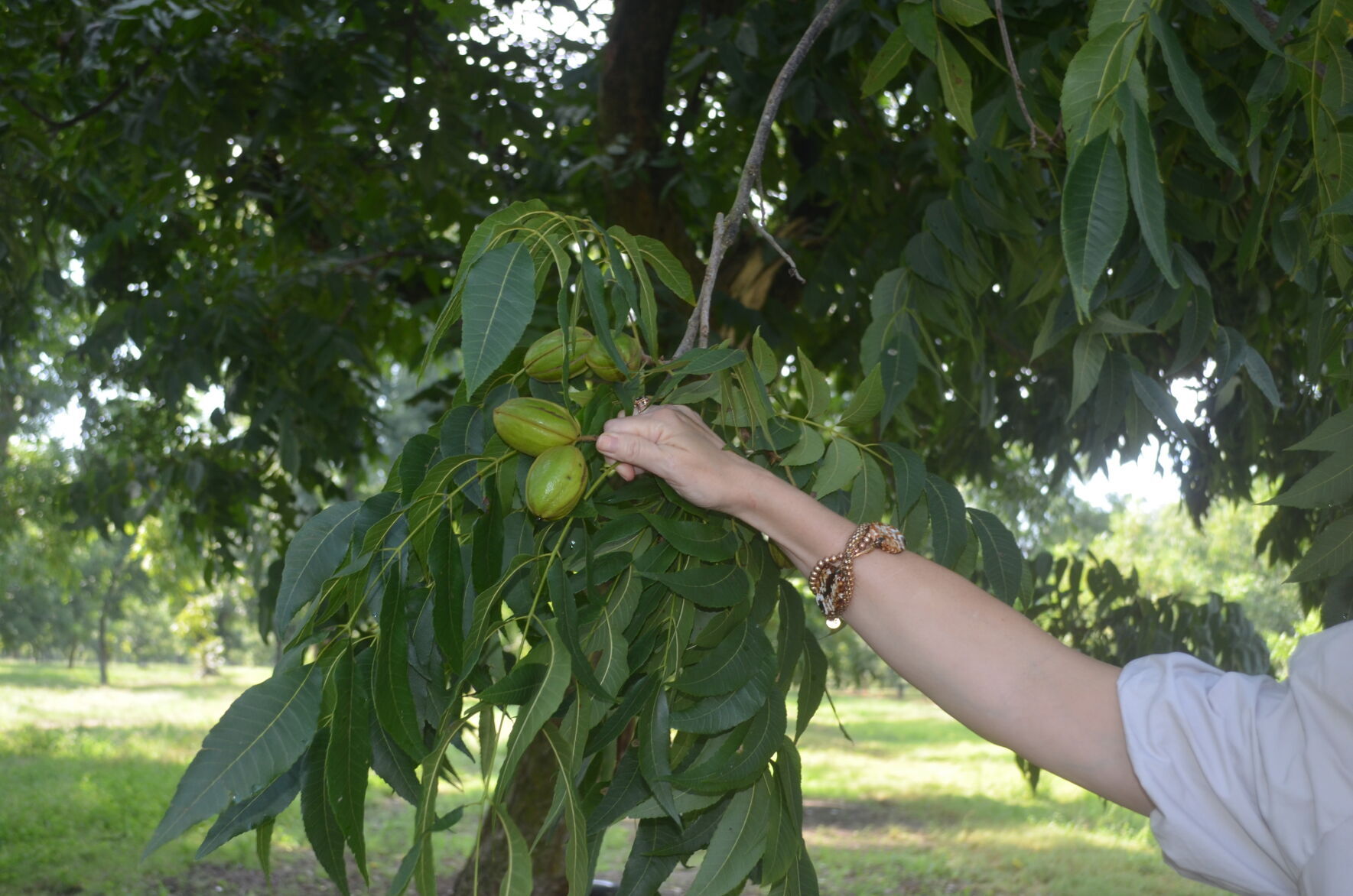
At this time, you can look up into the pecan trees to see branches brimming with nuts. You can snag fallen pecans or those from low hanging branches, cut them open and see if the nuts are filled out. This year, it appears they are, he said.
“We’re cautiously optimistic as we are every early October,” Willson said. “I would be lying if I said that every September, October, every time they start talking about a storm in the Atlantic, we aren’t paying attention.”
Author

Related Articles

Terrell County school board calls special meeting to consider CFO consulting services
The Terrell County Board of Education will hold a special called meeting Tuesday to consider hiring outside financial consulting services as the school district continues work on its finance operations.
The meeting is scheduled for 5 p.m. Tuesday, Aug. 25, in Room 107 of the Terrell County Board of Education office, 761 First Ave. SE in Dawson.
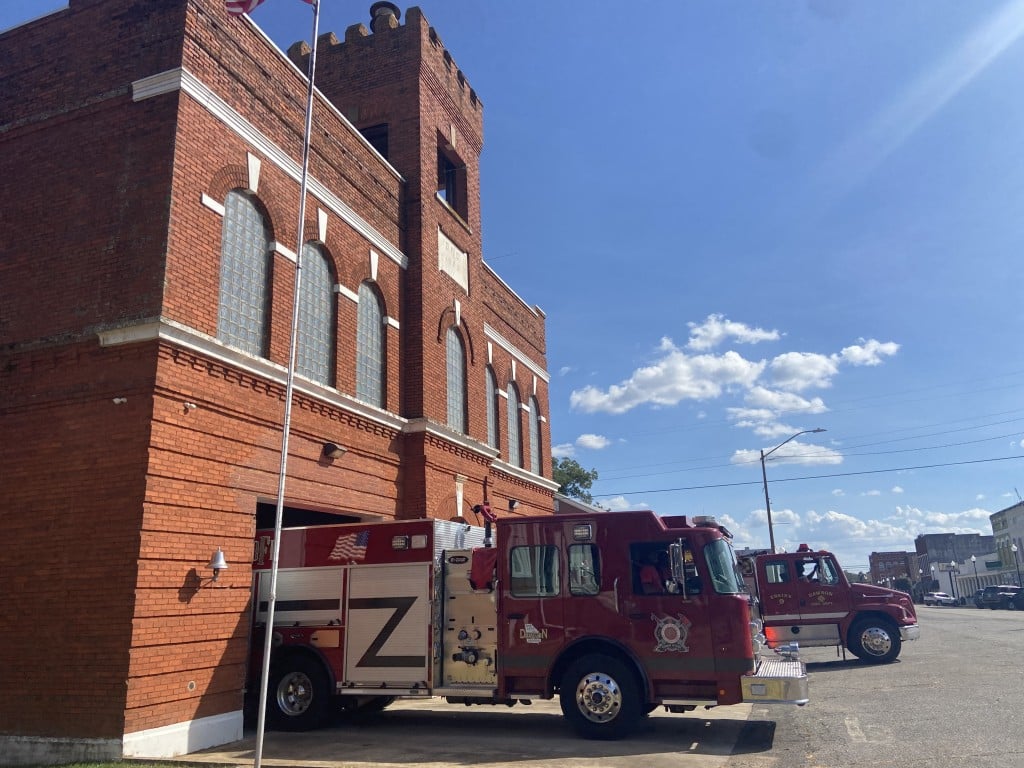
Dawson’s proposed fire tax district: What residents need to know
Dawson residents could soon see a new $8 charge on their monthly city utility bills to help pay for fire protection. That is the simplest way to describe what the Dawson City Council is considering. But the proposed ordinance would do considerably more than add another line item to a water bill.

Judges denies residency challenge; Edward Brown to claim Senate District 12 seat
An email ruling issue this week paves the way for Albany businessman Edward Brown to enter the Georgia Senate next year. A Superior Court judge denied candidate Corey B. Morgan’s challenge to Brown’s residency in the District 12 race.
