
Fossils reveal various environments of southwest Georgia region
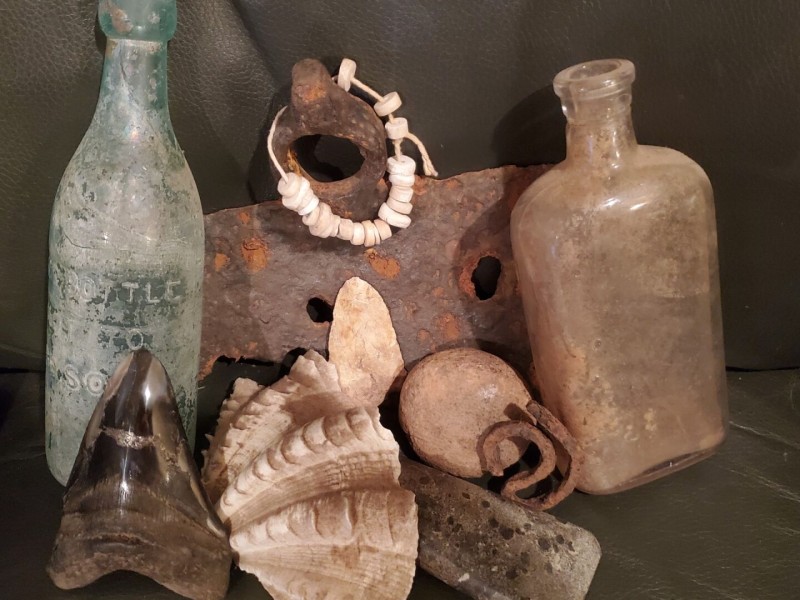
Staff Photo: Tom Seegmueller
By Tom Seegmueller
newsalbanyherald.com
ALBANY ‒ There can be no denying the impact of climate change on Southwest Georgia. The evidence is everywhere, and the fossils here tell the story of a region that was at one time part of the ocean’s floor and at other times was a tropical paradise or an open savanna.
In order for a plant or animal to leave a fossil record, it must be speedily entombed in a protective material. The same is true for bacterial-sized specimens and the largest whales. Water that has percolated through limestone bedrock can create incrustations encasing and protecting these specimens.
Examples of many of marine inhabitants of the region when southwest Georgia was part of the ocean’s floor may be found by merely looking at the limestone nodules scattered across the region. Crinoids, a form of sea lily, coral, mollusks and brachiopods are common fossilized finds. Various crustaceans and trilobites also can be found here.
Those walking the banks of the Flint River might be lucky enough to find these fossils still embedded in the limestone riverbanks or laying loose among the rocky banks. If you are lucky, you might find the fossilized tooth of a Megalodon or other species of ancient shark.
Where there are shark’s teeth, you also will have a good chance of finding the fossilized remains of these massive carnivore’s favorite protein source. It seems they were partial to whales. Several complete skeletons of these marine mammals have been found embedded in the limestone riverbed in Albany. In many cases, the current of the Flint River has eroded the limestone, leaving vertebrae, ribs, and other skeletal parts exposed or scattered along the riverbed.
When the seas receded, the region was transformed over time into a variety of differing environments supporting a variety of reptilian and mammalian species. The fossil remains of massive turtles, beaver, and sloth can be found scattered with those of camels, horses, mastodons and mammoths.
The regulations regarding the collection of fossils are very similar to the collecting of historic artifacts. However, the Submersible Cultural Resources law does not apply, and they can be collected in state-controlled waters.
Author

Related Articles

Months of unresolved records requests leave Dawson taxpayer questions unanswered
The City of Dawson will move ahead with its fiscal year 2027 budget before completing external audits that remain unfinished, city officials told The Dawson News on July 31 — more than three months after the newspaper began requesting the financial records behind the city’s decisions.
Dawson’s $10.2 million sewer project leaves major financial questions unresolved
As Dawson’s finance director resigns and operating pressures mount, records show $10.2 million in sewer funding, frozen loans, missing audits and gaps in the public accounting of project money.

Jail HVAC work divides Dougherty County Commission
Dougherty County commissioners deadlocked in two 3-3 votes, with one commissioner abstaining in each, related to work on the heating, ventilation and air-conditioning system at the Dougherty County Jail on Monday. The issue has divided commissioners for months.
