
Georgia Farm Bureau holds 82nd convention
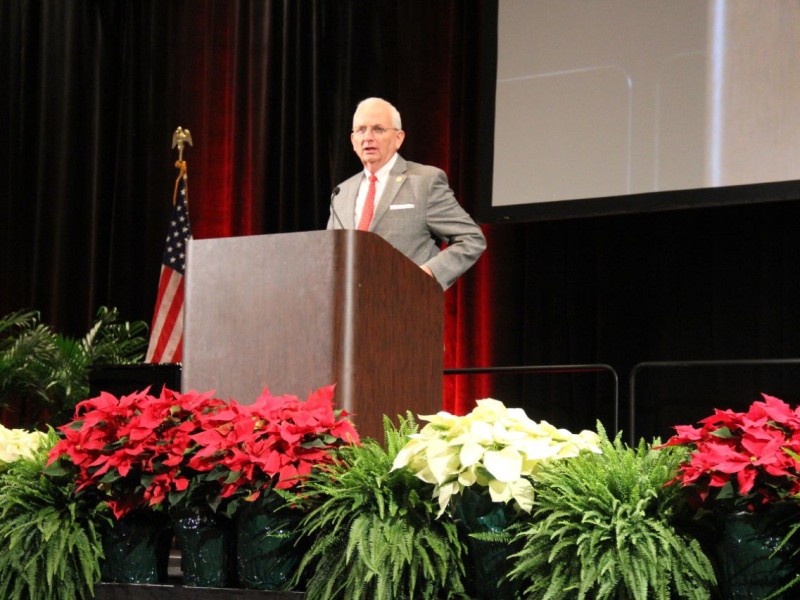
Special Photo: Georgia Farm Bureau
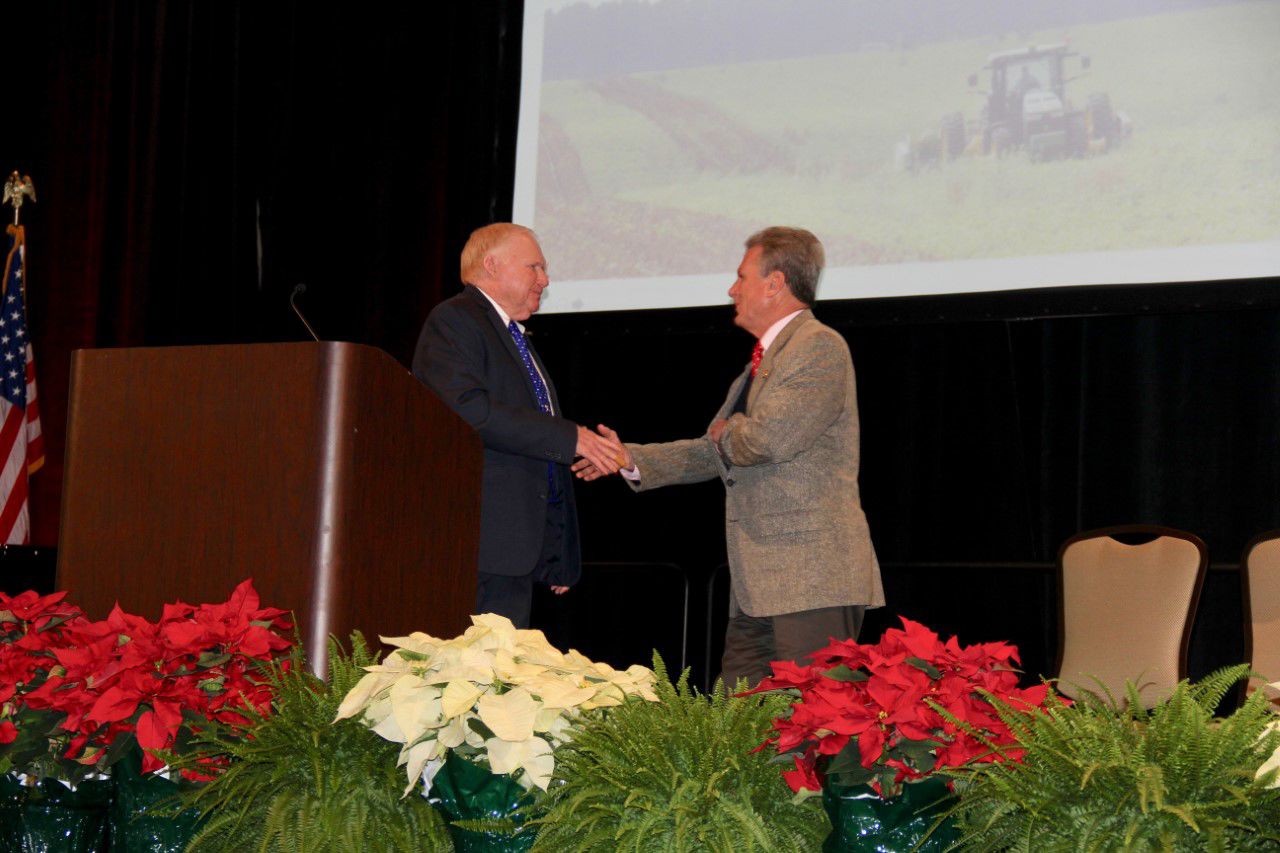
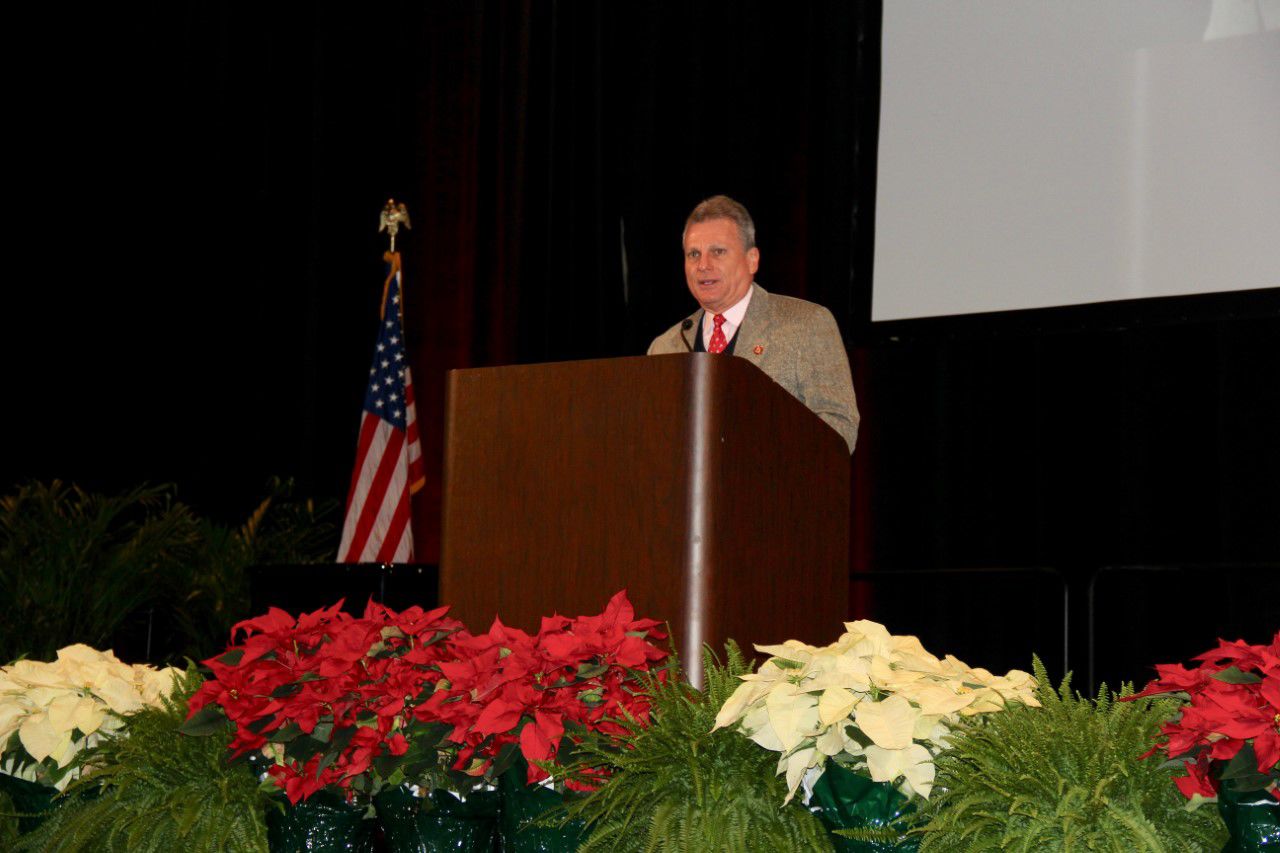
Special Photo: Georgia Farm Bureau
From staff reports
JEKYLL ISLAND – Georgia farmers and agribusiness leaders from across the state met on Jekyll Island for the 82nd Annual Georgia Farm Bureau Convention. The three-day event included a trade show and educational sessions that briefed farmers on policy and production issues affecting Georgia’s major commodities.
GFB President Gerald Long delivered his annual address during the general session. Republican U.S. Rep. Buddy Carter and Georgia Agriculture Commissioner Gary Black also addressed convention attendees.
While delivering his annual address to GFB members, Long discussed the many ways the organization is working on behalf of Georgia farmers and rural residents.
Farmers and small business owners have long struggled to obtain affordable health care. Long said the organization is now able to offer health insurance for small businesses with 50 employees or less and sole proprietors.
“For decades, our members have asked for reasonably priced health insurance, but that goal was elusive. Now, through a partnership with Anthem, formerly Blue Cross/Blue Shield of Georgia, we can offer it,” Long said.
Farm Bureau’s motto has long been “The Voice of Georgia Farmers” as it has advocated for farmers in the legislative arena.
Long noted that Farm Bureau secured a victory in September for landowners when the U.S. Environmental Protection Agency and U.S. Army Corps of Engineers repealed the “Waters of the U.S. (WOTUS)” rule it first issued in 2015. Farm Bureau opposed the rule on grounds that it constituted regulatory overreach and deviated from two Supreme Court rulings in regard to defining federally regulated waterways versus waters that are solely under state authority.
“A new WOTUS rule is currently being developed which is more respectful of private property rights,” Long said.
With the 2020 U.S. Census set to begin soon, Long urged farmers and rural residents to participate.
“Every 10 years, the census determines funding for federal agencies and programs important to rural Georgia,” he said. “This count also determines the number of seats Georgia will have in Congress and other important positions. In the coming months, we will activate the ‘You Farm. You Count’ campaign to make sure rural Georgia is properly counted, represented and funded.”
Long also encouraged farmers and rural residents to educate all candidates running in 2020 elections about the issues that impact agriculture and rural Georgia.
“When the November 2020 election is upon us, all the candidates, whether they are Democrat or Republican, must have a strong understanding and appreciation for the importance of agriculture,” Long said. “That’s the challenge before us. We must educate these candidates before the election.”
Long also discussed three ways GFB is investing in Georgia agriculture. After Hurricane Michael, GFB created a Hurricane Michael Relief Fund that collected $665,000. In April, GFB distributed all of the donations to Georgia farmers who submitted applications demonstrating they suffered damages or losses that wouldn’t be covered by traditional disaster aid.
In 2018 and 2019, GFB has invested $150,000 in agricultural research addressing production issues Georgia farmers are facing on their farms. Long announced that GFB will invest another $125,000 in ag research in 2020.
Carter welcomed GFB members to his district and provided an update on action Congress has taken on key ag issues in the past year. Carter said he thinks changes the Department of Labor has proposed to the H-2A program will help farmers secure migrant workers they need to harvest their crops. Carter praised the DOL for converting the program from a paper system to online saying this will streamline the application and approval process for farmers trying to secure migrant workers.
“If a farmer is expecting 300 workers and if Homeland Security suspects five of these employees, they currently hold up all of the workers,” Carter said. “This is the type of thing we’re expressing that we need help with, and I think we’re getting that message across.”
He said negotiations led by Sen. Marco Rubio of Florida are taking place to secure better provisions for fruit and vegetable growers under the pending United States-Mexico-Canada Agreement (USMCA), which will replace the North American Free Trade Agreement.
“We’re trying to make sure that fruit and vegetable growers are taken care of in this agreement,” Carter said.
Carter also discussed his support of the Forest Recovery Act, which if passed, would amend U.S. tax code to give landowners who experience a loss of uncut timber due to natural disasters a tax deduction for their losses.
“Georgia is the No. 1 forestry state in the nation,” Carter said. “The Forest Recovery Act will help forest owners who suffer a catastrophic event by assuring them they can get a tax deduction that takes the fair market value of the uncut timber into consideration.”
Black discussed the status of the state block grant the USDA has allocated for Georgia to help farmers with crop losses from Hurricane Michael not covered by other USDA disaster programs, such as the Wildfire and Hurricane Indemnity Program Plus (WHIP+).
Black said Georgia is receiving $347 million in block grant funds to help beef, dairy, nursery, pecan, poultry, timber and vegetable producers affected by Hurricane Michael.
“I believe we’re very close to signing a contract with the USDA for the state block grant,” Black said. “We have vendors waiting to distribute the funds as soon as the contract is signed.”
Black also outlined the GDA timeline for implementing Georgia’s guidelines for growing industrial hemp, which the 2018 farm bill made a legal crop nationwide.
Per federal regulations, industrial hemp must contain less than 0.3 % tetrahydrocannabinol (THC), the component of marijuana that produces a “high.” The two most common uses of hemp are cosmetics and cannabidiol (CBD) oil. Hemp fibers are used in fabrics, paper, carpeting, construction materials and auto parts.
On July 10 the GDA issued proposed rules for growers and processors of industrial hemp, in accordance with the 2018 farm bill and the Georgia Hemp Farming Act passed during the 2019 session of the Georgia General Assembly to comply with federal statute. GDA developed the rules in consultation with the Georgia Bureau of Investigation.
“The 30-day comment period (for the July 10 proposed rules) came back with some very good suggestions. It set us so we have another set of rules to get back out to you. That’s about to happen,” Black said.
Georgia is still waiting on the USDA to approve the state plan it submitted in July, Black said. The USDA released its proposed regulatory rules to manage hemp production nationwide in late October. Georgia’s rules must be compliant with the USDA rules.
The Georgia Hemp Farming Act sets a standard for concentration of delta-9-THC at a maximum 0.3%. The proposed rules allow for the destruction of hemp that has concentrations higher than 0.3%.
Black said the state of Georgia has set no limit on the number of industrial hemp producers or processors, but anyone who applies for a state permit to grow or process hemp will have to pass background checks and pay for licenses.
Black said it’s common knowledge that some hemp enthusiasts jumped the gun on growing hemp before federal and state guidelines have been implemented. He said this will be addressed by state legislators in the upcoming General Assembly.
“We must have changes in Georgia law to make it a crime to grow hemp without a permit,” Black said.
About Georgia Farm Bureau
Founded in 1937, the Georgia Farm Bureau Federation is the state’s largest general farm organization with 158 county chapters. As a membership-driven, nongovernmental organization, GFB serves as the voice of Georgia farmers and rural Georgia by advocating for them on legislative issues and promoting Georgia commodities. Its volunteer members actively participate in activities that promote agriculture awareness.
GFB membership is open to the public and offers a wide variety of benefits, including insurance and discounts for health services, travel and family entertainment. Enrollment in any of the member benefits is optional and not a requirement for membership. For more information about agriculture, visit www.gfb.org, like Georgia Farm Bureau on Facebook @GeorgiaFarmBureau or follow on Twitter at @GaFarmBureau.
Related Articles
The industrial park filled, Lee County’s tax base didn’t notice
Part Two: Twenty years after county planners warned that homeowners were carrying too much of the load, residential property makes up a larger share of the tax digest than it did then.
Artesian Alliance’s Leslie Stout building from the ground up
“We want the flashy things, but we need the HVAC unit. We don’t want to put a new exhibit at Thronateeska if we don’t have the building ready, so it’s not the glamorous things right now.”

Dougherty County woman born with conjoined twin left legacy through carnival appearances
“She was normal in school and everything. She was educated. It wasn’t like it affected her being normal, talking normal, cooking. She didn’t let it hinder her.”
