
Georgia judge strikes down state abortion ban: Opposing sides in southwest Georgia share thoughts

Special Photo
By Lucille Lannigan
[email protected]
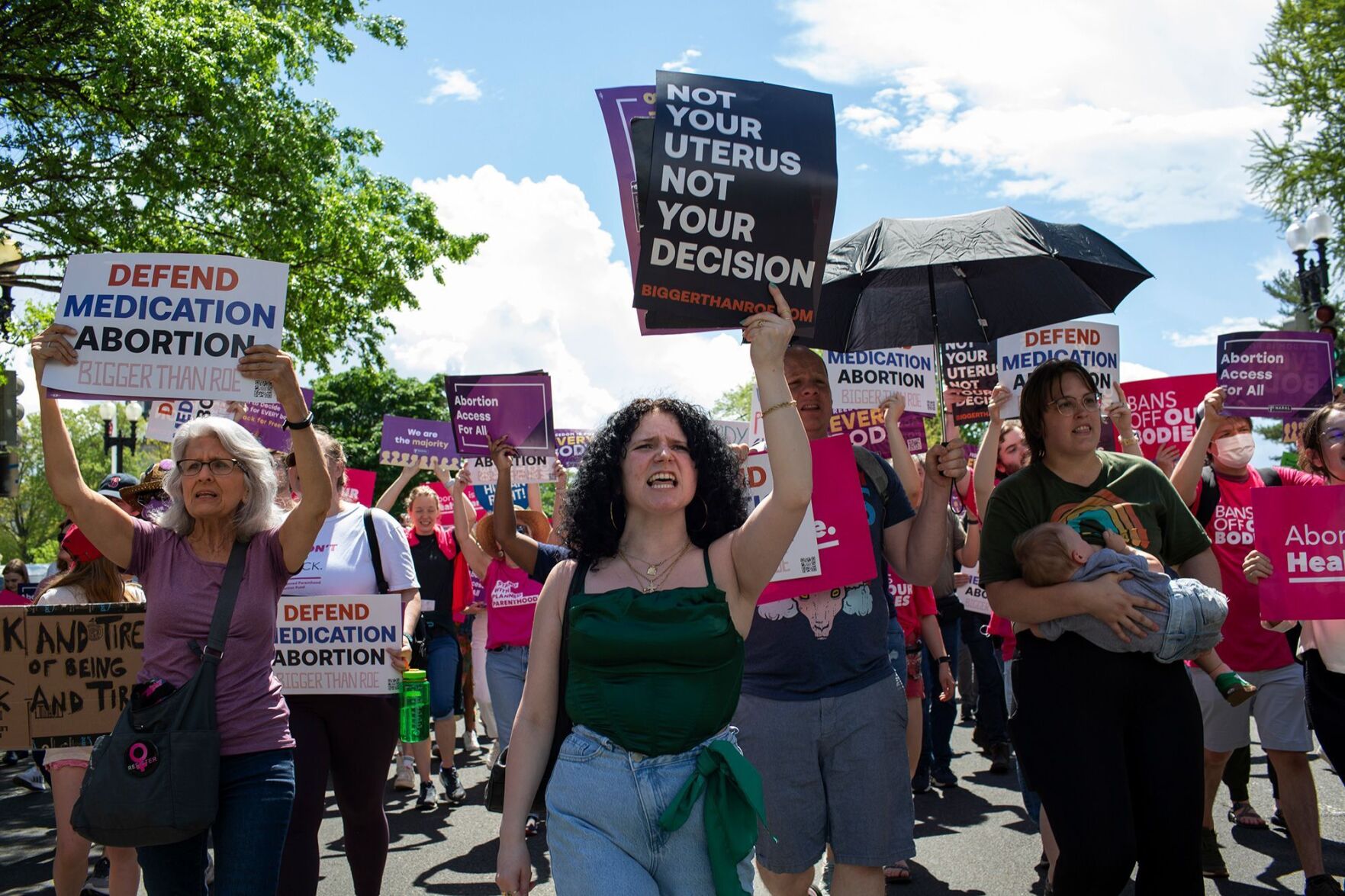
ALBANY – A Fulton County judge overturned Georgia’s six-week abortion ban on Sept. 2. Days later, the state’s Republican attorney general appealed the judge’s ruling. On Monday, Georgia’s Supreme Court reinstated the six-week ban while the appeal is heard.
Robert McBurney, a Fulton County Superior Court Judge ruled that the ban, which had been in place since 2022, violated women’s rights to liberty and privacy under the state constitution. The decision returned abortion limits in the state to the prior law that allowed abortions up to about 22 to 24 weeks into a pregnancy.
“For these women, the liberty of privacy means that they alone should choose whether they serve as human incubators for the five months leading up to viability,” McBurney said in his opinion. “It is not for a legislator, a judge or a commander from ‘The Handmaid’s Tale,’ to tell these women what to do with their bodies during this period when the fetus cannot survive outside the womb anymore than society could — or should — force them to serve as a human tissue bank or to give up a kidney for the benefit of another.”
Chris Carr, Georgia’s attorney general, filed an appeal to the Georgia Supreme Court to reinstate the six-week ban while the court considers the state’s appeal.
“There is nothing legally private about ending the life of an unborn child,” the court filing read.
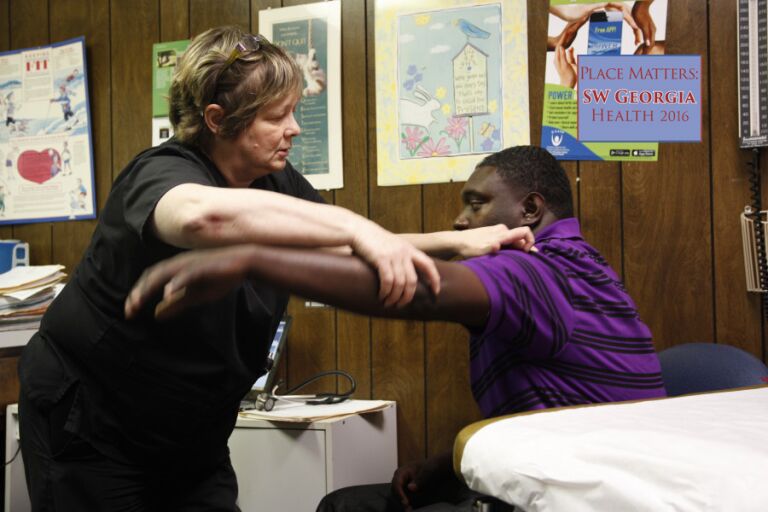
Health care providers and advocacy organizations on both sides of the issues in southwest Georgia are paying close attention to what will come of the ruling. Women’s health care is limited in this region of Georgia, especially in communities with majority black populations and rural ones.
In southwest Georgia, there is a high maternal mortality rate of about 40 deaths per 100,000 live births. For black women, there were about 49 pregnancy-related deaths per 100,000 live births in the state from 2018 to 2020 according to the state Department of Public Health.
Dr. Karen Kinsell, the owner of Clay County Medical Center, said the nearest place to have a baby from where she’s located in Ft. Gaines is about 60 miles away in Albany. The closest place southwest Georgians can receive abortion care is in Columbus at Columbus Women’s Health Organization or in Tallahassee, Fla. Kinsell said many of the pregnant people she serves have to travel for obstetrics care.
She said very few women realize they’re pregnant before five or six weeks. Having to travel far distances for abortion care thus creates an even greater challenge.
“They don’t have the time, the money or the wherewithal to get to a place where they could go ahead and get the care they need,” she said.
Since Georgia’s six-week ban was established, Kinsell said she’s seen more people come to her medical center seeking out termination information, knowing they were too late to have care in Georgia. She’s had clients travel out of state as far as Chicago for an abortion. She said she’s had more conversations with clients about contraceptive care as well.
“Kind of reminding them that you don’t really have as many options as you had before,” Kinsell said. “So it’s important that if you don’t want pregnancy, that you take effective measures to prevent it.”
One southwest Georgia doctor, who asked not to be named for fear of putting her work at risk, said she’s been helping clients access an online provider of pregnancy termination services based in Europe. The patient must submit a medical appeal abortion claim, pay $150 and then have the medication mailed to them from a U.S. pharmacy. The doctor said this method had been successful for several patients.
Kinsell said if McBurney’s decision stands, it would allow pregnant women to make their own choices about their own bodies, which she said is a “pretty fundamental right for Americans.” She said she hopes the laws change further to allow her to prescribe abortion pills at her medical center.
“Health care has changed so much … the abortion pills are now so good that it’s really not clear why you should have to go to an abortion clinic to get those pills,” she said. “Your primary care provider should be able to provide you with a prescription.”
The Georgia Right to Life organization supported the attorney general’s appeal. The anti-abortion nonprofit has chapters across the state, including in Albany. Genevieve Wilson, the director of chapter development called McBurney’s decision “a tragedy” in a written statement to The Albany Herald.
“All these rulings and bills do nothing but continue to ratify the killing of innocent lives,” she wrote. “No matter how abortion is packaged, advertised or marketed, it is still murder.”
Wilson wrote that abortion is “especially cruel to the black community,” with the CDC reporting that 32% of all abortions are performed on black women.
She wrote that the only way to end abortion is to eradicate it.
“This could end with the signing of a Personhood Amendment, which would provide protection, equal justice, and equal rights for all innocent human life at any stage of development, medical condition, manner of conception, or race,” Wilson wrote.
While Albany doesn’t have an abortion clinic, there are a few options pregnant women can consider when seeking care. There are the obvious OBGYNs through medical centers like Albany Area Primary Health Care, but there are also center’s that provide other types of support.
When conducting a Google search for pregnancy care options in Albany, one of the first sites that pops up is Alpha Pregnancy Center.
Jessica Sheets, the executive director at Alpha Pregnancy Center, said the center is a nonprofit organization with four clinics across southwest Georgia that provide no-cost pregnancy-related services to “anyone in the community who needs them.”
Sheets said the center provides pregnancy testing, pre-sonograms to look for healthy early pregnancy, offers prenatal and parenting classes as well as gives away materials like diapers and wipes. Nurses give care options, and help link clients with a physician/OB-GYN in the area.
Sheets said the center, which is a ministry of Sherwood Baptist Church, is a life-affirming clinic.
“We were saddened to hear the change in the (abortion) rule, and are closely following the appeals process,” she said. “We find value in all life.”
Sheets said the center’s nurses are trained to “share all options from a medical perspective” while also acknowledging that the center is a life-affirming organization. She said Alpha Pregnancy Center is a licensed medical clinic under the leadership of three medical directors; although, the center’s website has a disclaimer at the bottom of its page that reads:
“Information received at the APC is provided as an educational service and should not be relied on as a substitute for professional and/or medical advice.”
Still, Alpha Pregnancy Center, is a local resource that provides free counseling and care in a community that is primarily low-income.
“Pregnancy can be a scary thing, especially if it wasn’t planned, and having compassionate people to talk to is important,” Sheets said. She said abortion restrictions change nothing about how they serve or counsel clients.
A newer pregnancy care service available in Albany is the SOWEGA Birthworkers Collective, which provides a wide range of doula services and hosts reproductive justice campaigns.
Victoria Snowden, the collective’s co-founder and an abortion doula, called the Georgia judge’s overturning of the six-week ban a step forward in the right direction. She said she’s still celebrating the decision despite the appeal.
As an abortion doula, Snowden specializes in supporting clients who are seeking abortions or have had an abortion. She said doing this work in Georgia means navigating the restrictive ban – compiling resources, seeing what people can do to travel for abortion care and creating an “underground support.”
“Advocacy has always been part of the work, but it has definitely amped up since the introduction of the six-week ban,” Snowden said. “We’re … telling people about their rights … about what they can and what they can’t do in this particular climate.”
Snowden said one concern she has with the six-week ban is the gray line between miscarriages and abortions, especially in a state with a high rate of miscarriages.
“Abortions are often called induced miscarriages, and there’s a lot of spaces in which miscarriages and abortions are hard to decipher which is which,” she said. “Because of these restrictive measures on abortions, those who are having miscarriages are being heavily criminalized and heavily monitored in negative ways.”
Snowden said politics aside, current abortion bans neglect to identify intersecting factors for why people get abortions. She pointed to issues like poverty, lack of stability, substance abuse or trauma.
“I rarely see those talked about in political spaces,” she said. “If you’re not going to address a lot of the root causes, people are just going to navigate ways around these particular restrictive measures.”
Author

Related Articles
PHOTOS: Albany State’s How To Dress For Success Forum
Click the arrow to scroll through the photos.
PHOTOS: Albany State Principal Investigator Appreciation Day
Click the arrow to scroll through the photos.

PHOTOS: Albany State President’s Speaking Series Forum
Click the arrow to scroll through the photos.
