
Georgia Supreme Court upholds gun carry denial because of nolo plea
Staff Reports
ATLANTA — The Georgia Supreme Court on Monday upheld a Quitman County court ruling in which a Georgia gun license was denied to a man who pleaded no contest to a charge of aggravated assault with a deadly weapon when he was 18 years old.
According to a summary Monday from the high court, James Hertz, a nuclear power engineer, pleaded “nolo contendere” in Florida in 1994 to five felony charges — three counts of aggravated assault with a deadly weapon, one count of shooting from a vehicle and one count of possession of a short-barrel weapon.
Nolo contendere, the court said, means “no contest” and is an alternative to a guilty or not guilty plea that is often offered as part of a plea bargain, and means the person is neither admitting the charges nor contesting them.
As a result of Hertz’s plea, the Florida court withheld issuing a judgment on the charges and sentenced Hertz to three years’ of probation, which Hertz successfully completed.
In September 2012, Hertz applied to Quitman County Probate Judge Andrew Bennett for a “weapons carry license,” an application that was denied on Sept. 20, 2012, denied based on his 1994 no-contest pleas to the Florida felony charges. Hertz sued Bennett, seeking a writ of mandamus to force the judge to issue him the license.
Following a hearing, the trial court ruled that Hertz’s pleas of nolo contendere made him ineligible for a Georgia weapons license under the Official Code of Georgia, which states that “No weapons carry license shall be issued to:…[a]ny person who has been convicted of a felony by a court of this state or any other state.” The statute defines “convicted” as “a plea of guilty or a finding of guilt by a court of competent jurisdiction or the acceptance of a plea of nolo contendere …”
Hertz then appealed to the state Supreme Court, contending that a nolo plea in Florida that results in “adjudication withheld” is equivalent to a nolo plea in Georgia that results in first-offender treatment. Undre the Georgia Code, a person who successfully completes first-offender treatment is eligible for a weapons carry license unless another license exception applies. He also argued that denial of the license violated his constitutional right to keep and bear arms.
In Monday’s opinion, Justice Carol Hunstein wrote that “[b]ecause Hertz’s nolo contendere plea makes him ineligible for a weapons carry license under Georgia law, and the statute as applied to him does not violate the United States or Georgia Constitutions, we affirm” the Quitman County Superior Court’s decision.
“Even if Hertz’s aggravated assault and other non-drug crimes had been resolved by first offender treatment in Georgia, he would not be eligible for a weapons carry license,” Hunstein said in the 17-page opinion. “The first offender provision in subsection (b) (3) does not extend to first offender treatment for any offense, but rather is limited to convictions of the controlled substance offenses listed in subparagraphs (F) and (I) of subsection (b) (2).”
As to Hertz’s challenge that the denial of a weapons license violates his federal right to bear arms, the “law being challenged here does not involve the core Second Amendment right to possess a firearm for self-defense in one’s home,” the opinion says. “Under [Official Code of Georgia]
Related Articles
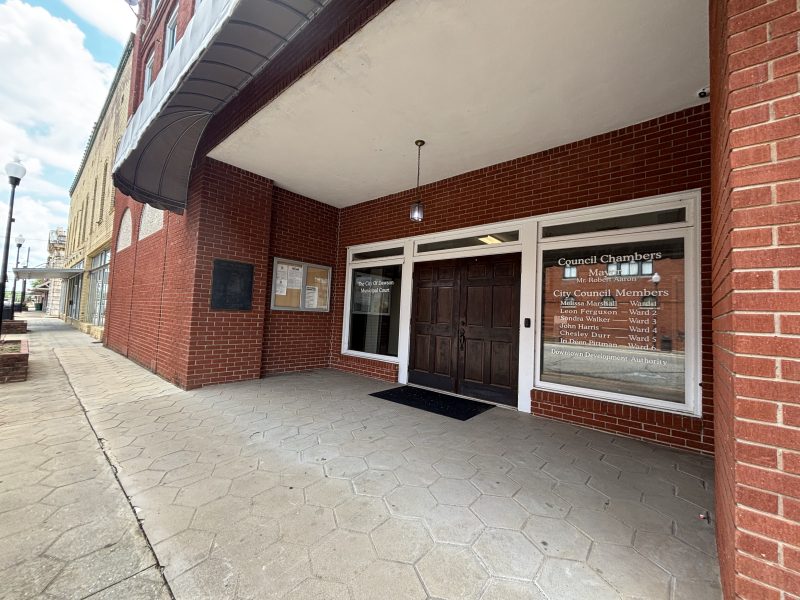
Dawson City Council addresses budget, fire fee, wastewater spending
The City of Dawson will enter new fiscal year without adopted budget as council considers creating a new fire assessment and approves wastewater equipment, K-9 agreement

Dougherty County assistant county manager declines top position in Harris County
“It is a beautiful community. I was thankful that they thought of me. They offered, but it didn’t come through in the end.”
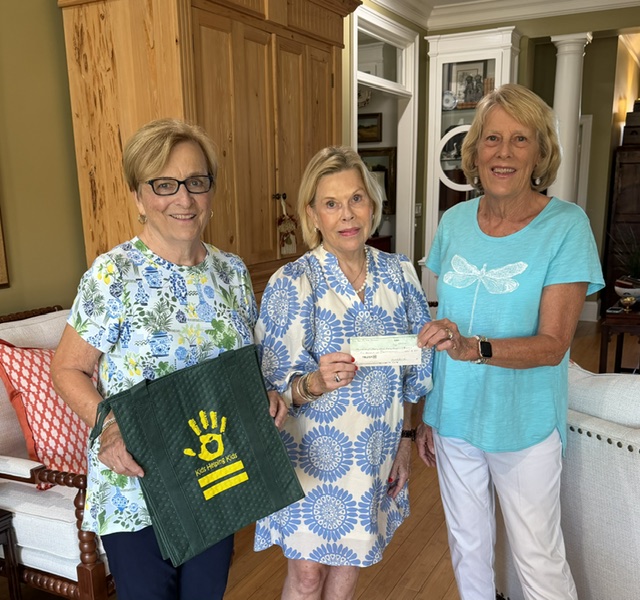
Helping Hands to serve 1,100 Dougherty families weekly with help from Paula Deen foundation
Paula Deen’s Bag Lady Foundation has donated money to Helping Hands Ending Hunger, providing enough funding for about 1,100 cooler bags as the Dougherty County School System program begins another year of getting unused school food into the homes of local families.
