
Georgia Supreme Court upholds Thomas County murder conviction
Alvin Davis III among several indicted in connection to a 2012 Thomas County homicide
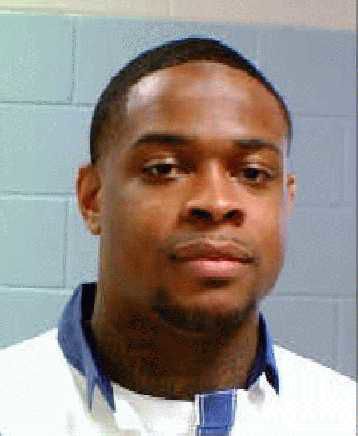
Special Photo: Georgia Department of Corrections
From staff reports
ATLANTA — Following his conviction for the murder of Hassan Williams, as well as his convictions for armed robbery, aggravated assault, hijacking a motor vehicle, arson in the first degree, and cruelty to children in the first degree, Alvin Davis III appealed to the Georgia Supreme Court from the denial of his motion for new trial.
Davis argued that the trial court erred in denying his motion for a new trial because the evidence was insufficient to convict him on all charges and because he received ineffective assistance of counsel at trial.
“However, because we determine that the evidence was sufficient to authorize a rational jury to find Davis guilty of the crimes for which he was convicted, and that Davis was not denied the effective assistance of counsel, we affirm,” the state’s highest court decided.
Williams was killed on July 17, 2012. On Feb. 7, 2013, a Thomas County grand jury jointly indicted Davis, Chaquel Cook, Kimberly Williams and Kiera Graham for malice murder, felony murder predicated on armed robbery and aggravated assault, armed robbery, aggravated assault, hijacking a motor vehicle, arson in the first degree and cruelty to children in the first degree for committing the offenses of murder, armed robbery, aggravated assault, and arson in the presence of a child.
Cook was also charged with possession of a firearm by a convicted felon. After a September 2013 trial at which Davis was tried alone, a jury found him guilty of all counts. Davis was sentenced to serve life in prison without the possibility of parole for malice murder, life in prison for armed robbery (consecutive), 20 years for aggravated assault (consecutive), 20 years for hijacking a motor vehicle (consecutive), 20 years for first degree arson (consecutive) and 20 years for first degree cruelty to children (consecutive).
Davis filed a motion for new trial on Sept. 30, 2013, and an amended motion on Oct. 29, 2018.
Following a hearing, the trial court denied the motion (as amended) on Dec. 20, 2018. Davis filed a notice of appeal to the state Supreme Court on Dec. 31, 2018, and the case was docketed for the April 2019 term and submitted for a decision on the briefs.
Davis was at the apartment of his girlfriend, Graham, and her roommate Kimberly Williams. Graham’s 5-year-old daughter was also present. Hassan Williams, who had served in the U.S. Army with Graham, showed up outside the apartment after having texted Graham the day before to say that he was coming to town. When Kimberly Williams returned to the apartment, Graham asked her to take Graham’s young daughter with her when Kimberly Williams went to take Davis home. Kimberly Williams walked out to the car accompanied by Davis and Graham’s daughter.
The victim, who had remained in the parking lot of the apartment complex, called out to Kimberly Williams and asked her where Graham was and said he would follow her. Kimberly Williams replied that he ought to meet Graham at a local store instead, but Williams insisted on following her.
As the two cars drove away, Davis called his brother, Cook, and said that they were going “to make a lick” and to meet him at “the spot where we normally go.” After hearing this, Kimberly Williams tried to lose the victims, who was following her in his vehicle, in the hopes that Graham would call him to come back to the apartment.
When her attempt to lose Hassan Williams failed, Kimberly Williams decided to stop at a gas station. While at the gas station, Kimberly Wiliams texted Graham that Davis’ comments made her concerned that he was planning to kill Hassan Williams. Kimberly Williams therefore asked Graham to call Davis.
Kimberly Williams ended up calling Graham, who then agreed to speak to Davis. Davis assured Graham that he would not hurt or kill anyone. After the call, Kimberly Williams returned to the car with Davis, who directed her to what she believed was his house. As Davis instructed, Kimberly Williams pulled into the driveway of the house and stopped.
The victim pulled in behind her. Graham’s child then called out that she saw “a man in a mask” outside of the car and that she wanted to go home to her mom. Davis got out of the car, and Kimberly Williams drove away.
Kimberly Williams then received a call from Graham, who frantically asked her to return home. When Kimberly Williams got back to the apartment, Graham was outside on her phone. Graham told Kimberly Williams to move to the passenger seat. Kimberly Willams then saw that Graham was holding a jug of bleach and asked her what was going on, but Graham would not say.
Instead, Graham replied that “the less [Kimberly] knew, the better [she] was,” and that Graham had to leave to meet Davis.
Graham drove the car to a different location than the house at which Kimberly Williams had left Davis. When they pulled up, Kimberly Williams saw Cook come out from behind the victims’ car, which had been moved to the new location, with a ski mask pulled up on top of his head.
Graham instructed her daughter to get down on the floor of the car. Davis came and retrieved the bleach from Graham, and Cook poured the bleach in the victim’s car and lit the car on fire. Kimberly Williams asked if Hassan Williams had been hurt, but Davis denied it.
Davis and Cook then got in Graham’s car. When they left, the victim’s vehicle was burning. Later that day, Graham confided in Kimberly Williams that Davis had told her that Cook “made a mistake” and shot Hassaen Williams in the back, and that Davis then shot him in the head to stop his suffering.
Graham told Kimberly Williams that Davis and Cook “were going to hurt [Kimberly] if she told anyone about what she saw.” Graham also said she promised Davis and Cook that she would “keep [Kimberly] quiet.”
After discovering Hassan Williams’ body outside the house and his burning vehicle at a separate location, police were able to connect Davis and the others to the murder. At trial, Jessica Ivey, Davis’ former fiancée, testified that Davis told her that he and his brother had both shot the victim, and that Davis had shot him because he was concerned that the victim would be paralyzed or would die after Cook’s initial shot.
Kanetria Flemming, the mother of one of Davis’ children, also testified that Davis texted her and confessed to shooting Williams twice in the back of the head and burning his car after the botched robbery. Flemming further testified that Davis changed his text signature to “red rum,” which is murder spelled backwards.
Testimony reflected that Hassan Williams had an entrance gunshot wound in the back left side of his head and a second entrance gunshot wound in the left upper side of his back. Texts between Davis and Cook later revealed that, on the morning of July 17, shortly after the vicitm was killed, the two conspired to fabricate an alibi.
Police also recovered Hassan Williams’ GPS device from a location identified by Davis during a police interview. Shoe impressions consistent with shoes owned by Davis were also found at the crime scene. Davis was questioned by police several times, and while he initially denied any involvement, he later admitted that he was afraid of the victim and had therefore called Cook, who told him where to lead Hassan Williams.
Davis further claimed that Cook shot the victim and that Cook made him help move Hassan Williams’ car to where it was ultimately set on fire. Davis argued that prosecutors did not present sufficient evidence to support a verdict of guilty on each charge for which he was convicted.
“Here, the evidence presented at trial showed that Davis planned to rob Williams but the robbery went badly,” the opinion said. “Davis admitted to several witnesses that he shot Williams. Davis also participated in taking Williams’ car to where it was burned, and he attempted to cover up his involvement in the crime by fabricating an alibi.
“Physical evidence linked Davis to the scene of the crime, and Davis later admitted to police that he was present during the commission of the crimes, though he denied any involvement. Davis further admitted to police to hiding certain items at a friend’s house, and police later recovered Williams’ GPS at this location.”
Davis next argued that he received ineffective assistance because his trial counsel failed to object to the prosecution’s improper closing argument and to certain hearsay testimony.
“Davis has not demonstrated that he was prejudiced,” the opinion said. “Considering the totality of the evidence, we find no reasonable probability that, had trial counsel objected to the statements in closing regarding Williams’ good character, the outcome in Davis’ case would have been different.”
Related Articles
‘Flywheel’ comes home as Kendrick brothers bring Brazilian remake to Albany
Twenty-three years after a $20,000 movie made with church volunteers launched their filmmaking careers, Alex and Stephen Kendrick returned Thursday to the Albany theater where “Flywheel” first reached an audience — this time with a Brazilian cast telling the story.
Heated exchanges, lengthy delays precede Lee school board’s 17.96-mill vote
The Lee County Board of Education adopted a 17.96-mill operating tax rate Thursday after a crowded public hearing and a lengthy wait for a vote that left frustrated residents at the meeting until close to 9:30 p.m.
Turnout steady during first week of early voting in Dougherty County
Early voting started statewide on Tuesday, giving voters three weeks to cast ballots ahead of the Nov. 3 election.
