
Georgia’s cotton fields are vanishing: Farmers warn industry is under threat
Georgia’s cotton acreage fell 22% this year—from 1.1 million acres in 2024 to just under 850,000 in 2025.

DAWSON – From early September until late November, south Georgia’s landscape is blanketed in fluffy, white cotton.
Tufts blow across fields and frame highways. Tiny bagged stalks with puffy blooms appear in roadside shops for tourists to “ooh and ahh” aover.
“You see people stopping on the side of the road all the time like ‘What is this?’” Seth McAllister, a Terrell County UGA Extension agent, said. “It’s Georgia snow.”
But those watching closely may have noticed less of that “snowfall” this year. Many fields once covered in white are now planted with corn or peanuts. Georgia’s cotton acreage fell by 22% this year — from 1.1 million acres in 2024 to just under 850,000 in 2025.
In Terrell, a county nestled just above Albany and is home to one of the largest cotton gins in the southeastern U.S., the drop was even sharper. McAllister said the county’s cotton acreage averages about 30,000 acres. This year it sank to about 16,500
Taylor Sills, the Georgia Cotton Commission’s executive director, said the state’s cotton industry is under threat from volatile markets, invasive pests, policy failures and climate pressures.
“The cost of production on cotton is really high right now, and the market – people are selling cotton for what they sold it for 30 years ago,” Sills said. “We have been operating under a safety net from the federal government that did not mirror real-world production. We’re really worried.”
A crop that once defined the region is rapidly disappearing.
Once Georgia’s defining crop, cotton is now struggling to survive
Cotton dominated Georgia’s agricultural economy from the late 18th century through the mid-20th, and the state still ranks second in the U.S. for production. Eli Whitney invented the cotton gin in Georgia in 1793, accelerating the U.S. industrial revolution and transforming the state’s landscape.
But cotton’s prosperity depended on the enslavement of hundreds of thousands of black Georgians who planted, chopped and hand-picked the crop. Entire towns grew around cotton production, yet the system was built on forced labor and became a driving cause of the Civil War.
“Without the South’s obsession with cotton, it is hard to imagine that the Civil War would have occurred at all,” the New Georgia Encyclopedia reads.
Today, many black Georgians above the age of 70 can recount painful childhood memories of hand-picking cotton for as little as just a few cents per pound. The widespread adoption of mechanical cotton pickers began in the late 1950s and early 1960s.
“There’s a real negative connotation to the crop because of the history,” McAllister said. “It was awful and unfortunate and morally and ethically wrong.”
Still, he said, the industry shaped Georgia’s broader agricultural capacity.
“It provided a living for decades and many generations here,” he said. “It cleared the landscape for us to be able to farm everything else we do.”
Georgia once grew more than 2 million acres of cotton, but the boll weevil devastated the crop until the pest’s eradication in the early 1990s. Acreage began climbing again after the introduction of Roundup in 1995, which improved weed suppression.
That same year, the McCleskey Cotton Co. built its gin in Bronwood. At one time, nearly every Georgia town had a gin, but most had disappeared during the boll weevil era. By the mid-1990s, the number of gins in the state nearly doubled.
Today, McCleskey is one of the largest cotton gins in the Southeast, capable of ginning 154,000 bales.
In early November, the gin’s grounds are covered in 8-foot-tall rolls of cotton tightly packed in bright blue, green and yellow plastic. Inside, the gin roars as machines remove debris and separate lint from seed. Vice president and gin manager Ron Lee said the gin processes about 75 500-pound bales per hour.


Historically, the gin handled about 100,000 bales annually. This year, Lee is hoping for 75,000. In 2019 he had more than 100 growers. This year he has fewer than 40.
“There’s fewer customers, and the ones that are left are having to grow more to justify it,” Lee said.
For many Georgia farmers, cotton no longer pencils out
Riley Davis’ family had been growing cotton in Terrell County for decades, but this year, for the first time, he didn’t plant a single acre. Davis said the decision wasn’t really a choice at all. As he built his yearly crop budgets — breaking them down farm by farm, accounting for changing soils, irrigation differences, land rent, and his own yield history — he couldn’t make a single scenario work with cotton.
“I didn’t have a single farm that showed any net profit at all, not even close,” Davis said. “I just couldn’t plan it knowing that it was a losing battle going in.”
Lee said cotton’s price is the largest industry challenge. At roughly 65 cents per pound, it’s far below the 80-85 cents growers need just to break even. In good years, he said, prices reached $1.10 to $1.30, but now “you just can’t yield enough to make it come out.”
Behind those prices is a global squeeze. Lee said Brazil now exports more cotton than the U.S. ever did with lower costs and fewer environmental regulations. At the same time, China — a major player — “has bought virtually no U.S. cotton this year.”
Tariffs worsened the strain. When the Trump administration placed tariffs on imports, other countries retaliated by targeting U.S. agricultural exports.
“The farmer … bears the brunt,” Lee said. “Short-term pain for long-term gain … that’s what they want to say. It’s just we don’t have a lot of short-term left. I think in two years it will be better, but can we make it to two years?”
McAllister said global market forces now dictate cotton’s swings more than Georgia farmers ever could. Other countries subsidize their growers more, while American producers face the highest input costs and the most regulation. This year, banks often refused to finance cotton because UGA budgets projected losses.
New biological threats have made the year even harder. Sills said the cotton jassid, a new invasive pest, caused “40-plus percent” yield losses in some fields and added about $30 per acre in pesticide costs.
“That’s $30 an acre that producers didn’t have,” Sills said.
In the end, Davis left some rented farms completely unplanted and shifted most of his acreage to corn. He doesn’t see cotton returning to his rotation next year.
“When I look at those numbers … there is no way I can do this,” he said.
Across Georgia, many growers are arriving at the same conclusion.
“If we ever saw five consecutive years like this, it would completely destroy and decimate our cotton industry,” McAllister warned.


Cotton’s decline endangers rotations, gins and communities built around them
Cotton’s disappearance would reshape more than farm budgets.
McAllister said cotton is one of the three essential pillars of Terrell County’s rotation: cotton, corn and peanuts. That rotation reduces pest and disease pressure, prevents weed resistance, and protects peanut yields, historically farmers’ most profitable crop. Cotton also helps manage irrigation because the three crops need water at different times of year.
Without cotton, he warned, many growers— especially those farther south lacking grain infrastructure — would be forced into “contiguous peanut rotation,” eventually destroying fungicide efficacy and peanut yield potential.
Cotton’s disappearance also would hit the rural economy. Lee said cotton dollars “multiply” through local communities in ways other crops don’t. His gin employs 25 to 30 seasonal workers and 15 to 20 full-time staff, jobs rooted in the local economy.
But without cotton, he said, the gin – and other equipment used in cotton production – has no alternative.
“There’s only one thing we can run through that cotton gin, and that’s cotton,” Lee said.
Statewide, the loss would ripple even further. Sills said the crop typically generates about $1 billion in farm-gate value, worth $2.5 billion to the state once cotton dollars move through gins, tractor dealerships, and input suppliers.
For rural communities, it could mean more people moving away, just as they did during the boll weevil devastation in the early 1900s.
For farmers like Davis, the effects are already visible. Without cotton, he said, growers lose a crop that can efficiently cover large acreages and help cut overhead equipment costs. Landowners in his area are already struggling to find anyone to farm their fields.
“It’ll impact the whole area – the whole state in some way or another,” he said.
Farmers need short-term aid, long-term demand—and consumers can help
Lee said growers urgently need short-term help to get them through the year.
Federal support included in the Trump administration’s spending bill raised reference prices for cotton and other row crops for the first time since 2018, which Lee said should finally trigger meaningful payments after years when inflation outpaced program thresholds.
Still, he said, growers will likely need a bridge payment to survive until those benefits arrive next year. Longer-term, Lee said he sees hope in the proposed Buy American Cotton Act, which would give retailers tax credits for purchasing U.S.-grown cotton, even if the fabric is spun overseas. He said such a bill “would do as much for cotton as any type of subsidy” by strengthening the market so farmers can earn income from prices, not government aid.
That matters because, as Davis said, producers don’t want to be reliant on government aid. In years like this, government programs keep farmers alive.
“But we don’t want to just be handed money,” Davis said. “We want to make a crop and make a living. We just need a demand and a fair price.”
Consumers have a role in that demand. McAllister said the No. 1 thing people can do is buy cotton — jeans, sheets, towels — because most shirts in stores are now synthetic or blended. He noted cotton biodegrades quickly, unlike polyester, which “will sit there for decades” in landfills.
“Consumers are more willing to pay for something they know is healthy, they know is environmentally friendly, sustainable,” McAllister said.
The industry is trying to elevate that message. Sills said the National Cotton Council’s new Plant Not Plastic campaign highlights the dangers of microplastic pollution, synthetic fibers that shed into waterways and even human bodies. He said he hopes the campaign pushes consumers toward natural fibers and helps protect the cotton infrastructure that rural communities depend on.
“We need cotton,” McAllister said. “We need to do everything we can to support that industry. Buying it, wearing it, feeding it. To lose that infrastructure, to lose that industry, would be I think the first domino of degrading our agriculture here.”
Author

Related Articles
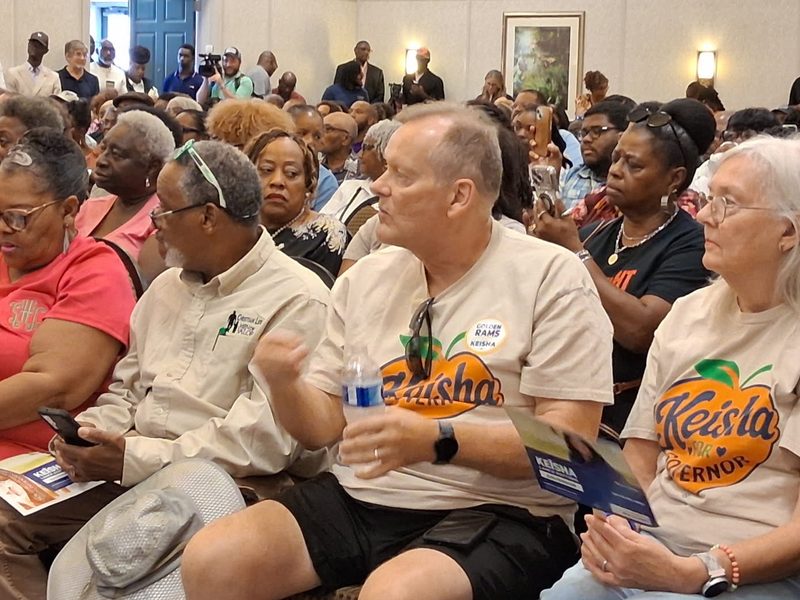
Keisha Lance Bottoms visits Albany during first week of early voting
Democratic gubernatorial candidate Keisha Lance Bottoms made a campaign stop in Albany on Friday. Early voting for the Nov. 3 election runs through Oct. 30.
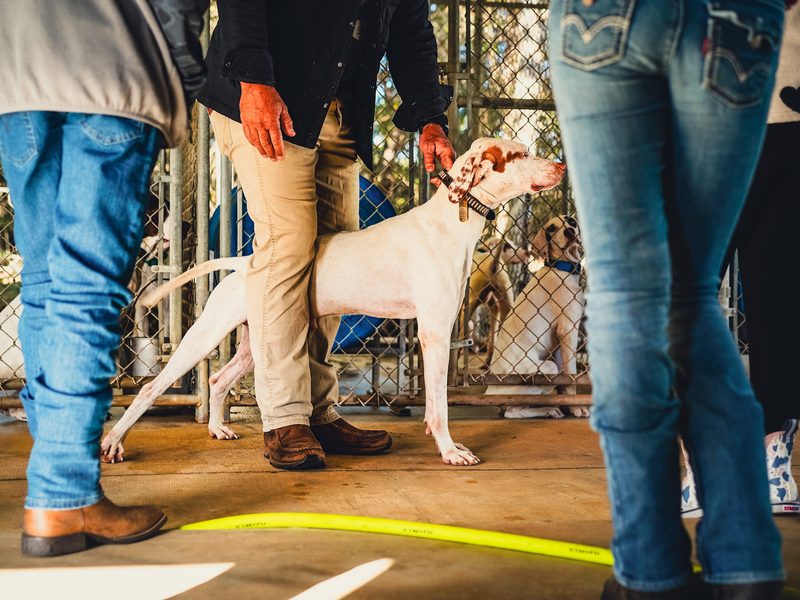
A new generation takes the field in southwest Georgia
At Daniels Kennels on Saturday, the lessons moved from checking dogs’ feet to tying knots, giving horses room and handling a loss. Professional trainers were teaching young people how to compete in field trials — and the daily responsibilities that come with a sport built around animals.

‘Flywheel’ comes home as Kendrick brothers bring Brazilian remake to Albany
Twenty-three years after a $20,000 movie made with church volunteers launched their filmmaking careers, Alex and Stephen Kendrick returned Thursday to the Albany theater where “Flywheel” first reached an audience — this time with a Brazilian cast telling the story.
