
Lee County hospital financing plan proposes up to $200 million in bonds, with county-backed portion still to be defined
The Lee County Hospital Authority will hold a public hearing Sept. 22 on a proposal to issue up to $200 million in financing for a planned acute-care hospital. Lee County Commissioner Billy Mathis said the debt is intended to be repaid from hospital revenues rather than taxpayers.
Hospital revenues are expected to repay the debt, but Lee County could still be exposed for up to $30 million under a proposed financing structure.
By Kathryn Crockett & Carlton Fletcher
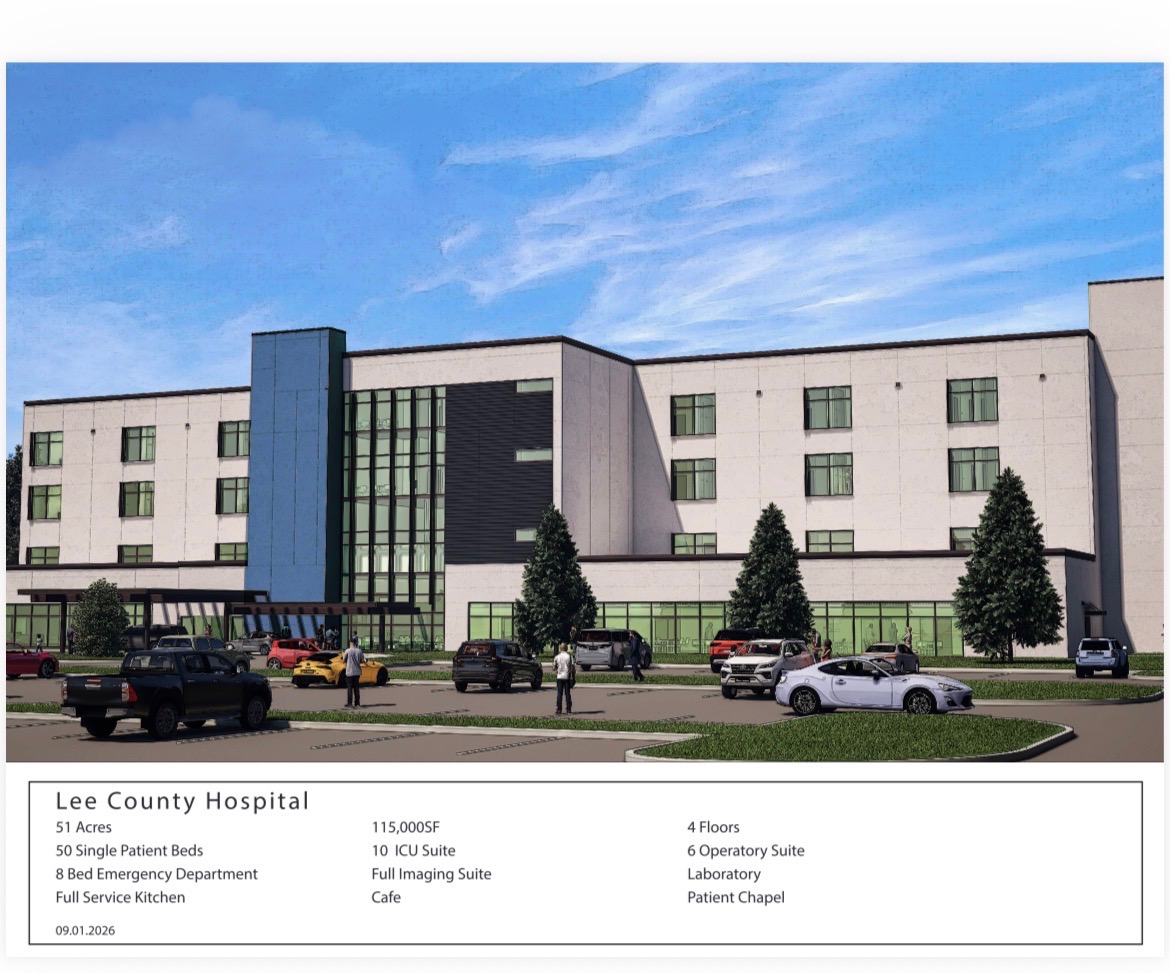
LEESBURG — The Lee County Hospital Authority will hold a public hearing Sept. 22 on a proposal to issue up to $200 million in financing for a planned acute-care hospital. Lee County Commissioner Billy Mathis said the debt is intended to be repaid from hospital revenues rather than by taxpayers.
According to the public notice, the Hospital Authority would issue revenue anticipation certificates, a form of revenue bond, for the benefit of MCLCG Inc., a Georgia nonprofit corporation that would initially own the hospital land and facilities.
The notice says the certificates would not be a debt or obligation of Lee County or the state of Georgia. Instead, they would be limited obligations of the Hospital Authority, payable only from revenues pledged to them.
However, Mathis said the financing is expected to include about $170 million in debt insured by the U.S. Department of Housing and Urban Development and about $30 million backed by Lee County.
Lee County Commission Chairman Luke Singletary, responding to similar questions posed to The Albany Herald, said the $30 million represents “skin in the game” on the part of the county.
“We are committed to providing up to $30 million in bonds, if needed,” the commission chairman said. “That doesn’t mean we’ll use all of it. But if it’s needed, we’re obligated to provide up to that much, the way I understand it. And I know there is a ‘clawback’ clause in the agreement that says if we use all or a portion of the $30 million but the hospital does really well and reaches certain parameters, we’d get all or part of that money back.”
Asked if the county-backed $30 million would add to the burden of Lee taxpayers, Singletary said proposed development on the property surrounding the hospital is expected to make up for the $30 million or any portion utilized.
“We’re expecting the funding generated by the hospital to pretty much offset costs,” he said. “And when you get a couple of medical offices, a hotel, and a restaurant on the other 130 acres or so of that Grand Island property, that’s going to be a huge increase for our tax digest.”
Singletary said businesses, including some that pitched development ideas on the Grand Island property earlier in this process, are eager to see the hospital become reality.
“We have a couple of businesses that are itching to go right now,” he said. “And there are a number of others who have told us, ‘Just let us know when you get a shovel in the ground’.”
Mathis said hospital revenues are expected to cover the county-supported portion and that $30 million represents the county’s maximum financial exposure. But what has not yet been made public is the legal mechanism behind that county backing — including when the county would become responsible for making a payment and what county revenue would be used if hospital revenues fall short.
Singletary admitted, though, that a scenario exists that could lead to taxpayers in the county having to pay back the $30 million if used by the county.
“Sure, if the county put up its entire $30 million and in the first couple of years the hospital went belly-up, then, yeah, the county would be on the hook,” he said. “But no one expects anything like that to happen.”
Singletary would not reveal the name of the group identified as “People’s Health System” that plans to operate the hospital and issue the $170 million in bonds needed for the long-promised hospital to become reality. But he said it is a group that is “well-entrenched in the health care business.” Some have suggested a group out of Columbus is heading up the management group.
“This is an independent group that knows the health care industry,” he said. “This will be the first hospital they’ve run, but the group was created specifically for this project.”
Mathis described the proposed debt as high-quality bonds, a characterization that generally refers to bonds expected to be viewed as comparatively secure by investors. In this case, the anticipated HUD insurance on much of the financing, together with the structure of the project and any county support, could affect the bonds’ credit quality, investor demand and borrowing costs. A formal credit rating, if one is issued, would provide a clearer measure of that assessment.
The proposal would allow the Hospital Authority to issue one or more series of revenue anticipation certificates totaling up to $200 million.
The proceeds could be used to acquire, construct, install, furnish and equip the hospital and related facilities. They could also pay capitalized interest, startup expenses, working capital, debt-service reserves and costs associated with issuing the debt.
The public notice also does not identify the specific revenues pledged to repay the debt or the order in which project revenues would be distributed among expenses and obligations — which Mathis described as “a financing waterfall.”
That order matters if hospital revenues are insufficient to cover every obligation because it determines which expenses and debts are paid first and where the county-supported portion falls in that sequence.
The hospital would be built on 51.966 acres in the Grand Island Golf Course area.
Mathis said the larger property is about 175 acres, and the hospital development would use about 50 acres. He said the proposed building site was moved within the larger property because officials believed the new location was better suited to the project and more considerate of neighboring property uses.
The Lee County Commission approved that location change at its Sept. 8 meeting by amending an existing intergovernmental agreement among Lee County, the Development Authority of Lee County and the Hospital Authority.
The original agreement took effect Nov. 25, 2024. The amendment replaces the property’s legal description while leaving the remainder of the contract in effect.
The central question for taxpayers is what triggers Lee County’s $30 million obligation — and what county funds would be used if hospital revenues are not enough to cover it.
The Herald has requested the original 2024 intergovernmental agreement and related financing records under the Georgia Open Records Act,– including a feasibility study that was reportedly conducted but has not been made public and documents defining repayment terms and Lee County’s financial obligations.
Many who have followed Lee County’s long and winding road toward building a hospital question what kind of impact the new facility would have on Phoebe Putney Memorial Hospital in Albany. Singletary, for one, says “anti-Phoebe” animus is not “driving the ship.”
“I can tell you, for me, this is not about Phoebe,” he said. “They do what they do well, and there is certainly room for both facilities. But our argument has been all along that having a second hospital in the region is good for competition, and competition is what brings costs down.”
Singletary also did not address the fact that, with more than 1,000 Lee residents on its payroll, Phoebe is the largest employer in Lee County.
The commission chairman hesitated in proclaiming the hospital a “done deal,” noting there are still some “hurdles” to address. “I won’t say this is a sure thing until I see the ink on the dotted line,” he said. “But I’m optimistic. We’re closer than we’ve ever been before.”
The public hearing is scheduled for 3:30 p.m. Sept. 22 at the Lee County Governmental Building, 102 Starksville Ave. N. in Leesburg. Residents may comment on the financing plan, issuance of the certificates and the location and nature of the hospital facilities.
Related Articles

PHOTOS: Albany State Homecoming Fair and Carnival
Click the arrow to scroll through the photos.

PHOTOS: Albany State Homecoming 2026 – Business After Hours
Click the arrow to scroll through the photos.
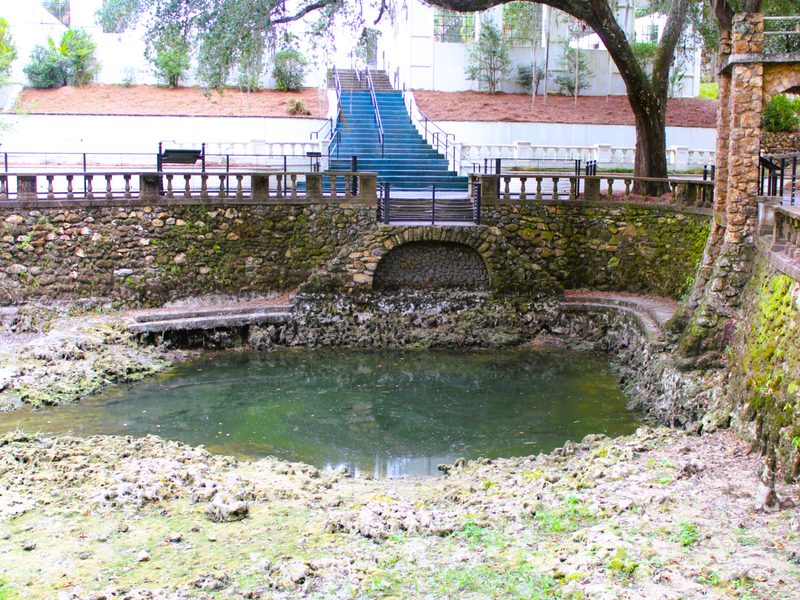
Weather conditions, water usage lead to dried-up Radium Springs
Radium Springs was purchased by DNR after the Flood of 1998, the second “500-year flood” that hit the area in a four-year period.
