
Lee County schools seek higher property taxes: The costs, choices and questions ahead
Lee County property owners face a proposed school tax increase that district leaders say would restore savings, help replace expiring sales tax revenue and cover rising costs. For residents preparing to speak at public hearings, the decision involves both protecting school services and understanding how much additional money is needed now.
Before public hearings, a closer look at the district’s case for rebuilding reserves and funding repairs, what voters already approved and what remains unclear about the proposed 3-mill increase.
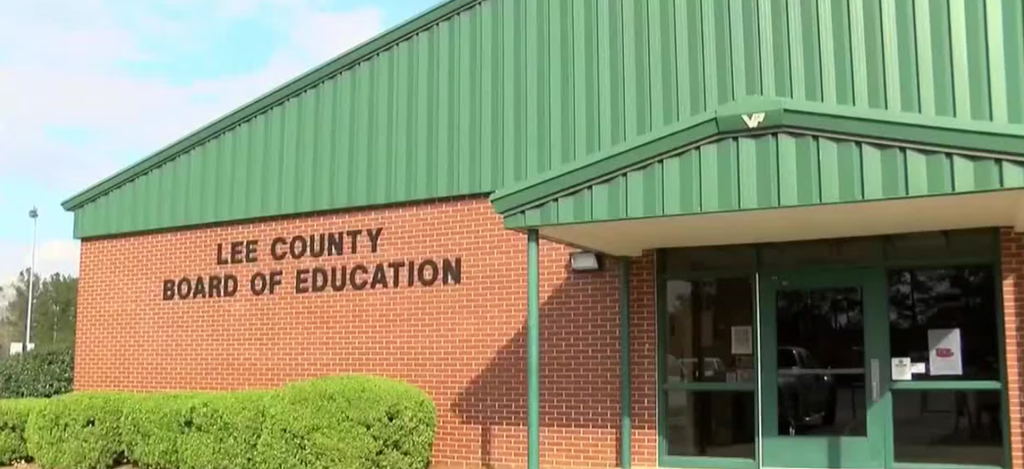
LEESBURG — Lee County property owners face a proposed school tax increase that district leaders say would restore savings, help replace expiring sales tax revenue and cover rising costs. For residents preparing to speak at public hearings, the decision involves both protecting school services and understanding how much additional money is needed now.
The school board proposes raising its operating rate from 15.96 to 18.96 mills, an increase of 3 mills, or about 18.8%. On a property with $100,000 in taxable assessed value, that would add $300 to the annual school operating tax, assuming the taxable value remains unchanged.
The advertised 28.7% increase uses a different comparison: the proposed rate against the 14.732-mill rollback rate, which adjusts for reassessment increases in existing property. Neither percentage predicts every taxpayer’s bill, which also depends on assessed value and exemptions.
The operating rate is the one school tax voters do not decide directly. Georgia’s constitution lets a school board set it on its own, up to 20 mills.
What voters already approved
The operating tax proposal is separate from the education sales taxes and construction borrowing voters previously authorized. Those existing obligations do not disappear because a renewal fails.
An education special-purpose local-option sales tax, commonly called E-SPLOST, adds 1% to taxable purchases and supports authorized capital projects and eligible debt. Its proceeds cannot cover ordinary operating expenses such as teacher salaries.
“Salaries? No,” Lee School Superintendent Kathleen Truitt said in an interview with The Albany Herald. “You can buy buses, buildings, parking lots, capital things.”
Voters approved E-SPLOST V in 2016, authorizing up to $19.5 million. The district’s project schedules show it paid for:
- New buses, $4.19 million, and air-conditioning retrofits for existing buses, about $490,000.
- Flooring and bathroom work at Lee County High School, $4.08 million.
- A track, $3.13 million, initially estimated at $1 million, and tennis courts, about $1.51 million, initially estimated at $600,000.
- Paving the bus yard, $2.49 million.
- Kinchafoonee Primary School renovations, including a new roof, $1.26 million.
- High school athletic facilities, about $3.1 million in Fiscal 2024, following about $344,000 in earlier work.
- Smaller items, including $166,363 in technology, $65,940 at Lee County Middle School West and a $13,425 livestock trailer.
- About $2.88 million in interest and costs on bonds repaid with the tax.
Those cost differences warrant explanations of changes in scope, bids and funding sources. They do not, by themselves, establish improper spending. Several projects cost more than their ballot estimates. The schedules note that project spending can include state money and local property taxes as well as sales tax.
Voters approved E-SPLOST VI in 2020, authorizing up to $25 million. Collections began Oct. 1, 2022. Under the special education tax, the district completed Lee County Primary School renovations and a bus loop for the Ninth Grade Campus at a reported cost of $20.19 million, compared with an original $13.5 million estimate.
Its Fiscal 2025 schedule also lists a $13 million high school gym with an estimated October 2026 completion date. The state audit reports that the district sold $10.63 million in previously authorized bonds in August 2025 for the gym and expected about $1.2 million in state assistance.
Why losing the sales tax matters
On May 19, voters rejected a renewal that would have continued the tax for up to five more years, raised up to $38 million and allowed up to $10 million in new bonds.
The existing tax continues until it reaches its authorized limit. Through September, E-SPLOST VI had collected about $21.1 million, and at its recent pace of roughly $493,000 a month, the district expects collections to end in May or June 2027 after reaching the $25 million cap.
“When you hit your 25 million, you’re done,” Truitt said.
The district projects about $4 million in lost collections during the gap, even if voters approve another sales tax in November 2027.
“We are set to lose eight months, or $4 million of revenue,” Truitt said.
She said the proposed tax increase would replace part of that amount and cover higher fuel costs.
The district’s own worksheet, based on last year’s usage, projects bus fuel would run $195,831 over budget if diesel averages $5 a gallon and $494,163 over if it averages $7.
The district has not said how much of the $3.48 million raised by the proposed 2.15 mills would go to building projects and how much to operating costs such as fuel. The difference matters because E-SPLOST money can be used only for construction, equipment and debt payments, not day-to-day expenses like fuel. A future E-SPLOST could support authorized construction and equipment, but it could not replace fuel spending.
Truitt argues that sales taxes spread costs beyond property owners to shoppers and visitors.
“When you have E-SPLOST, everybody who spends a dime in Lee County helped pay for that,” she said. “Our revenue funds locally are limited to property tax and E-SPLOST, and so without one, you only have the other.”
Property taxes place the direct bill on property owners, although tenants can also bear costs through rent. Sales taxes reach more purchasers, including residents who do not own property. The choice affects how costs are distributed as well as how much revenue is collected.
Rejecting the renewal removed a proposed revenue source. It did not approve the current property tax proposal or settle which future projects should proceed, be delayed or be reduced.
How the district gets to 18.96 mills
The district’s own breakdown has four parts:
- 14.32 mills, about $23.2 million, to fund the 2027 budget adopted in June.
- 2.02 mills, about $3.3 million, to rebuild reserves after refunds tied to a 2025 assessment error.
- 2.15 mills, $3.48 million, to partly replace lost E-SPLOST money and cover higher fuel costs.
- About 0.46 mill, roughly $748,000, for the 2.5% fee the county charges to bill and collect the tax.
The district also cited a $500,000 special education need, which is not included in that total.
Reserves, staffing and the meaning of a budget cut
The refund behind the second item totaled $3.28 million. Reserves help pay salaries and other bills while the district waits for tax revenue, and provide a cushion for emergencies. In business terms, they serve as working capital, helping the school system avoid short-term borrowing and keep services running.
How much to keep and how quickly to restore it are separate decisions for the school board.
Georgia law now caps a school system’s statutory reserve account at 25% of its annual budget, following a 2026 change from 15%. That is a ceiling, not a requirement to maintain that amount, and the district’s own policy sets a goal of at least 7% of spending. Neither requires the district to rebuild its balance in a single year.
The published Fiscal 2027 budget planned to use about $7.7 million of general fund balance after transfers, starting from an assumed $14 million. The district’s subsequent Fiscal 2026 financial statement reports a general fund ending balance of about $11.56 million.
Those figures reflect an earlier budget assumption and a later financial report, rather than an updated forecast under the proposed tax rate. The district would need to reconcile them to show its expected available balance, cash-flow needs and the amount it proposes to restore.
Truitt said declining enrollment had already led the district to reduce teaching positions.
“When enrollment went down, we needed 11.6 less teaching positions, and so we reduced those,” she said. “But then the cost of benefits went up in the state, so that we can’t control.”
Reducing positions does not necessarily reduce total personnel spending. It lowers salary costs from what they otherwise would have been, but higher insurance and retirement contributions can offset those savings. Likewise, a smaller overall budget can reflect the completion of a construction project while everyday operating costs continue to rise.
The HVAC decision and existing balances
One major need is replacing much of the high school’s heating and air-conditioning equipment. Truitt said the system still works but is nearing the end of its expected life.
“It’s not that we’re sweating over there right now,” she said. “You can delay it till it breaks. And then there is no choice.”
Truitt said delaying one repair can push back others.
“If you spread out the funds that you need for air conditioning at the high school over five years, then I’ve kicked that roof project five years too late,” she said.
Replacing equipment before it fails can help avoid emergency work and classroom disruption. Evaluating the timing requires a condition assessment, expected remaining life, project schedule and cost of alternatives.
The state does not set a schedule for replacing school air-conditioning systems or other building components. It does require local participation funds to be available when a district submits a state capital outlay application, and regular state entitlements accumulate from year to year. Those rules alone do not establish a deadline for this particular project; that depends on its application and funding conditions.
For the Lee County High School HVAC project, the state would pay $2,065,801 and the district $5,909,346, based on an architect’s estimate of $7,975,147.
Waiting does not automatically forfeit state money. Each district’s state construction credit builds up year to year, and the district can draw on that credit later for eligible projects. But if the local money isn’t ready when the district needs to apply, the project and the state’s share wait with it.
The district’s Fiscal 2026 statement reports about $17.53 million in capital projects fund balance and $10.05 million in debt service fund balance. Those amounts are not automatically available for HVAC. The capital fund received construction bond proceeds during the year, while the debt service fund supports repayment obligations. Existing sales tax proceeds must also follow their authorized purposes.
Existing debt and when the bond tax could rise
The state audit reports $17.23 million in outstanding bonds as of June 30, 2025, before the gym bond sale: $6.49 million on 2014 bonds, with a final payment in February 2034, and $10.74 million on 2022 bonds, with a final payment in February 2030.
E-SPLOST pays those bonds first. If it falls short, the audit says, the debt “will be satisfied from a direct annual ad valorem tax levied upon all taxable property within the school district.” That bond tax is separate from the operating rate now under consideration. For the 2024 tax year, it was 0.80 mill and brought in about $890,000.
Ending sales tax collections does not automatically create an immediate bond tax increase; existing debt service balances and remaining collections also affect the financing need. The bond tax could rise in situations like these:
- The sales tax stops. Payments on the two older bond issues alone total about $15.9 million from July 2026 through 2034, before any gym bond payments. Once collections end, the $10.05 million debt service balance and remaining collections must cover them, and any gap falls to property owners.
- A renewal fails again. The rejected renewal listed repaying “previously incurred general obligation debt” among its uses. Without a new sales tax, that job shifts to the bond tax.
- Sales slow down. A downturn that cuts monthly collections leaves less sales tax money for debt payments.
A separate Nov. 3 referendum would exempt qualifying homeowners 67 and older from school bond taxes. It would not exempt them from the proposed school operating tax or eliminate the district’s debt.
What comes next
Truitt described the current situation as unusual but was cautious about promising a future rate.
“I think the one-time situation is a one-time situation,” she said. “I can’t promise anything,” she added, saying she could not speak for how the board will vote. “I also don’t know what’s coming ahead.”
But for Truitt, future decisions will always begin with the conditions children need to learn.
“If they’re not fed, if they’re not safe, then they can’t learn,” she said. “Whether right, wrong, or indifferent, government and society has put an increasing burden of responsibility on a school system to meet the needs of children, regardless of what community they’re in, and regardless of what resources that community has. We take that very seriously.
“The burden that we carry is in doing that and making the right choices, so that children have what they need. It’s not about wants. It’s 100% about needs. … That is our sole purpose for existing.”
The hearings are scheduled for 6 p.m. Thursday, 11:30 a.m. Friday and 6 p.m. Oct. 15, at the Board of Education office, 126 Starksville Ave. N. in Leesburg. The board is scheduled to set the rate at 6:30 p.m. Oct. 15.
To comment, residents can sign up at the venue immediately before each hearing begins. Speakers are generally allowed up to five minutes to address the board as a whole. Digital media presentations are not permitted, and any handouts must be given to the board secretary before the meeting starts.
Related Articles

Beyond the bushel: Value-added products give southwest Georgia growers a second paycheck
Across the exhibit halls at Spence Field, farmers and small manufacturers showed how they turn raw crops into finished products. They bottle sauces, box gifts, print shirts, and they find new income and new customers along the way.

Small fish make big business for Southern farmers
The fish in a University of Florida display at the annual Sunbelt Ag Expo this week were more than technicolor aquarium pets. They are farm products, representing a multimillion-dollar industry that depends on breeding, feeding and keeping some very small livestock alive.

Pelham farmers turn hardship into a regenerative mission
When serious health problems disrupted April Workman’s career, she and her husband, James, began reconsidering how they earned a living, raised their family and cared for their farm.
