
Heated exchanges, lengthy delays precede Lee school board’s 17.96-mill vote
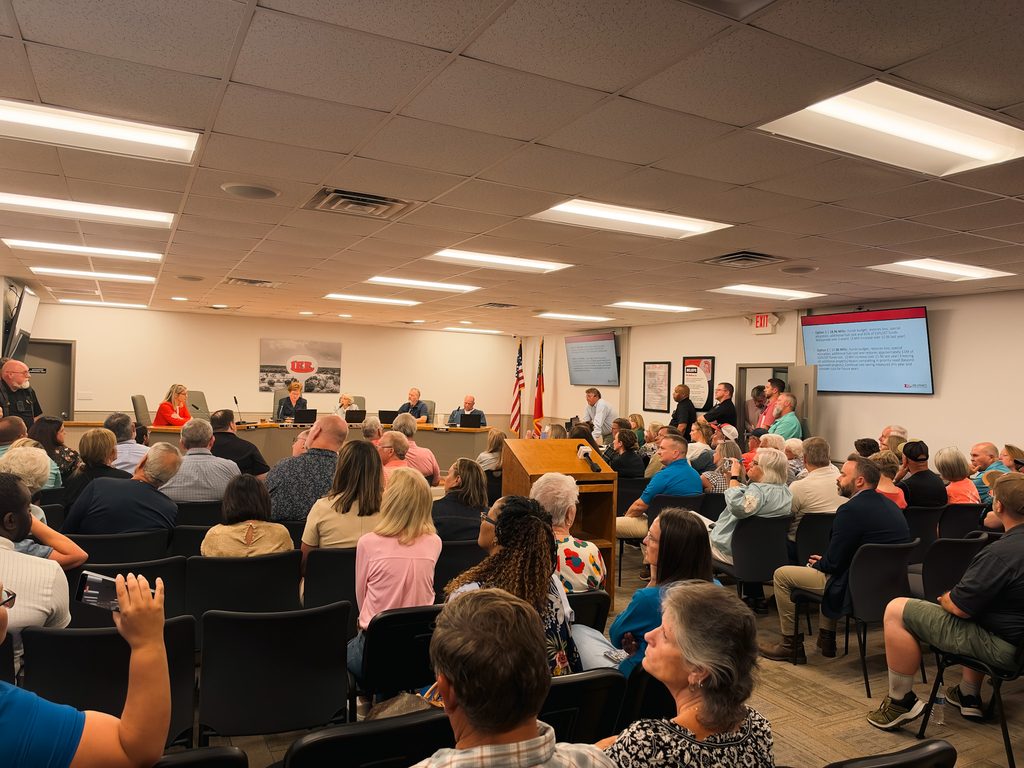
The Lee County Board of Education adopted a 17.96-mill operating tax rate Thursday after a crowded public hearing and a lengthy wait for a vote that left frustrated residents at the meeting until close to 9:30 p.m.
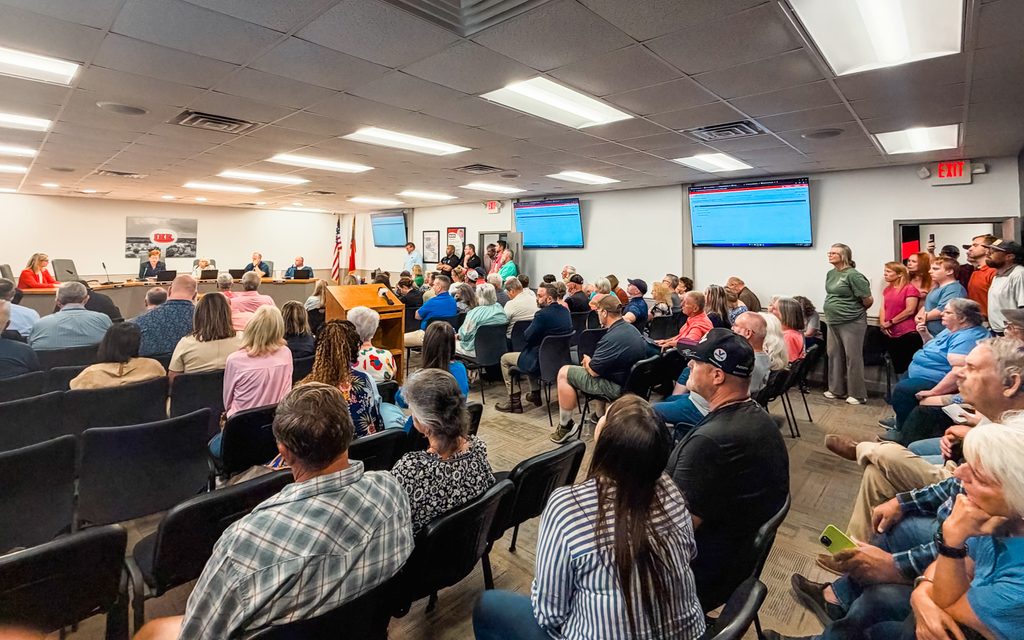
LEESBURG — The Lee County Board of Education adopted a 17.96-mill operating tax rate Thursday after a crowded and tense public hearing and a lengthy wait for a vote that left frustrated residents at the meeting until close to 9:30 p.m.
The board voted 4-0 to approve the maintenance and operations rate, reducing its initial proposal by 1 mill but raising the rate 2 mills above last year’s 15.96.
The decision followed an evening of interruptions, calls for order, and disputes over both the tax increase and how the board handled the meeting. Residents filled the meeting room and spilled into the hallway. By the time the board voted, the argument had expanded beyond school spending to whether officials were listening to the people paying the bills.
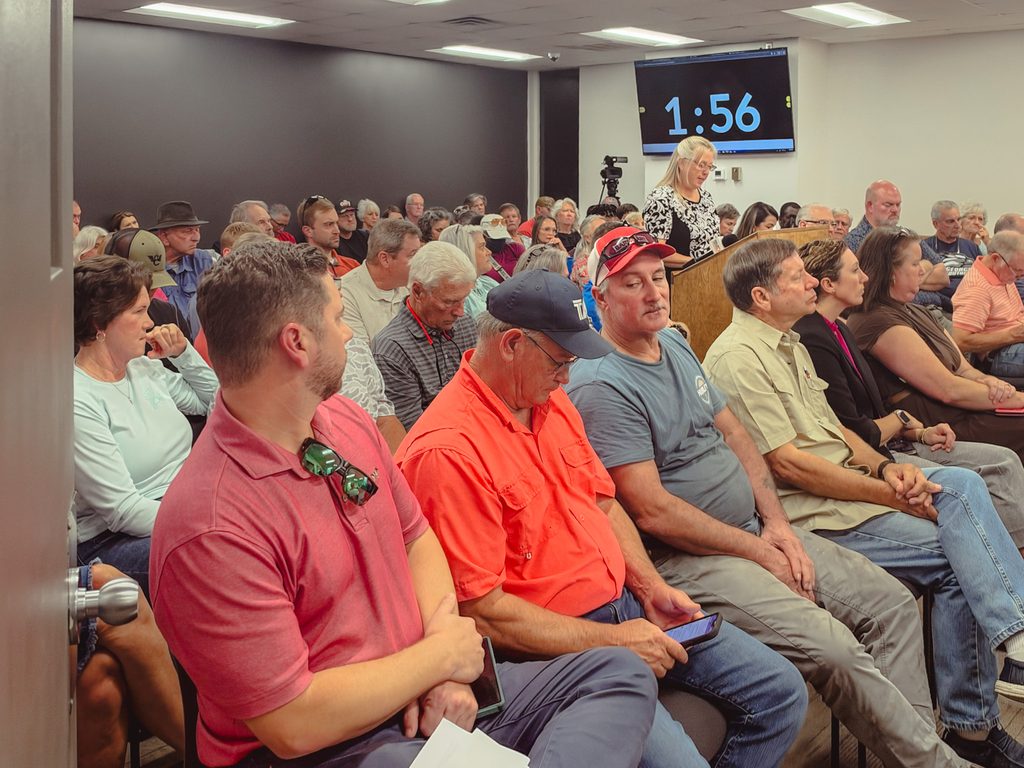
Near the hearing’s conclusion, the discussion turned from the amount of the tax increase to whether the board should proceed with setting it that night.
An exchange involving Lee County Tax Commissioner Wendy David brought those tensions into focus. An official responding to the concerns said the dates had been selected to meet legal requirements and that all board members did not have to be present to conduct business. Calls for order interrupted the discussion.
Questions about whether the board should proceed with the vote that night were followed by a public apology read by David following the long delays.
Before the hearing closed, Daniels read from what appeared to be a prepared statement and publicly acknowledged that the district had consulted its attorney and the Georgia Department of Revenue and had been advised to proceed. She also acknowledged the district’s position that Monday counted as a business day and that the board could conduct business with a quorum.
“I recognize that I have overstepped, and I apologize if my concerns came across that way,” David read. “My intention was never to tell the board what to do but to simply express my perspective.”
Audience member’s were vocal in their objections to what they witnessed. “Wow, that’s what intimidation gets, huh?” an unidentified attendee yelled from the back of the room.
The third and final hearing had been scheduled for 6 p.m., with the vote scheduled for 6:30 p.m. Instead, residents faced a prolonged evening, including a lengthy delay between the hearing and the vote. The meeting did not adjourn until close to 9:30 p.m.
Frustration was evident as the board prepared to begin its separate called meeting to adopt the rates.
“You’ve been back there long enough,” one attendee said.
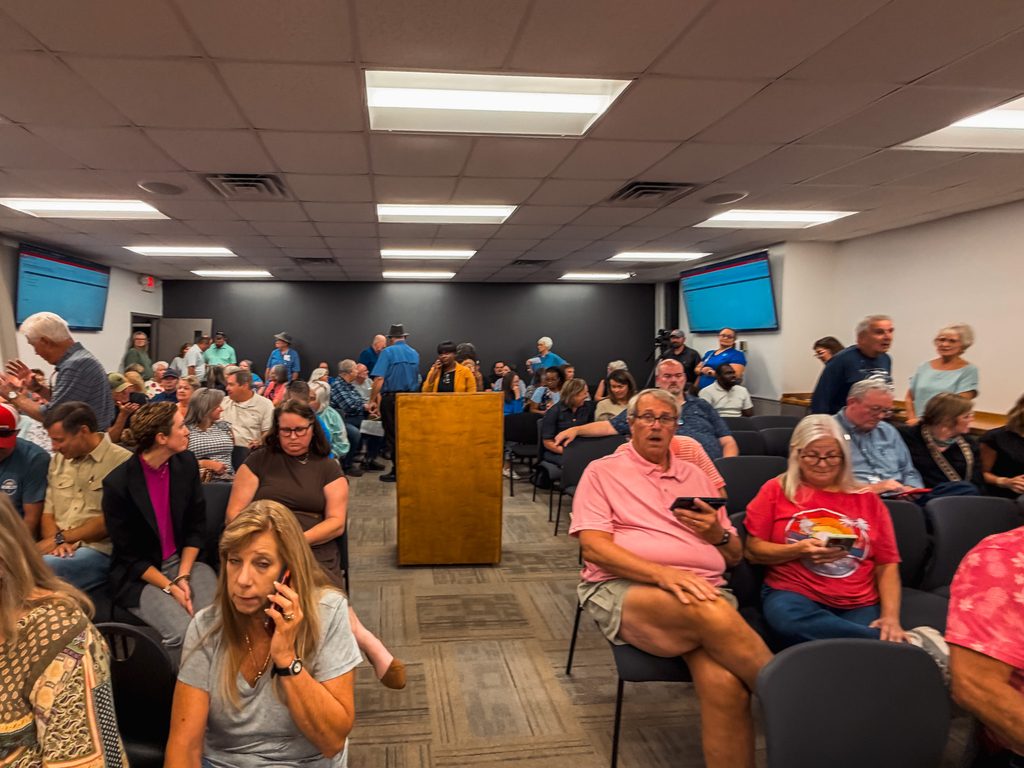
For some, the eventual reduction offered a measure of acknowledgment.
“At least they’re trying to meet us. Meet us somewhere,” another audience member said as the board considered 17.96 mills.
Others remained dissatisfied. After the vote, another attendee called for Superintendent Kathleen Truitt to resign.
“That’s enough. Please,” the chair responded.
The strain had been apparent from the opening presentation, when Truitt asked whether people at the back could hear her without a microphone and received a no.
“The hallway’s full out here, too,” someone added.
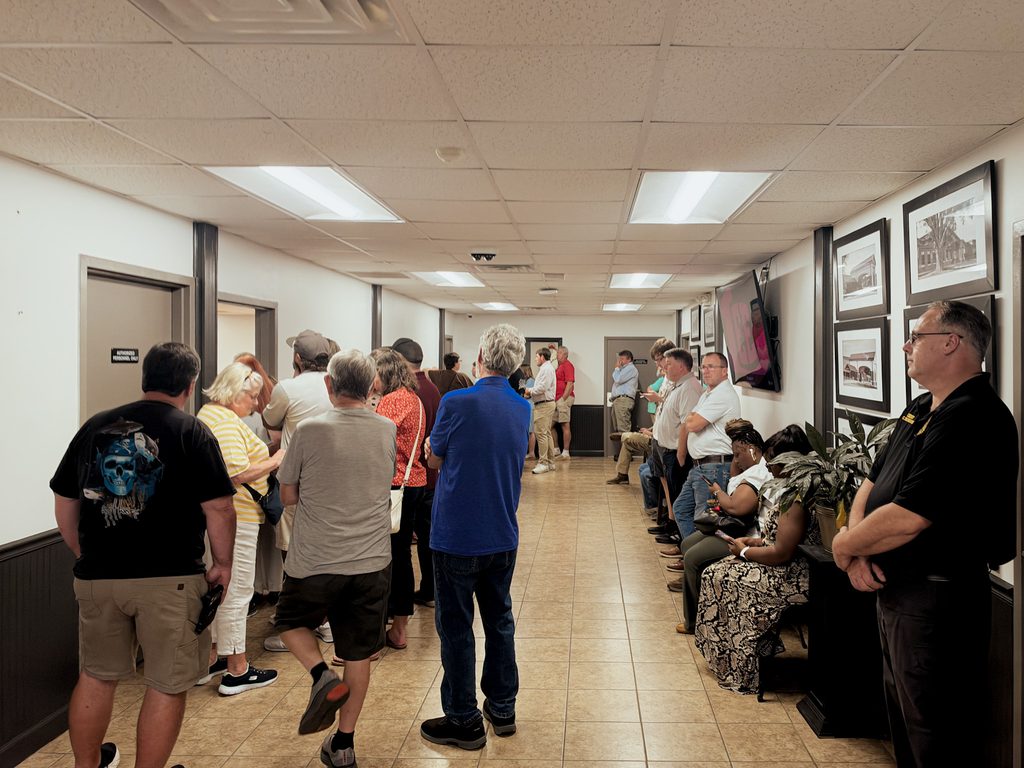
“Well, we’re going to do the best we can,” Truitt said. “I’m sorry, this is what we’ve got.”
As the evening continued, questions about the tax proposal became intertwined with disagreements over the board’s response to criticism and the procedures governing the vote. The audience response underscored a central tension of the evening: Officials appealed for respectful disagreement while some residents objected to how questions and criticism were being received.
Earlier, board member Trey Newell said the tax debate had brought personal attacks and threats involving the member’s family and business.
“I respect people’s right to disagree,” Newell said. “I respect their right to question this board.”
The member said residents should hold elected officials accountable but argued that threats and personal attacks crossed a line.
“We can agree to disagree. We can debate, and we can certainly have opinions about taxes and how our school system operates,” Newell said. “But we ought to be able to do it with some level of honesty, decency and mutual respect.”
Those remarks also drew interruptions.
Newell described messages from other residents who opposed cutting teacher pay or using furlough days to reduce costs. One concern was that school closures would force working parents to find and pay for additional child care.
The comments reflected competing concerns about how to address the district’s financial pressures: Higher property taxes would affect households, while some spending reductions could also carry costs for families and school employees.
Truitt’s presentation attributed the proposed increase to several factors, including replenishing reserves after a property tax refund, special education costs, fuel expenses and anticipated losses in education sales tax revenue.
She said compensation and benefits accounted for 83% of the budget she was describing, leaving about $16 million for other expenses. Those included transportation, electricity, maintenance, technology, security and classroom supplies.
The district’s roughly $12.2 million year-to-year budget reduction largely reflected a capital project, Truitt acknowledged, rather than an equivalent reduction in recurring operating costs.
When the board convened to set the rates, Truitt said she and Gary Kelly had worked through the weekend after the previous hearings to develop alternatives in response to community feedback.
The initial option would have kept the proposed operating rate at 18.96 mills. The lower option, at 17.96 mills, would fund the budget and restore the reserve loss while replacing a smaller portion of anticipated education sales tax revenue losses, according to the district’s presentation.
The lower rate also came with a plan to hold additional projects and repairs beyond work already approved, address needs by priority and consider further cuts in future years.
Truitt identified air conditioning work and tennis court repairs as projects already approved by the board. She said the district had applied for state funding for the air conditioning project.
“Beyond those two projects, we’ll continue to put in place cost-saving measures this year and consider cuts for future years,” she said.
The four members voting approved the lower operating rate without opposition. But after hours of waiting and contentious exchanges, the vote brought the evening to a close without ending the objections from the audience.
Related Articles
Turnout steady during first week of early voting in Dougherty County
Early voting started statewide on Tuesday, giving voters three weeks to cast ballots ahead of the Nov. 3 election.
District 151 challengers Wolfe, Lockhart offer plans for schools, rural jobs, health care
Two challengers seeking to unseat state Rep. Mike Cheokas are proposing different approaches to Southwest Georgia’s needs, with Democrat Ethan Wolfe emphasizing changes to state funding and health policy and independent Travis Lockhart focusing on partnerships among local governments, schools and employers.
Albany considers battery storage system to address electricity surplus
“For me, this is all about ratepayers. Will this keep our rates low? That’s my biggest concern on a project like this.”
