
Liberty House luncheon focuses on elder abuse
Jennifer Parks
ALBANY — The topic of domestic abuse is not often discussed openly. This can include a population who has reached a point where they depend on caregivers, those who might be most likely to abuse them, for their daily needs — including the elderly.
As part of Domestic Violence Awareness Month, Liberty House — a Southwest Georgia resource serving domestic violence victims in the region — conducted a luncheon on the Albany Technical College campus earlier in the week with a focus on elder abuse and the available resources to combat the problem.
The lunch included a panel of individuals who see firsthand the impact of elder abuse in the Albany area on a daily basis, such as Capt. Craig Dodd from the Dougherty County Sheriff’s Department, Kim Walker with the Georgia Department of Human Services (DHS) Division of Aging Services Adult Protective Services, Alfton Turner with SOWEGA Council on Aging and Liberty House Executive Director Silke Deeley.
After Deeley opened the program, Dodd used the recent killing of the lion, Cecil, to make a point demonstrating to what level some people are concerned about elder abuse.
“We are often more concerned about wildlife than the people who brought us into this world,” he said.
Dodd said, on a regular basis, he finds himself at the scenes of reported elder abuse. He said some die alone in their own homes, living on a fixed income while family members are, in many cases, wasting the money the elders — some of whom suffer from dementia — have saved after they have done without certain things to support their families.
“We see this almost daily in Albany,” the captain said.
Sandra Powell, shelter advocate for Liberty House, added a thought to Dodd’s remarks before the next speaker by noting: “We’re all going to get to that age one day … and we want someone to take care of us.”
Turner presented some recent national statistics concerning elder abuse, while also providing a brief overview on the Georgia Long-Term Care Ombudsman program. The figures she showed said one in 10 Americans aged 60 and over has experienced some form of elder abuse, and that one in three nursing homes was cited for abuse from 1999-2001.
A set of 2,000 respondent interviews done in recent years found that 44 percent of elders had experienced some form of abuse. In 2010, half of nursing home staffers admitted to abuse, primarily neglect. Twenty-nine percent of reports from nursing homes are physical abuse, Turner said in her presentation.
As far as the available resources are concerned, Turner mentioned the ombudsman program, SOWEGA Council on Aging and DHS.
“If you know of an elderly citizen who is a subject of abuse, please report it,” Turner said. “When we care about each other, it makes our community better.”
Information on the ombudsman program can be found at georgiaombudsman.org, or through the Council on Aging.
Walker, who serves Dougherty County, said the Adult Protective Services region she represents work with six managers in 11 counties who often go out to homes to visit individuals and gather information on a particular case.
“(During these visits), we are trying to decide: ‘What is the next step?,’” she said.
The case managers will observe interactions between the elders and their caregivers, and look for any physical marks of abuse.
“We try to interview the individual alone,” Walker said. “If we can’t, we are mindful of what we say in front of the caregiver and go back later.”
They will take note if caregivers talk over the alleged victim, and there will often be law enforcement there to offer back-up. Cleanliness of the home is also among the things taken into account, Walker said.
“If we have enough information to support an allegation, we turn it over to law enforcement and the district attorney’s office,” she said.
Walker gave the central line through which to report abuse, which is 1-866-552-4464. She said individuals can also go online to aging.dhs.georgia.gov.
She noted that an elder cannot be forced to take advantage of services. Whether they want to pursue a complaint is up to them.
“I’m very passionate about the work that I do,” she said.
Liberty House, established in 1981, offers services to domestic abuse victims in Baker, Calhoun, Clay, Crisp, Dooly, Dougherty, Early, Lee, Macon, Miller, Quitman, Randolph, Schley, Stewart, Sumter, Terrell and Webster counties. It has two 24-hour crisis lines, which are accessible by dialing 1-800-334-2836 or (229) 439-7065. The business office can be reached at (229) 439-7094.
Related Articles
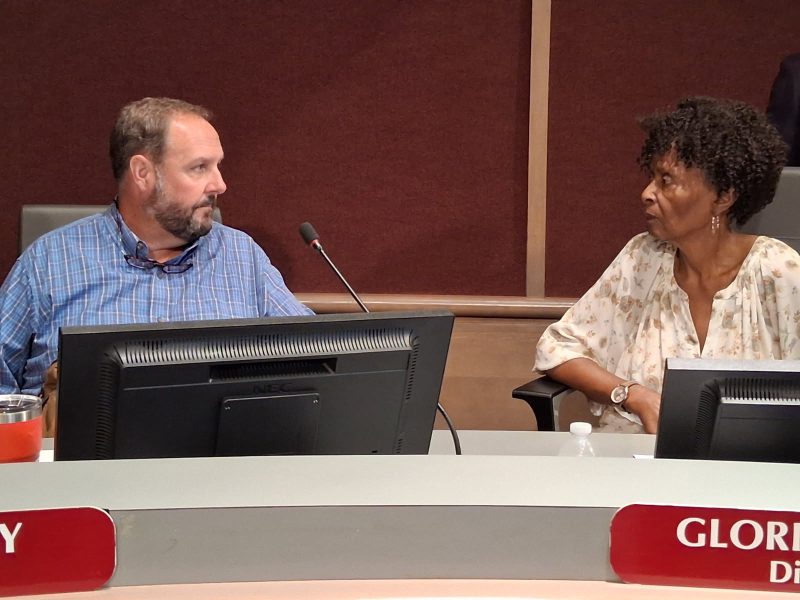
Dougherty Commission considers $104 million budget for 2026-2027 budget year
“The other side of the coin is you could have higher revenues than projected. We’re very conservative in budgeting revenues. That also reduces the need to use fund balance”
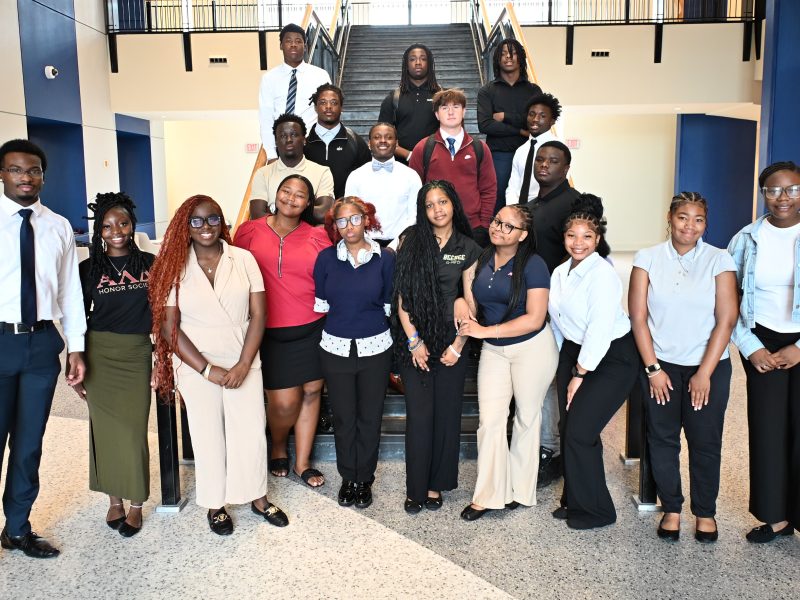
PHOTOS: Albany State Summer Success Academy
Photos by Reginald Christian, Albany State University
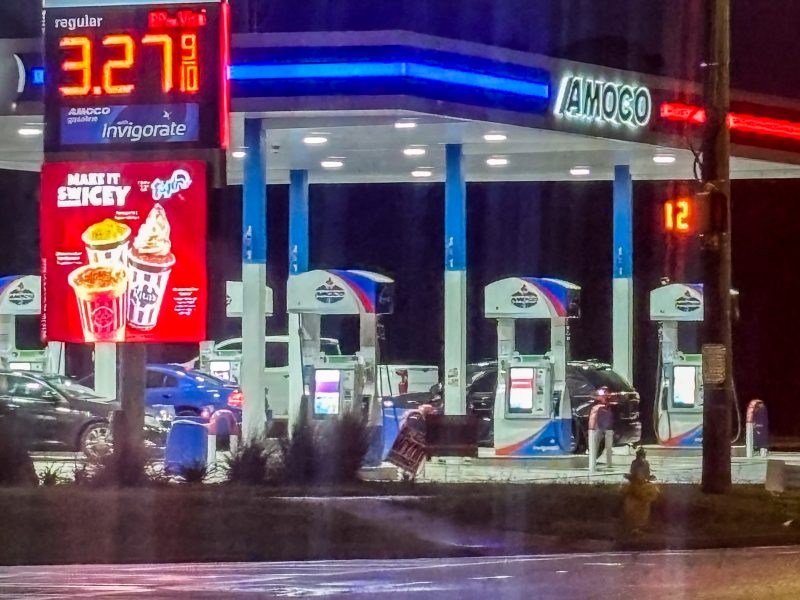
Albany gas prices among Georgia’s lowest as summer fuel costs decline
According to AAA, the average price for a gallon of regular gasoline in the Albany metro area was approximately $3.45 this week, making Albany the second-least expensive metro market in Georgia behind Dalton at $3.41 and slightly ahead of Brunswick at $3.48.
