
Adjusting to new life as Citizen Wernick
Phoebe CEO Joel Wernick cedes title to Scott Steiner
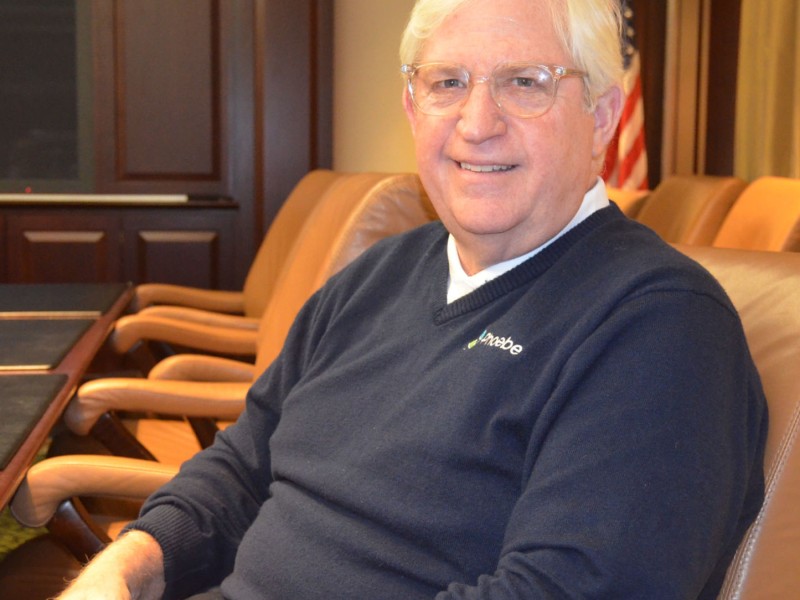
By Carlton Fletcher
Editor’s Note: Second in a series.
ALBANY — On Friday, Joel Wernick officially ceded his position as President/CEO of Phoebe Putney Health System and Phoebe Putney Memorial Hospital to Scott Steiner.
Over his 30 years with Phoebe, years in which his name became synonymous with the health care system, Wernick enjoyed a stellar career in which he masterminded a plan that transformed Phoebe from a small community hospital to a regional health care hub.
Over those 30 years Wernick became a lightning rod for controversy, his every action drawing a reaction from a group in the community that sought every opportunity to criticize him. Still, Wernick persevered, and Phoebe stands as one of the state’s premiere health care facilities.
As he prepared to leave Phoebe behind and become Citizen Wernick, the now former CEO took the time for an extended conversation with The Albany Herald about his career with Phoebe and what he plans to do now that he has retired. The second part of that conversation deals with Citizen Wernick.
ALBANY HERALD: The first day you’re no longer CEO of Phoebe, what do you do?
JOEL WERNICK: Wow! (Wernick laughs.) There are so many projects I’ve started that are only partially completed. I’ve always been a compartmentalized person; I make a to-do list every morning and at night I scratch off the things I accomplished and start work on a new list. I may not do that now, but I’m not going to lay in bed until all times of the day and I never was much of a TV watcher. I’m going to get some projects done I need to get done. I guess what I’ll have to do is change priorities to a more personal level.
AH: Will it be difficult the first time you see an issue arise at the hospital not to weigh in, to start formulating strategy?
JW: I’ve never been a big second-guesser. This organization is made up of a lot of smart people at all levels. It’s not error-free, but there are people here who can find the answer to any question. I will always be available to give a historical perspective if I’m needed. At some point, the hospital will move on a new course; that’s one of the exciting things about a change in leadership. Different, new ideas are what you expect when there is change in an organization’s leadership.
AH: How will Citizen Joel Wernick differ from CEO Joel Wernick?
JW: Shedding stress is going to be one of the most evident changes. I will create a list of priorities, but it will be less intense. I’m going to spend more quality time with the important people in my life. I’m going to retrace some steps, reconnect with people. I have a lot of pride not just in the Phoebe organization but in this community and region. I admire the people who put a lot into it, and these are people I want to work side-by-side with. There are two sayings that are important to me that I stole from someone, I don’t know who: “When the end of the world comes, I want to be in south Georgia because I know it will be 10 years later.” The slower pace, though, is part of the charm. The second saying is, “This is a place where thousands live and millions wish they could.” Our region needs to have a heck of a lot more confidence in itself. It’s a great region, and I intend to continue contributing to it.
AH: You have the opportunity now to do anything you like. What do you expect a typical day to be like?
JW: I think I’m going to try and divide the year into four parts, I’ve always enjoyed autumn, and while I’ve loved living in the South, I grew up in an area where there were actually four seasons. A guy I know who is retired told me “I will not spend another August in south Georgia.” I plan to do some of that, rove with the climate. I’ll experience things quarter by quarter — plant trees, hunt, fish — let the weather guide me.
AH: Let’s take a mental last walk around the hospital campus for a bit, take in all that Phoebe has become in the 30 years you’ve been here. Do you allow yourself to stop and say, “Wow, I helped build this”?
JW: Let me tell you something not many people know: When I came here in 1988, (then-Phoebe board chairman) Harry Willson told me one of the things we had to do was negotiate to buy Palmyra Park Hospital. He saw the wisdom of consolidating health resources 30 years ago. What we’ve done in my 30 years at this hospital is grow a facility that could meet the needs of the community and create a strategy to continue to meet those needs. When Judge Putney breathed life into this facility, he said he wanted it to be here to serve everybody, no matter their circumstances. It’s become more and more a challenge in our industry to do that, but we have a board that I’m confident will stay the mission. That’s what’s important, having a caring, engaged board. As Mr. Willson would have said, “I’m just the hired help.”
AH: A final shot to address your critics who seemed to hate every hospital success because it reflected on you. What do you say to them?
JW: There is an old saying: “Either you’re making dust or eating dust.” I’d rather make dust. I’ve probably kicked up a lot of dust along the way, but I didn’t know any other way of doing things. Look, there are people who think I own a Starbucks (in the hospital lobby) because my name is on the paperwork. People spin and corrupt things to their own purpose. They have to deal with their own issues. Anger is a connecting emotion; it connects you to someone else. I don’t want that kind of connection. I’ve bit my lip a lot. I’ve always embraced constructive criticism, but I am not guided by those whose criticism is anything but constructive. It’s like that saying by Teddy Roosevelt: I don’t concern myself with those timid souls who are always outside the ring, criticizing. I save my respect for the people who are in the ring, maybe succeeding and maybe failing, but always in the ring trying.
Author

Related Articles
Southwest Georgia Career Expo lets job seekers shine in Albany
“I’m just trying to get a career, just anything that might spark my interest, really. I just want to see what’s out there.”

Joshua Harrison pounds the pavement to provide shoes for Dougherty County children
“Being able to work with the H.E.A.R.T. organization and they work with me as one of their protege sons, it really made my life different. I want to let children feel better about themselves.
17th annual Unity in the Community brings food, fun to Albany
“We think it’s the perfect time to have a barbecue with all the violence in the community. It’s a chance to come together and do something positive. “
