
Albany leaders’ focus turns to aging infrastructure
Officials ramp up efforts to improve ‘unseen’ part of Albany
By Carlton Fletcher
ALBANY — Infrastructure is on the minds of city officials these days.
Last week, Albany City Manager Sharon Subadan reiterated at the City Commission’s work session that the focus of all personnel, from management to staff levels, is being directed toward improving the city’s aging infrastructure.
Assistant City Manager Phil Roberson and Engineering Director Bruce Maples gave a detailed presentation at the commission meeting, updating commissioners on five areas of concern: street resurfacing, sanitary sewer, stormwater, alley paving and sidewalks.
“This is an update for your benefit, but we’ll be coming back to you soon asking for decisions,” Subadan told commissioners before the presentation. “The focus is on the ‘unseen’ part of the city, the part of government that goes generally unnoticed but is very important to our citizens’ quality of life.”
Mayor Dorothy Hubbard, who made improving infrastructure one of the primary issues of her successful re-election campaign last fall, said she is in favor of emphasizing infrastructure improvements to the point of reprioritizing projects on the city’s to-do list.
“We’ll be talking about the new SPLOST (special-purpose local-option sales tax) referendum soon, and we must make infrastructure improvements our priority,” the mayor said. “Sure, there are other needs that we’ll have to address, but we cannot keep putting off our infrastructure. Like I said during the election, I have this fear of getting a call in the middle of the night telling me one of those old, almost-100-year-old sewer lines has burst and we have a serious problem.
“If I had my way, we’d set aside about 99 percent of all SPLOST collections to upgrade our infrastructure.”
The 1 percent SPLOST tax will be vital to future infrastructure projects, but Subadan said the city is not waiting for that bit of legislation to pass to kick the infrastructure improvement campaign into high gear.
“SPLOST collections are not bound by any fiscal year, they are ongoing,” the city manager said. “We are moving forward with these projects right now, as we speak. Some of the SPLOST-funded projects have been put off over the last several years for whatever reason, but we’re not going to keep putting them off. We’re moving forward.”
The presentation by Roberson and Maples gave commissioners specific numbers associated with infrastructure needs. And the numbers were often sobering:
— 550 miles of asphalt streets that should ideally be resurfaced every 15 years;
— 37 percent of the city’s streets categorized in “poor” or “very poor” condition, according to the latest audit;
— $3.4 million funding shortfall each resurfacing cycle;
— 500 miles of sewer mains, 83 lift stations to be maintained;
— 40 million to 50 million gallons of water treated at the city’s wastewater treatment plant on days of heavy rain;
— Amount needed to improve east-side sewer line: $5 million;
— Amount needed to improve west-side line: $10 million;
— 290 holding ponds and 252 miles of canals in city and county to divert stormwater;
— The huge Holloway Basin storm sewer line covers parts of Wards 2, 3 and 6; improving the line has two options — one with an estimated cost of $50 million-$70 million, the second with an estimated cost of $18 million-$20 million;
— 1,105 alleys in the city, 308 of which have been paved;
— Cost of paving an alley with asphalt: $125 per linear foot;
— Cost to place crushed asphalt in an alley: $15 per linear foot;
— Sidewalks repaired or built in city: 73,285 linear feet; handicap ramps installed, 144; curb-and-gutter installation, 1,605 feet.
“This discussion of our infrastructure is timely,” Roberson told commissioners. “The recent flood, which was considered minor when compared to the floods we had in ‘94, ‘98 and ‘09, illustrated the importance of our infrastructure and showed some areas where we need improvements. We had localized flooding. We had a whole road cave in.
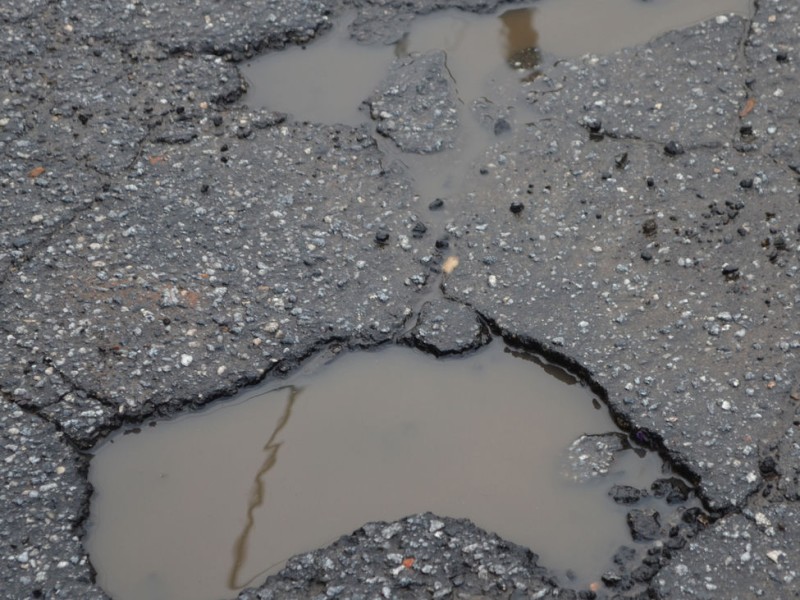
“We’ve also heard a great deal of talk lately about potholes in the city, and I can say the only time I’ve ever seen them worse was in the ’70s and early ’80s. We’ve average $4 million in SPLOST funding and $714,000 in LMIG (state-provided Local Maintenance and Improvement Grant) funds for resurfacing each year since 2006, but we’re still more than $3 million short each year. Mr. (Mike) Dover (deputy commissioner for the Georgia Department of Transportation) told us we could expect LMIG funds to increase by 30 percent next year, but that still leaves us way short.”
Ward IV City Commissioner Roger Marietta took Roberson, Maples and Public Works to task at the meeting, saying alley paving is “drug out” so long that SPLOST funding allocated for such projects runs out. He also accused city staff of “abandoning” a priority sidewalk project on Dawson Road that had been approved in a SPLOST referendum.
“All the big projects have been completed,” Marietta said. “It’s time we got more bang for our SPLOST bucks and looked at moving back to doing these projects ourselves rather than contracting them out to companies that don’t make them a priority.”
Subadan said in-sourcing projects comes with costs that are not immediately apparent.
“First of all, I’m appalled that there are neighborhoods in our community with no sidewalks,” the city manager said. “And I appreciate the feedback on specific projects. But when you look at in-sourcing rather than outsourcing, the cost difference at times can be in the millions of dollars. We have to look at the overall picture and return on investment. Like if we wanted to do our own paving, one piece of equipment in that process would cost a half-million dollars.
“I also want to point out that there are a lot of urban legends surrounding what’s been approved in our SPLOST referendums. And my research shows that Dawson Road sidewalks are not on any SPLOST referendum. They were discussed, but not included.”
Author

Related Articles
Dougherty Jail graduates first class of female GED recipients
“It was an escape. I can say this has been challenging. I want to express my gratitude for being able to attend this program.”

From cotton to cloud: In the data center debate, is rural Georgia once again being asked to carry the cost?
Across much of rural Georgia, the abandoned cotton warehouses and shrinking tax bases remain — enduring reminders that industries built to serve distant markets do not necessarily stay rooted in the communities that first sustained them.
Dawson Council approves $400,000 lifeline in emergency meeting as financial accountability remains elusive
Less than a week after city officials publicly acknowledged the City of Dawson cannot continue operating without additional financing, the Dawson City Council convened a hastily called emergency meeting Tuesday evening and unanimously approved authority to borrow up to $400,000 through a tax anticipation note.
