
Albany native physician Dr. James Black carrying on a legacy
After completing medical training, Dr. James Black came back to serve his hometown
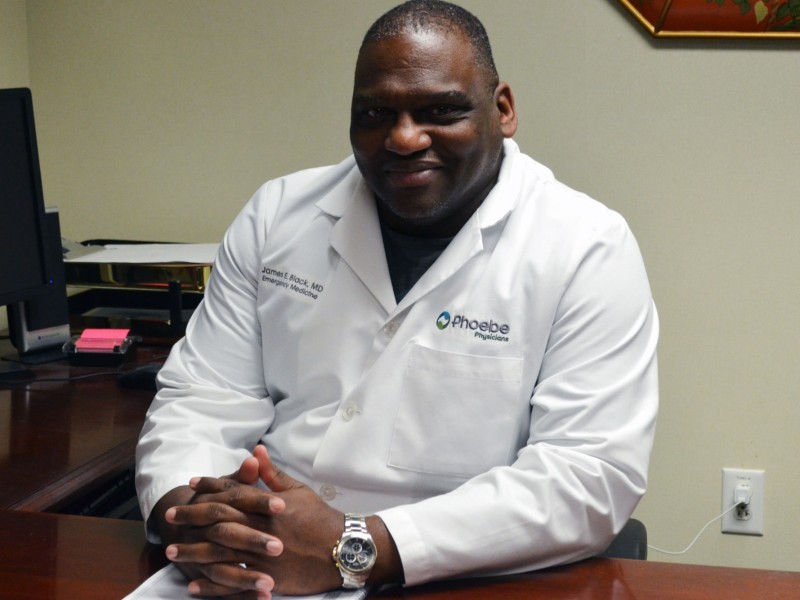
File Photo
By Jennifer Parks
ALBANY — The late Billy C. Black served as Albany State University’s president from 1981 until 1996. Black, who passed away in 2008, oversaw the establishment of the Center for the African-American Male on the ASU campus.
He also set the course for Albany State’s recovery from the Flood of 1994, during which the institution earned a new nickname: the “unsinkable” Albany State. In 2014, the university honored his legacy by naming its newly built Academic Building in Black’s honor.
President Black also left behind a legacy in the person of his son, Dr. James “Eddie” Black. While the younger Black could have taken his talents anywhere, he chose to bring them back to Albany.
Eddie Black is now the medical director for emergency medicine at Phoebe Putney Memorial Hospital. Born at the hospital he now works in, Black graduated from Dougherty Comprehensive High School and went on to earn his medical degree from the Ohio State University College of Medicine.
He also completed his medical residency at the University of South Florida in Tampa and completed a fellowship at the University of Alabama at Birmingham. His resume also includes time in the U.S. Navy, during which he served as a flight surgeon.
“I wasn’t sure if I would come back to Albany,” Black said.
Thirteen years ago, fate nudged the young doctor in the direction of Albany after his father fell ill — giving him a chance to interact with some of his hometown mentors.
“(While in the Navy) I got to see a lot of places, and there is no place like home,” Black said.
When making the decision to come back, he made it clear that his decision was not simply about his father being ill. He wanted to come home, and in fact, jumped at the chance.
“When you come back, you have a different relationship with your parents,” the emergency medicine physician said. “He (my father) was an unspoken influence, but there was no pressure at all.”
Black said it has been good for people to recognize his face, including some of his former teachers whom he has treated in his role as a doctor. He has had a chance to have a positive impact on their lives as a kind of repayment for the help they offered him.
Black said coming back to Albany after the experiences he has had and seeing what he has seen offers him a unique perspective on what his hometown has to offer.
“It makes you proud of where you come from. It also makes you appreciate home,” he said.
And now that he has established his own position in the community, Black said he does not know of anything he would do differently.
“I have had a wonderful life and a wonderful experience,” he said. “There were mistakes made, but hopefully they made me better. I was happy with the decision to come home.”
At the time he left home, Black’s only exposure to medicine had been through the doctor he visited as a child. So he thought pediatrics might be the medical track he would take.
Black eventually landed in emergency medicine because of the wide range of cases he would be exposed to.
“(I found that) I liked all aspects of medicine, so it was either emergency medicine or family medicine,” he said.
In a way, his time as a Naval flight surgeon played a big role in the growth of his skillset as an emergency medicine physician.
“It is fast-paced; you don’t know what is coming in,” Black said. “They (the patients) trust you with something important to them. You can’t find that in many areas.”
With his roots now firmly re-established in Albany, Black says he has no intention of leaving.
“We have built a life here and have no intention of leaving anytime soon,” he said. “Albany has a way of drawing you in. It would be very hard for me to leave.”
When interacting with students at the Medical College of Georgia at Augusta University who are considering where to do their rotations, Black said he has often seen them come to Phoebe and find something they did not expect.
The MCG campus in southwest Georgia has the ultimate goal of training physicians and keeping them in the region to meet the needs of the underserved, so it is a benefit for medical students to see what Black sees for that spirit to live on.
“They are surprised to see a health care community this large,” Black said. “A lot of folks are pleasantly surprised. They have no idea we are this capable.”
Related Articles
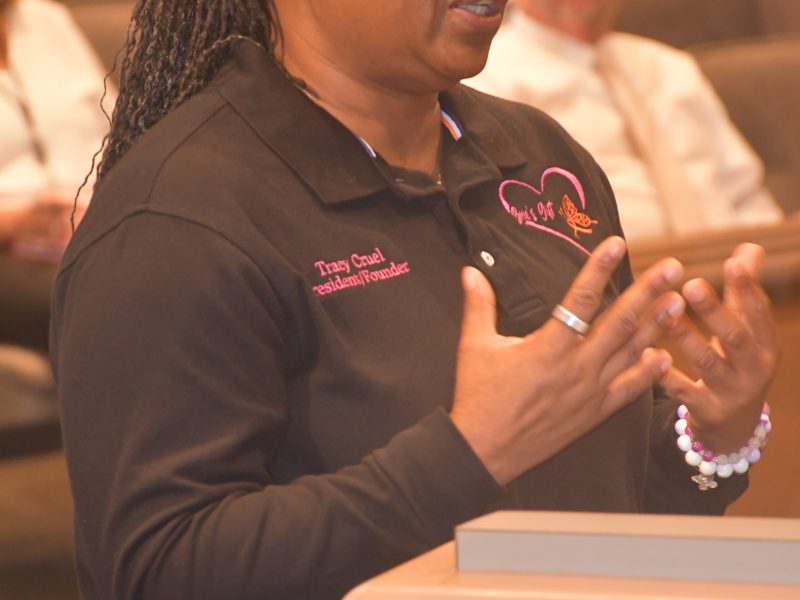
Brie’s Gift offers a helping hand for families affected by leukemia
“I think that would be beautiful. Brie loved her school, she loved her city. I think that would be wonderful.”

Who decides elections in Terrell County? Data show older voters dominate turnout as turnout declines
According to the Georgia Secretary of State, 1,731 of Terrell County’s 6,048 active registered voters cast ballots in the May primary, a turnout rate of 28.6%. Four weeks later, only 922 voters participated in the June 16 primary runoff, reducing turnout to 15.2%.
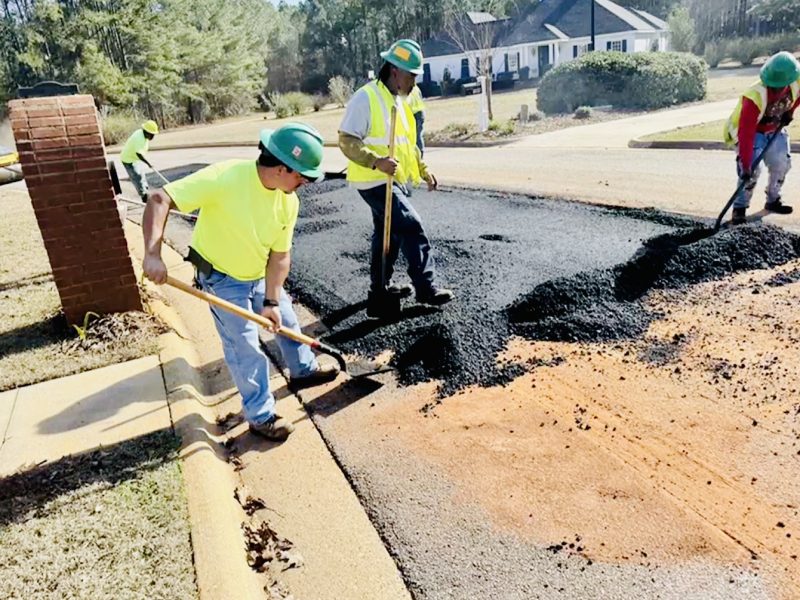
From Ledo to Coston, Lee County’s summer road projects are underway
Updates provided during recent meetings of the Lee County Board of Commissioners show projects are underway or scheduled to begin on several county roads, while additional transportation improvements funded through the Local Maintenance and Improvement Grant (LMIG) program and Transportation Special Purpose Local Option Sales Tax (T-SPLOST) are expected to begin shortly after the July Fourth holiday.
